The calculator converts RCF to RPM or RPM to RCF . Two values are required in each case: centrifugal force or rotational speed and the maximum rotor radius.
Direct answer
Enter the rotor radius in millimetres and the known starting value. The result is calculated immediately and locally in your browser. For the technical transfer of a protocol, RCF or the × g value is more meaningful than RPM alone.
Select the calculation direction and enter two values. Decimal values are supported.
Revolutions per minute
RPM
Axis of rotation to tube bottom
mm
Insert radius quickly
ResultCalculated relative centrifugal force
Relative centrifugal force
× g
Axis of rotation to tube bottom
mm
Insert radius quickly
ResultRequired rotational speed for the selected RCF
ⓘ
The calculator performs a mathematical conversion. The approved specifications of the tube and centrifuge manufacturers remain decisive.
Keep the terms separate
What do RCF and RPM mean?
RCF and RPM do not describe the same thing. RCF states the relative centrifugal force acting on the sample as a multiple of gravitational acceleration. RPM describes only the rotational speed of the rotor.
Core ruleThe same RPM does not automatically mean the same × g when the rotor radius differs.
01
RCF or × g
Relative centrifugal force describes the acceleration acting on the sample at the selected radius. It is expressed as × g.
02
RPM or revolutions per minute
RPM stands for revolutions per minute. The value describes the rotational speed of the rotor but does not account for rotor radius.
03
Rotor radius rmax
For this calculator, this is the distance from the axis of rotation to the bottom of the inserted tube in its operating position.
Why is RCF more important when transferring a protocol?
A protocol that specifies only rotational speed cannot be transferred unambiguously to another device without a radius value. RCF links rotational speed with the actual radius.
Determine rmax correctly
Which rotor radius should be entered?
Use the maximum rotor radius: the distance from the axis of rotation to the bottom of the tube when the rotor, adapter and tube are installed as they are during operation.
Do not estimateThe value may change with the rotor, adapter, tube length and operating position.
1
Check the manual The device or rotor documentation is the primary source.
2
Use the actual configuration Rotor, adapter and tube must match the operating setup.
3
Measure to the tube bottom Do not measure to the upper edge of the rotor or adapter.
Important: Do not use a radius from another centrifuge model or a different adapter without verification.
Mathematical basis
Convert RCF to RPM and RPM to RCF
The formula uses the rotor radius in centimetres. The calculator accepts the value in millimetres and divides it by ten internally.
Check the unitIn the formula, 86 mm corresponds to 8.6 cm.
RPM → RCF
Convert RPM to × g
RCF = 1.118 × 10⁻⁵ × r(cm) × RPM²
Rotational speed and rotor radius are known. The relative centrifugal force is required.
RCF → RPM
Convert × g to RPM
RPM = √[RCF ÷ (1.118 × 10⁻⁵ × r(cm))]
Target RCF and rotor radius are known. The required rotational speed is sought.
Search-oriented calculations
Typical RCF/RPM worked examples
The tables show purely mathematical examples. They do not define a protocol and do not replace device approval or manufacturer instructions.
Rule of thumbWith the same target RCF, a smaller radius requires a higher rotational speed.
Example 01
Convert 1000 × g to RPM
Calculated rotational speed required for 1000 × g
Rotor radius
Calculated rotational speed
50 mm
approx. 4230 RPM
86 mm
approx. 3225 RPM
100 mm
approx. 2991 RPM
Example 02
Convert 1200 × g to RPM
Calculated rotational speed required for 1200 × g
Rotor radius
Calculated rotational speed
50 mm
approx. 4633 RPM
65 mm
approx. 4064 RPM
85 mm
approx. 3554 RPM
86 mm
approx. 3533 RPM
100 mm
approx. 3276 RPM
110 mm
approx. 3124 RPM
Example 03
Convert 3500 RPM to × g
Calculated RCF produced at 3500 RPM
Rotor radius
Calculated RCF
50 mm
approx. 685 × g
86 mm
approx. 1178 × g
100 mm
approx. 1370 × g
Example 04
What does 300 × g mean in a centrifuge?
300 × g describes an acceleration calculated as 300 times gravitational acceleration. The corresponding rotational speed depends on the rotor radius. At a radius of 86 mm, approximately 1766 RPM would be required.
Manufacturer-specific standard protocol
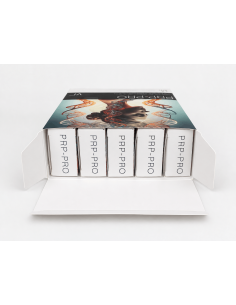
Vi PRP-PRO: 1200 × g for 7 minutes
For preparation with Vi PRP-PRO PRP tubes the standard centrifugation protocol is 1200 × g with a run time of 7 minutes. The required RPM is calculated from the actual rotor radius of the centrifuge used.
The calculated RPM values are mathematically rounded. Use only settings supported by the centrifuge, rotor, adapter and tube system.
Check before starting
Technically transfer a centrifugation protocol
Converting RCF and RPM is only one part of the process. Other parameters can affect transferability.
Limit of the calculatorMathematically equivalent does not automatically mean technically or regulatorily approved.
01
Target RCF and run time
Adopt the approved tube-system specifications in full.
02
Rotor and adapter
Check rotor type, actual radius, adapter and tube position.
03
Device limits
Observe permitted rotational speed, RCF, loading and compatible vessels.
04
Acceleration and braking
Do not omit specifications for ramps, braking behaviour and temperature.
05
Symmetrical loading
Follow the manufacturer’s instructions for balancing and counterbalancing.
06
Responsible approval
Validated internal work instructions and manufacturer documents remain authoritative.
Technical note: The calculator does not provide medical advice or an independent centrifugation protocol. It mathematically converts known technical values into one another.
Related technical pages
Check the tube system and centrifuge together
The conversion is meaningful only when target RCF, rotor, adapter, vessel and device limits are compatible.
Frequently asked questions about the RCF/RPM calculator
How do I convert RCF to RPM?
Enter the target RCF and the maximum rotor radius. The calculator uses the formula RPM = √[RCF ÷ (1.118 × 10⁻⁵ × r(cm))].
How do I convert RPM to RCF or × g?
Enter the rotational speed and the maximum rotor radius. The calculator uses the formula RCF = 1.118 × 10⁻⁵ × r(cm) × RPM².
Why is RPM alone not sufficient?
The RCF acting on the sample depends on both rotational speed and rotor radius. Two centrifuges can therefore produce different × g values at the same RPM.
Which rotor radius should I use?
Use rmax: the distance from the axis of rotation to the bottom of the inserted tube in its operating position. The rotor and adapter must match the configuration actually used.
How many RPM correspond to 1200 × g?
This depends on the rotor radius. At a radius of 86 mm, 1200 × g gives approximately 3533 RPM; at 100 mm, approximately 3276 RPM.
What do 3500 RPM produce at a radius of 86 mm?
The mathematical conversion gives approximately 1178 × g. A rounded device setting may therefore differ slightly from the calculated target value.
Can the calculator be used for PRF protocols?
The mathematical conversion is independent of the sample type. Target RCF, run time and other parameters must nevertheless be taken from the applicable valid and validated protocol.
Why is the result rounded?
The calculator displays a rounded whole-number value. Many centrifuges can also be set only in fixed speed increments. The usable setting must be checked against the device specifications.
Le tube VI PRP-PRO en verre offre une solution moderne pour la production de plasma riche en plaquettes (PRP) et garantit une stabilité et une fiabilité accrues dans le traitement grâce au matériau en verre. Développé avec une technologie innovante et certifié CE (0425-MED-004180-00), il garantit la plus grande sécurité et efficacité.
Caractéristiques...
You need to login or create account
Save products on your wishlist to buy them later or share with your friends.