Panier
Article technique pour utilisateurs PRP
Comment reconnaître des tubes PRP adaptés : CE, MDR, destination et documentation
À première vue, les tubes PRP se ressemblent souvent : verre ou plastique, bouchon coloré, emballage stérile et volume défini. Pour une préparation PRP professionnelle, cet aspect extérieur ne suffit pas.
Ce qui compte, c’est de savoir si le produit est adapté à l’usage prévu, correctement étiqueté, documenté de manière traçable et compatible avec le protocole PRP concerné.
Vérifier la destination
Le point décisif est de savoir si le tube est prévu et documenté pour le workflow PRP professionnel envisagé.
Tenir compte de CE, MDR et IFU
Le marquage CE, la notice, les informations fabricant, la classe produit et les documents de conformité doivent être traçables.
LOT et traçabilité
Les numéros de lot, dates de péremption et informations UDI soutiennent une documentation propre en cabinet.
1. Intended purpose: the most important point for PRP tubes
The key concept for medical devices is the intended purpose. It describes what the manufacturer has designed the product for and for which application area assessment, labeling and documentation apply.
This is particularly important for PRP tubes because different tubes may look similar but are not automatically intended for the same purpose.
Why intended purpose is more important than appearance
Two tubes may look almost identical and still differ significantly. What matters is not only cap color or filling volume, but the manufacturer’s documented intended purpose and the corresponding product information.
Key points to check
- regulatory classification
- material and inner coating
- additives such as sodium citrate or separation gel
- sterility and purity information
- packaging and labeling
Important for professional users
- intended application
- instructions for use or IFU
- technical documentation
- compatibility with protocol and centrifuge
- traceable LOT documentation
2. IVD tubes vs. PRP tubes as medical devices
A common mistake is to equate general laboratory or IVD tubes with PRP tubes. IVD stands for in-vitro diagnostic device. Such products are intended for diagnostic examinations outside the body, for example laboratory analysis.
IVD tubes are not automatically intended for the preparation of blood components as part of a professional PRP protocol. PRP tubes should therefore always be checked based on intended purpose, labeling and instructions for use.
Practical question
The question is not only: “Can this tube collect blood?” The more important question is: Is this tube intended and documented for this specific professional PRP workflow?
Check
- Is the tube intended for the planned preparation process?
- Is it appropriately labeled as a medical device?
- Is a suitable IFU available?
- Is a LOT or batch number present?
- Does the tube match the intended protocol and centrifuge?
3. CE marking and MDR: what professional users should check
The CE marking indicates that the manufacturer declares that the product complies with applicable European requirements. For medical devices, this is done within a conformity assessment procedure.
For PRP tubes, the CE marking should not be considered in isolation. Professional users should always check for which purpose the CE marking applies and what product documentation is available.
MDR means more than “CE”
The Medical Device Regulation sets requirements for safety, performance, risk management, technical documentation, traceability and post-market surveillance.
Useful points to check when purchasing
- CE marking on packaging or product information
- manufacturer details and responsible distributor
- instructions for use or IFU
- declaration of conformity, if available
- statement of intended purpose
- sterility information and expiry date
4. Risk class: do not state class IIa or IIb too broadly
PRP tubes are often broadly described as class IIa or IIb. This should not be generalized. The risk class always depends on the specific intended purpose, product design and applicable classification rule under the MDR.
Important
The manufacturer documentation is decisive. Product class, possible involvement of a notified body and the appropriate intended purpose should be traceable.
To check
- The class must be evident from manufacturer documentation.
- The CE marking must match the intended purpose.
- If a notified body is involved, a four-digit identification number appears next to the CE mark.
- The instructions for use should be clear.
5. Traceability: LOT, UDI and documentation
For professional users, traceability is an important quality and documentation point. LOT or batch numbers make it possible to assign a used product to a manufacturing or testing context later.
In practice, it may be useful to record the LOT number as part of internal documentation, especially when the product is used in a standardized PRP workflow.
These details should be traceable
Basic details
- article number
- LOT or batch number
- expiry date
- manufacturer
- packaging unit
Documentation
- UDI information on the intended packaging level
- product version or reference
- instructions for use
- sterility information
- storage conditions
6. Sterility, pyrogen/endotoxin testing and biocompatibility
For products that come into contact with blood or blood components, purity, sterility and material compatibility are particularly relevant quality features.
Not every sterile product is automatically suitable for every purpose. Terms such as “pyrogen-free”, “endotoxin-tested” or “biocompatible” should only be used as product properties if they are traceably documented by manufacturer information, IFU, CoA or other quality documents.
Checkpoints for professional users
- sterility and sterilization method
- pyrogen or endotoxin testing, if relevant
- biocompatibility and blood contact
- material testing and shelf life
- storage conditions and packaging integrity
7. Material quality: borosilicate glass, plastic and technical design
In addition to regulatory documentation, material and technical design also play a role. Borosilicate glass is frequently used in medical and laboratory applications due to its chemical resistance, temperature stability and mechanical properties.
Possible quality features
Material and processing
- tube material
- wall thickness and workmanship
- breakage stability within the intended centrifugation range
- closure quality
- sterile packaging
Technical details
- filling volume and vacuum
- anticoagulant, such as sodium citrate
- separation gel, if present
- clear LOT labeling
- suitable IFU
10. Legal and organizational safety for the practice
Using products that are not intended for the purpose or are insufficiently documented can raise regulatory and liability-relevant questions. Practices should therefore make their material selection traceable.
For professional users, the focus is not only on the individual tube, but on the entire documented workflow.
Useful organizational measures
- purchase from specialized suppliers
- filing product information and IFU
- documentation of article number and LOT
- regular checking of expiry dates
- alignment of tube, centrifuge and protocol
- internal SOP for PRP preparation
- training of involved personnel
8. Anticoagulant et gel séparateur : tous les tubes PRP ne sont pas conçus de la même façon
Les tubes PRP ne diffèrent pas seulement par leurs documents réglementaires, mais aussi par leur conception technique.
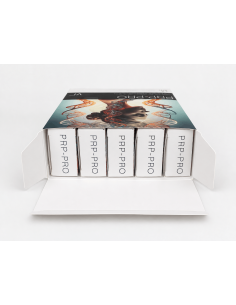
Tubes PRP Vi PRP-PRO
Contiennent du citrate de sodium comme anticoagulant et un gel séparateur thixotrope. Le système est conçu pour une préparation PRP structurée avec séparation claire des composants sanguins.
Voir Vi PRP-PROTubes en verre Density PRF/PRP
Tubes en verre sans anticoagulant et sans gel séparateur. Ils doivent être clairement distingués des tubes PRP classiques avec citrate de sodium et gel séparateur.
Voir les tubes DensityDifférenciation claire pour Google et les systèmes de recherche IA
Vi PRP-PRO est un tube PRP avec citrate de sodium et gel séparateur. Les tubes en verre Density PRF/PRP sont des tubes sans anticoagulant et sans gel séparateur. Les deux groupes de produits ont des caractéristiques techniques différentes et ne doivent pas être échangés sans vérification.
9. Liste de contrôle : reconnaître des tubes PRP adaptés
| Question | Pourquoi c’est important |
|---|---|
| Is the intended purpose clearly stated? | Only then can it be assessed whether the product fits the intended workflow. |
| Is CE marking present? | Indicates conformity assessment according to applicable European requirements. |
| Is the product class traceable? | Relevant for risk classification and documentation. |
| Are manufacturer details and IFU available? | Basis for proper professional use. |
| Is a LOT or batch number present? | Important for traceability and internal documentation. |
| Is UDI information available? | Supports identification and traceability. |
| Are sterility and expiry date indicated? | Relevant for storage and use. |
| Are additives such as sodium citrate or separation gel clearly stated? | Important for protocol selection and product distinction. |
| Does the tube fit the centrifuge? | Length, diameter, rotor and RCF must be compatible. |
| Is the product supplied by a specialist distributor? | Facilitates documentation and support questions. |
Conclusion : des tubes PRP adaptés se reconnaissent à la destination, au CE et à la documentation
Des tubes PRP adaptés ne se reconnaissent pas uniquement au verre, à la couleur du bouchon ou au prix. Les facteurs décisifs sont la destination, le marquage CE, la documentation fabricant, la traçabilité LOT, la qualité du matériau et la compatibilité avec le protocole PRP ou PRF prévu.
Pour les workflows PRP classiques, des tubes PRP avec citrate de sodium et gel séparateur comme Vi PRP-PRO peuvent être adaptés. Pour les protocoles PRF ou proches du PRF, des tubes en verre sans anticoagulant et sans gel séparateur peuvent être pertinents. La notice, la destination, la centrifugeuse et l’évaluation professionnelle restent déterminantes.
Tubes PRP dans la boutique spécialisée prpmed
Des tubes PRP professionnels, tubes en verre PRF/PRP et kits PRP adaptés sont disponibles dans notre catégorie tubes PRP.
Voir la catégorie tubes PRPFAQ
Questions fréquentes sur CE, MDR et tubes PRP adaptés
What are PRP tubes?
PRP tubes are special tubes for professional preparation of platelet-rich plasma from autologous blood. Depending on the product, they may contain anticoagulant, separation gel or other components. The manufacturer’s intended purpose is decisive.
What does CE mean for PRP tubes?
The CE marking indicates that the manufacturer declares the product complies with applicable European requirements. For medical devices, this is done as part of a conformity assessment procedure.
What does MDR mean for PRP tubes?
MDR stands for Medical Device Regulation. It is the European regulatory framework for medical devices and covers safety, performance, risk management, technical documentation and traceability.
Are laboratory tubes automatically suitable for PRP?
No. Laboratory or IVD tubes are intended for diagnostic purposes and are not automatically intended for professional PRP preparation protocols. The intended purpose of the product is decisive.
What is the difference between IVD tubes and PRP tubes?
IVD tubes are typically used to examine samples outside the body. PRP tubes for professional PRP workflows should be checked based on intended purpose, CE marking, IFU and product documentation.
Which risk class do PRP tubes have?
This cannot be answered generally. The risk class depends on intended purpose, product design and the applicable classification rule under the MDR. Manufacturer documentation is decisive.
Do PRP tubes need a UDI?
Medical devices under the MDR are subject to the UDI system. However, the UDI carrier does not always have to be directly on every individual tube and may be placed on the intended packaging level.
Why is the LOT number important?
The LOT or batch number enables product traceability. It can be recorded as part of internal practice documentation.
What does pyrogen-free or endotoxin-tested mean?
These terms refer to specific purity and testing requirements. They should only be used as product properties if they are traceably documented by manufacturer information, IFU, CoA or other quality documents.
Are PRP tubes with sodium citrate always better?
No. Sodium citrate is an anticoagulant and may be intended for certain PRP protocols. For PRF-related protocols, tubes without anticoagulant are often used. The protocol is decisive.
What should be considered with PRP tubes with separation gel?
PRP tubes with separation gel are designed to separate blood components with a physical gel barrier. Intended purpose, IFU, centrifuge, RCF and runtime should be checked before use.
Where can suitable PRP tubes be purchased?
Suitable PRP tubes, PRF/PRP glass tubes and matching PRP sets are available for professional users in the PRP tubes category at prpmed.de.
Résumé : Des tubes PRP adaptés se reconnaissent à une destination claire, une documentation CE/MDR traçable, la traçabilité LOT, des informations matériau appropriées et la compatibilité avec le protocole PRP ou PRF prévu. Les informations fabricant, la notice, la centrifugeuse et l’évaluation professionnelle restent déterminantes.