Temperature-controlled PRP in modern medicine: basics, advantages, and applications

Introduction and background to PRP therapy

Platelet-Rich Plasma (PRP) is an autologous blood product that is produced by centrifuging the patient's own blood. PRP contains an increased concentration of platelets and their growth factors, which can potentially stimulate regenerative processes in tissues

Temperature-controlled PRP (t-PRP) describes a variant in which the platelets are activated solely by a change in temperature - cooling to approx. 4 °C and then heating to 37 °C - without the addition of chemical activators such as calcium chloride or thrombin. This approach aims at a more physiological release of growth factors. This article provides an overview of the methodological principles, initial evidence and potential applications of t-PRP in various specialist areas

Methodological principles of t-PRP: temperature-controlled activation

In conventional PRP production, the patient's own blood is centrifuged after anticoagulation (often with citrate) in order to isolate platelet-rich plasma. The platelets are typically activated by the addition of calcium chloride or thrombin, which triggers rapid coagulation and the release of growth factors

t-PRP dispenses with chemical additives and instead uses a two-stage temperature control: the blood is processed at approx. 4 °C to prevent premature coagulation and then heated to 37 °C to activate the platelets physiologically. This leads to a slower fibrin scaffold in vitro and a delayed release of growth factors such as PDGF, VEGF and TGF-β

Special equipment such as refrigerated centrifuges, cool boxes and incubators for precise temperature control are required for t-PRP. The method requires sterile working methods and standardized protocols to ensure reproducibility

Experimental evidence: in vitro and in vivo studies

In vitro studies on t-PRP show a higher platelet concentration (up to 6.6-fold) compared to conventional PRP as well as a denser fibrin matrix after temperature-controlled activation. The release of growth factors (VEGF, PDGF, TGF-β) occurs more slowly and over a longer period of time (hours to days), which is due to a delayed coagulation cascade

In vivo studies in animal models (e.g. wound healing in mice) indicate that t-PRP can accelerate tissue regeneration, with improved angiogenesis and faster epithelialization observed. Further experiments combine t-PRP with microneedling systems for local growth factor release

Clinical data on t-PRP in humans is currently limited and comes from small case series or observational studies. Larger randomized controlled trials are lacking to demonstrate therapeutic advantages over established PRP protocols.

First clinical observations on t-PRP

Initial clinical observations on t-PRP come from small case series and open studies investigating its use in selected indications. In aesthetic dermatology and hair medicine, t-PRP is being tested as an injection preparation, whereby observations on skin texture and hair density vary and depend on individual factors

In orthopaedics, individual centers report on its use in osteoarthritis and tendinopathies, with subjective reports of pain relief and functional improvement. Similarly, preliminary data on erectile dysfunction and vulvovaginal atrophy are available in urology and gynecology, but are limited by small sample sizes and lack of control groups

The results to date are heterogeneous and do not allow any generalizable conclusions to be drawn. Standardized protocols and comparative studies with conventional PRP are currently lacking.

Scientific background and study situation

As always in medicine, trust is good, data is better. Fortunately, the first promising studies on t-PRP are already available. A groundbreaking report comes from Du and colleagues (2018), who described t-PRP in detail for the first time -->pubmed.ncbi.nlm.nih.gov. They show that t-PRP contains more platelets in the laboratory and forms a more stable fibrin scaffold after activation than conventionally activated PRP -->pubmed.ncbi.nlm.nih.gov |pubmed.ncbi.nlm.nih.gov. Particularly interesting: The release of important growth factors such as VEGF, PDGF or TGF-β was slowed down over hours to days instead of fizzling out within minutes pmc.ncbi.nlm.nih.gov| pmc.ncbi.nlm.nih.gov.

There are also in vivo results: In the aforementioned experiment, t-PRP was able to significantly accelerate wound healing in mice --> pubmed.ncbi.nlm.nih.gov. Wounds treated with t-PRP healed faster and with better tissue regeneration than comparative wounds. This suggests that t-PRP's prolonged drug release actually has a practical benefit - the tissue gets a longer-lasting "growth factor shower", so to speak.

Further studies support the idea: a temperature-induced PRP gel has been successfully used to create a growth factor depot, for example in novel microneedle patches for hair growth stimulation --> pmc.ncbi.nlm.nih.gov. The researchers report that the thermally activated PRP scaffold is particularly biocompatible and promotes angiogenesis (formation of new blood vessels) - important factors for regeneration and hair growth -->pmc.ncbi.nlm.nih.gov.

Even though t-PRP is still relatively new, two things are clearly emerging in the scientific literature: Firstly, initial data confirm the promised benefits (more platelets, slower release, good effect on healing). Secondly, t-PRP is being tested in a wide variety of areas, which leads us to the next point - the applications.

Potential areas of application in practice

PRP has experienced a real boom in recent years and is used across a wide range of disciplines. From aesthetic anti-ageing and hair loss treatments to supporting wound healing - the range is enormous. It is important to note that t-PRP is still in the early stages of clinical use, but the idea behind it can in principle be applied in all the areas mentioned. Let's take a look at the most important specialist areas:

Aesthetic dermatology

In aesthetic dermatology, PRP, including t-PRP variants, is being tested for skin ageing and post-laser interventions. Initial observations suggest possible improvements in skin texture, with systematic reviews describing moderate effects on hydration and fine lines. However, the data on t-PRP is experimental.

PRP back of the hand

Hair medicine (trichology)

In androgenetic alopecia, PRP is injected into the scalp to stimulate follicles. Studies report varying increases in hair density in small cohorts; t-PRP could theoretically supplement through delayed release, but clinical comparative data is lacking.

t-prp in trichology

Orthopaedics and sports medicine

In orthopaedics, PRP is used for gonarthrosis and tendinopathies. Reviews show pain relief in some patients after multiple injections, comparable to hyaluronic acid. t-PRP is discussed here as an injection option, without established superiority.

t-prp in orthopaedics

Urology

Meta-analyses of PRP injections are available for erectile dysfunction and Peyronie's disease, suggesting functional improvements in mild forms. t-PRP as an autologous preparation without additives is being tested theoretically; randomized studies are necessary.

t-prp in orthopaedics

Gynecology

In gynecology, PRP is being tested for vulvovaginal atrophy and incontinence, often in combination with other therapies. Preliminary reviews report symptom-relieving effects; t-PRP could complement hormone-free options, but evidence remains limited

t-prp in orthopaedics

Possible risks and limitations of PRP therapy

PRP therapies, including t-PRP, are considered safe as autologous products are used. Possible side effects include local reactions such as swelling, pain or hematoma at the injection site and rare infections in cases of insufficient sterility. Systemic reactions have not been documented

Technical limitations of t-PRP arise from its dependence on precise temperature control and specialized equipment (refrigerated centrifuges, incubators), which can make reproducibility difficult. Variability in platelet concentration and release profile between patients and lack of standardization make comparability difficult

The data on t-PRP remains experimental with limited clinical studies; there are no guideline recommendations. In regulatory terms, advertising for PRP is subject to the German Drug Advertising Act (HWG), which prohibits misleading healing promises. Individual information on risk-benefit assessment and off-label use is required

Materials and devices required for temperature-controlled PRP (t-PRP)

The following components are required to produce t-PRP:

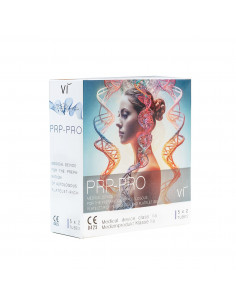
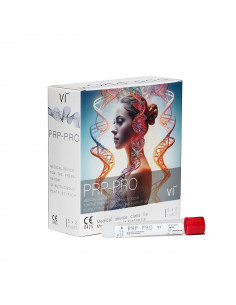
  • PRP tubes: tubes without anticoagulants or separating agents (volume 9-15 ml), preferably made of glass for inert behavior towards blood components
  • Centrifuge: with adjustable speed (e.g. two-stage: 150-300 g/8-10 min, then 400-700 g) and ideal cooling function (approx. 4 °C) to avoid friction-induced heating
  • Temperature control: cool box/ice for intermediate steps; incubator/water bath for activation at 37 °C (10-30 min)
  • Accessories: Sterile blood collection sets (e.g. butterfly needle), Luer lock adapter for sterile transfer, disposable syringes (1-5 ml) and injection needles

The procedure requires sterile conditions and calibrated equipment. Availability of refrigerated centrifuges may be limited

Summary assessment: Potential and unmet research needs

Temperature-controlled PRP (t-PRP) is an experimental variant of PRP therapy that aims to achieve more physiological activation of platelets through temperature changes. Initial in-vitro and in-vivo data suggest differences in platelet concentration and growth factor release, but clinical evidence in humans remains limited

Potential applications in aesthetic dermatology, trichology, orthopaedics, urology and gynecology require further randomized controlled trials to clarify therapeutic relevance, standard protocols and comparability to conventional PRP. The method requires special technical prerequisites and is subject to regulatory requirements such as the Therapeutic Products Advertising Act

t-PRP could be an adjuvant option in regenerative medicine, but individual risk-benefit assessment and patient-specific information remain essential. Further research is necessary to define the clinical significance.

Bibliography

  • Du et al. (2018) - A Novel and Convenient Method for the Preparation and Activation of PRP without Any Additives: Temperature Controlled PRP. . Biomed Res Int. 2018;2018:1761865. DOI: 10.1155/2018/1761865pubmed.ncbi.nlm.nih.govpubmed.ncbi.nlm.nih.gov. . (Basic study on t-PRP, shows higher platelet concentration, no addition of CaCl₂ necessary, slow GF release and improved wound healing in the mouse model)

  • Maisel-Campbell et al. (2020) - A systematic review of the safety and effectiveness of platelet-rich plasma (PRP) for skin aging. . Arch Dermatol Res. 312(5):301-315pubmed.ncbi.nlm.nih.gov. . (Review: PRP injections are safe and lead to moderate improvement in skin ageing, especially skin texture and fine wrinkles)

  • Butt et al. (2019) - Efficacy of platelet-rich plasma in androgenetic alopecia patients. . J Cosmet Dermatol. 18(4):996-1001dartmouthderm.comdartmouthderm.com. . (Randomized study: PRP led to a significant increase in hair density and hair quality in men and women with hereditary hair loss, without serious side effects)

  • Otahal et al. (2023) - Platelet-rich plasma and blood products - new research aspects and clinical results in osteoarthritis of the knee. . Knee Journal. 2023link.springer.comlink.springer.com. . (Overview in German: PRP for knee osteoarthritis shows comparable to better results than hyaluronic acid, in particular multiple PRP injections led to pain reduction and functional improvement)

  • Matz et al. (2023) - Role of Platelet-Rich Plasma in Genitourinary Syndrome of Menopause. . Ther Clin Risk Manag. 19:505-520pmc.ncbi.nlm.nih.govpmc.ncbi.nlm.nih.gov. . (Systematic review: PRP in combination with other therapies (hyaluronic acid, laser, lipofilling) shows promising improvements in vaginal atrophy and incontinence, but unclear evidence for PRP as monotherapy, further studies required)

  • Zaghloul et al. (2023) - Platelet-rich plasma injection for erectile dysfunction: a systematic review and meta-analysis of randomized trials. . Sex Med Rev. (ahead of print)pubmed.ncbi.nlm.nih.govpubmed.ncbi.nlm.nih.gov. . (Meta-analysis: PRP injections into the corpus cavernosum significantly improve the IIEF score (erectile function) in mild-moderate erectile dysfunction, with good safety. However, more high-quality studies are needed)

Related products

DUO PRF/PRP centrifuge DUO PRF/PRP centrifuge 2
immediately available
Certified Class IIa medical device – specifically designed for PRF and PRP therapies. Maximum speed of 4500 RPM and RCF up to 2490 x g for precise and safe blood preparation. Quiet operation at only 56 dB – ideal for use in quiet clinic or practice environments. User-friendly controls with pre-set programs and easy parameter adjustments. Highest...
PRP Power Kit Pro - starter set for professional PRP treatments
immediately available
PRP

PRP Power Kit Pro - your complete set for professional PRP treatments

PRPMED Professional Cosmetic Treatments
100399
€2,399.00
This set includes: 1x DUO Centrifuge2x PRP Tubes | Vi PRP-Pro VPE 10 pcs1x KIPIC® Needle 25G x 42mm, VPE 100 pcs1x KIPIC® Mesotherapy Needle 30G 4mm | VPE 100 pcs1x KIPIC® Mesotherapy Needle 32G x 4mm | VPE 100 pcs1x Mediware Disposable Syringes 5ml 3-part Luer-Lock Sterile (VPE 100 pcs)1x Mediware Disposable Syringes 2/3ml 3-part Luer-Lock Sterile (VPE...
PRP tubes | PRP-Pro | PU 10 pcs. PRP tubes | PRP-Pro | PU 10 pcs. 2
immediately available
PRP

PRP tubes | Vi PRP-PRO | with Anticoagulant PU 10 pieces

PRPMED Professional Cosmetic Treatments
100101
€131.00
VI PRP-PRO | PRP Tubes – The Revolution in Plasma Treatment The VI PRP-PRO glass tube offers a modern solution for producing platelet-rich plasma (PRP) and ensures additional stability and reliability in treatments with a wall thickness of 2.4 mm. Developed with innovative technology and EC-certified (0425-MED-004180-00), it guarantees the highest level...
Product added to wishlist
Product added to compare.
group_work Cookie consent