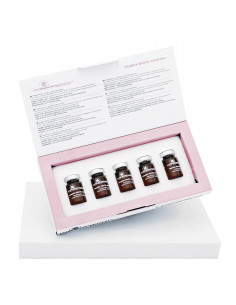
Vi Serum – Cosmetic care cream for sensitive skin

Vi Serum – Cosmetic care cream for demanding skin after aesthetic treatments

Vi Serum is a high-quality, fragrance-free skincare cream for cosmetic use after intensive skin treatment, e.g. microneedling, laser or peeling. The formula has been specially developed for sensitive skin and supports the natural skin barrier with hydrating and soothing active ingredients. Made in Germany, vegan and dermatologically tested.

Contents: 25ml

100102
immediately available
€24.95

€998.01 per Liter

incl. tax, plus shipping Shipping excluded | Delivery time 2 - 3 days within Germany* | Abroad may vary

Graduated price - order from quantity Unit price You save in total
2 €22.66 €4.58
3 €22.36 €7.77
5 €22.06 €14.45
10 €21.77 €31.80
 

prpmed Professional · Care

The cream for the days following the treatment

Vi Creme is a kosmetische Pflegecreme for cosmetic aftercare – for the time when the skin returns to its everyday life after an aesthetic treatment. 49 components They are listed in the declaration; almost half of them are substances that also occur in the stratum corneum itself: ceramides, cholesterol, squalane, urea, amino acids.

The INCI list comprises 49 ingredients. These include ceramides, cholesterol, squalane, panthenol, ectoin, and retinyl palmitate. Made in Germany, 25 ml tube.

Product type
Cosmetic product (Regulation (EC) No 1223/2009)
Mission
Cosmetic aftercare on intact skin, face and neck
Contents
1 tube of 25 ml
Components
49 according to INCI
texture
Creamy and light, absorbs quickly
Production
Germany
Submission
Exclusively for commercial users

The recipe

Four building blocks that make up the cream

The information describes which substances are contained and what they are used for in a formulation. It does not constitute a statement about the outcome of a treatment.

01Barrier lipids

Ceramides, cholesterol, sterols

The matrix between the corneocytes consists primarily of three lipid classes: ceramides, cholesterol, and free fatty acids. The formula contains representatives of these same classes: ceramides NP, ceramides AP, phytosphingosine, cholesterol, and beta-sitosterol.

INCI: Ceramide NP · Ceramide AP · Phytosphingosine · Cholesterol · Beta-sitosterol

02Moisture retention factor

Eleven substances that bind water

Urea, sodium lactate, sodium PCA, betaine, ectoin, sugars, and five amino acids. This group of substances is known in skin physiology as the natural moisturizing factor (NMF); it binds water in the stratum corneum.

INCI: Urea · Sodium Lactate · Sodium PCA · Betaine · Ectoine · Glycine · Alanine · Lysine HCl · Proline · Fructose · Inositol

03Oils & Lipids

Nine fats for texture

Shea butter, sweet almond oil, apricot kernel oil, pomegranate seed oil and soybean oil, plus squalane, squalene and two light esters. These make the cream moisturizing and determine how quickly it is absorbed.

INCI: Butyrospermum Parkii Butter · Prunus Amygdalus Dulcis Oil · Squalane · Caprylic/Capric Triglyceride · among others.

04Vitamins & Peptides

Panthenol, niacinamide, vitamins C and E

Panthenol (provitamin B5), niacinamide (vitamin B3), ascorbyl glucoside (vitamin C derivative), tocopherol and tocopheryl acetate (vitamin E), and two synthetic peptides. Tocopherol also protects the oils in the formula from oxidation.

INCI: Panthenol · Niacinamide · Ascorbyl Glucoside · Tocopherol · Tocopheryl Acetate · Acetyl Hexapeptide-8 · Trifluoroacetyl Tripeptide-2

Interactive · Structure of the stratum corneum

Why one cream contains three lipid classes

The stratum corneum is structured like a wall: corneocytes as bricks, a lipid matrix as mortar. This matrix consists of three classes of substances. Choose one – the graphic highlights it, and the formula strip below marks the corresponding entries.

Horn layer – brick-mortar model skin surface living epidermis

All three classes together form the lipid matrix. Tap a class to highlight it in the graph and formula strip.

Schematic representation of the structure of the stratum corneum based on general skin physiological knowledge. It does not describe the effect of this product and does not show any expected result.

Interactive · Declaration

49 components, seven questions

The most frequently asked questions during consultations – each checked directly against the INCI list. Tap a question; the relevant entries will be highlighted in the formula bar and the table.

Seven questions, seven answers directly from the declaration. Tap a question.

The 49 fields follow the specified INCI order. Ingredients of 1% or more are always listed in descending order by weight; ingredients below 1% are listed in any order. Tap a field or ingredient group.

Complete INCI list with function (49 ingredients)
No.INCIMaterial groupFunction in this recipe
1AquaWaterWater – the basis of the emulsion.
2Pentylene GlycolHumectantHumectant and solubilizer; also helps protect the formulation from microbial colonization.
3GlycerinHumectantClassic humectant, binds water in the stratum corneum.
4Glyceryl StearateEmulsifiersEmulsifier; holds the oil and water phases together.
5Prunus Amygdalus Dulcis OilOils & LipidsSweet almond oil.
6Butyrospermum Parkii ButterOils & LipidsShea butter; gives the cream its moisturizing properties.
7Decyl CocoateOils & LipidsLight ester of coconut fatty acids; improves absorption.
8Glyceryl DibehenateConsistency & TextureThickening agents from the behenic acid family.
9SqualaneOils & LipidsSaturated, very stable lipid; also occurs in a similar form in skin sebum.
10Caprylic/Capric TriglycerideOils & LipidsLight conditioning oil, spreads well.
11Hydrogenated PhosphatidylcholineEmulsifiersHardened lecithin; forms fine, skin-like structures with the lipids.
12PanthenolVitamins & conditioning agentsProvitamin B5, a skincare ingredient used for decades.
13TribeheninConsistency & Textureconsistency enhancer.
14Glyceryl BehenateConsistency & TextureThickener, stabilizes the emulsion.
15Propylene GlycolHumectantHumectants and solubilizers.
16Tocopheryl AcetateVitamins & conditioning agentsStable vitamin E ester.
17Acrylates/C10-30 Alkyl Acrylate CrosspolymerConsistency & TextureThickening agent; determines texture and stability.
18Sodium LactateNatural moisture-retaining factorLactic acid salt – a component of the skin's natural moisturizing factor.
19Xanthan GumConsistency & TexturePlant-based thickener.
20Sodium PCANatural moisture-retaining factorA key component of the natural moisturizing factor.
21BetaineNatural moisture-retaining factorMade from sugar beets; binds water.
22Prunus Armeniaca Kernel OilOils & LipidsApricot kernel oil.
23Punica Granatum Seed OilOils & LipidsPomegranate seed oil.
24GlycineNatural moisture-retaining factorAmino acid; part of the natural moisturizing factor.
25AlanineNatural moisture-retaining factorAmino acid.
26Ascorbyl GlucosideVitamins & conditioning agentsStable vitamin C derivative.
27DextranConsistency & TexturePolysaccharide; improves distribution and skin feel.
28EctoinNatural moisture-retaining factorA molecule known from salt-loving microorganisms that binds water in a hydration shell.
29Lysine HClNatural moisture-retaining factorAmino acid.
30ProlineNatural moisture-retaining factorAmino acid.
31AlcoholsolventsSolvent; also helps protect the formulation. In small quantities, far down the ingredient list.
32Lactic AcidpH adjustmentLactic acid; adjusts the pH value and is part of the natural moisturizing factor.
33Ceramide NPBarrier lipids of the stratum corneumCeramide – one of the three lipid types that make up the matrix between the corneocytes.
34Glycine Soja OilOils & LipidsSoybean oil.
35CholesterolBarrier lipids of the stratum corneumSterol – the second of the three lipid types in the stratum corneum.
36PhytosphingosineBarrier lipids of the stratum corneumSphingoid base; chemical building block of ceramides.
37Sodium HydroxidepH adjustmentTogether with the lactic acid, it adjusts the pH value.
38Retinyl PalmitateVitamins & conditioning agentsVitamin A esters. Vitamin A compounds are subject to quantitative limits in the Cosmetics Regulation (Annex III, amended by Regulation (EU) 2024/996).
39TocopherolVitamins & conditioning agentsVitamin E; also protects the oils in the formula from oxidation.
40Beta-SitosterolBarrier lipids of the stratum corneumPlant sterol, related to the cholesterol of the stratum corneum.
41FructoseNatural moisture-retaining factorSugar; binds water.
42InositolNatural moisture-retaining factorSugar alcohol; part of the natural humectant.
43NiacinamideVitamins & conditioning agentsVitamin B3 amide, one of the most researched skincare ingredients in cosmetics.
44UreaNatural moisture-retaining factorUrea – by volume one of the largest components of the natural moisturizing factor.
45Aesculus Hippocastanum Seed ExtractPlant extractHorse chestnut seed extract.
46SqualeneOils & LipidsUnsaturated precursor of squalane; also found in skin sebum.
47Acetyl Hexapeptide-8PeptidesSynthetic peptide consisting of six amino acids.
48Ceramide APBarrier lipids of the stratum corneumThe second ceramide in the formula, with a different head part than Ceramide NP.
49Trifluoroacetyl Tripeptide-2PeptidesSynthetic peptide consisting of three amino acids.

Declaration according to Article 19 of Regulation (EC) No. 1223/2009, in order of decreasing weight percentage; below 1%, the order is unrestricted. The information on the packaging of the delivered product is always authoritative.

Interactive · Time

From what point is the cream used?

For cosmetic aftercare, it is crucial that the intended application area is intact. Select a phase.

  1. Phase 1Treatment
  2. Phase 2Skin still open
  3. Phase 3Skin closed
  4. Phase 4Construction phase
  5. Phase 5Long-term care

Not yet. This product page specifies that Vi Cream should only be applied to intact skin. After procedures where the skin barrier is temporarily compromised, the starting point depends on the specific treatment protocol and professional assessment.

What is applied to the skin during this phase depends on the treatment protocol and on products with the appropriate intended purpose.

  1. Phase 1Treatment
  2. Phase 2Skin still open
  3. Phase 3Skin closed
  4. Phase 4Construction phase
  5. Phase 5Long-term care

Cosmetic aftercare begins once the skin barrier has closed. Apply a thin layer to cleansed, dry skin; do not massage in.

The treating professional assesses when this point is reached – it depends on the procedure, penetration depth and skin type.

  1. Phase 1Treatment
  2. Phase 2Skin still open
  3. Phase 3Skin closed
  4. Phase 4Construction phase
  5. Phase 5Long-term care

Repeat as needed, according to the manufacturer's instructions and individual skincare requirements. The formula contains barrier lipids and components of the stratum corneum's natural moisturizing factor.

The cream does not contain a UV filter. For daytime use, separate sun protection should be applied according to your individual skincare or treatment protocol.

  1. Phase 1Treatment
  2. Phase 2Skin still open
  3. Phase 3Skin closed
  4. Phase 4Construction phase
  5. Phase 5Long-term care

As regular morning and evening care after cleansing, even independently of any treatment.

The formula contains retinyl palmitate, a vitamin A ester. Those using other vitamin A products concurrently should keep an eye on the total amount.

The phases are a guideline, not a treatment protocol. The timing, frequency, and tolerability are assessed by the treating professional on a case-by-case basis.

Interactive · Calculation

Tube coverage and tiered pricing

25 ml sounds like a small amount, but with a thin application it will last for weeks. Adjust your preference.

Example calculation: At 0.5 ml per application, 25 ml yields approximately... 50 applications – approximately 25 days with twice-daily use.

The tiered pricing for this item is shown in the price box at the top of this page. All prices include VAT, plus shipping costs.

Application

Four steps

  1. Check skinApply only once the skin barrier has closed. Do not apply the cream to open, weeping, or bleeding skin.
  2. Clean and dryGently clean, pat dry, do not rub. If necessary, perform a preparatory step according to the protocol.
  3. Apply thinlyApply a thin, appropriate amount to the face and neck and smooth it on gently. Avoid the eye and lip area.
  4. Repeat and protectRepeat as needed. The cream does not contain a UV filter; for daytime use, apply a separate sunscreen according to your protocol.

Manufacturer's instructions: Apply gently to the affected areas after cleansing the skin. For external use only. The treating healthcare professional is responsible for the timing, indication, and documentation of application.

Product data & notes

The most important information at a glance

Product data

Trade name
Vi Creme – cosmetic care cream
Article number
100102
Contents
1 tube of 25 ml
Product type
Cosmetic product according to Regulation (EC) No. 1223/2009
Components
49 according to INCI, including 5 barrier lipids and 11 substances of the natural moisturizing factor
Fragrance & Color
Perfume / Dye: not listed in the INCI list
Application area
Face and neck, intact skin, external
Production
Germany
storage
Store in a cool, dry place; keep the tube closed.
Brand / Economic actor
prpmed Funkner e. K., Siemensstraße 32, 35440 Linden, Germany

Read before use

  • Only on intact skin. Do not apply to open, weeping, or bleeding skin. Cosmetic products are intended for use on intact skin; for treatment immediately following barrier-opening procedures, products with appropriate formulations are available.
  • Contains a vitamin A ester. Retinyl palmitate is listed at position 38 in the INCI list. Cosmetic products containing retinyl palmitate are subject to the regulations in Annex III of the Cosmetics Regulation. Mandatory warning: "Contains Vitamin A. Consider your daily intake before use."
  • No UV filter. When used during the day, separate sun protection should be taken into account according to the respective care or treatment protocol.
  • Only externally. Do not inject or ingest. Avoid contact with eyes and mucous membranes; if contact occurs, rinse thoroughly with water.
  • Check the ingredients. The product contains, among other ingredients, oils from sweet almond, soy, apricot kernel and pomegranate seeds, shea butter, and two synthetic peptides. If there are known intolerances, review the INCI list with the customer beforehand.
  • For professional use only. Sale exclusively to commercial users and their authorized representatives. Keep out of reach of children.

Practical questions

Frequently Asked Questions

When can the cream be used after treatment?

This product page specifies that Vi Creme should only be applied to intact skin. After barrier-opening procedures, the treating professional will assess when cosmetic aftercare can begin; the timeline above is for guidance only.

What distinguishes this cream from an ordinary moisturizing cream?

The composition. In addition to the usual humectants, it contains five barrier lipids (two ceramides, phytosphingosine, cholesterol, beta-sitosterol) and eleven substances that contribute to the natural moisturizing factor of the stratum corneum. The formula band above shows where these entries are located in the list.

What is the fragrance declaration?

The INCI list does not include an entry for "Parfum". The declaration on the packaging of the delivered product is authoritative.

Why is there no preservative listed?

Because no substance from Annex V of the Cosmetics Regulation is used. The formulation is instead protected by several excipients simultaneously – pentylene glycol, propylene glycol, and alcohol. This is standard practice in cosmetics and does not apply to other formulations.

Does the cream contain retinol?

It contains Retinyl Palmitate a vitamin A ester, not retinol itself. Retinyl palmitate is subject to the restrictions and labelling requirements of Annex III of the Cosmetics Regulation as amended by Regulation (EU) 2024/996. The required statement reads: “Contains Vitamin A. Consider your daily intake before use.”

How long does one tube last?

That depends on the amount applied. At 0.5 ml per application, 25 ml is theoretically enough for around 50 applications, or about 25 days with twice-daily application. The calculator above will calculate your value based on the current price on this page.

Can the cream be applied under makeup or sunscreen?

Yes. It absorbs quickly and doesn't leave a heavy film. Sunscreen should be applied over it during the day, as the cream does not contain a UV filter.

Cosmetic product according to Regulation (EC) No. 1223/2009. Sale exclusively to professional users and their authorized representatives; the regulations for cosmetic products and their proper use must be observed. The information on this page is for product information purposes only and does not replace a professional assessment in individual cases. The labeling, INCI list, and manufacturer's information of the delivered product are authoritative.

Features
Vi Serum is a fragrance-free, vegan skincare cream made in Germany – dermatologically tested, with ceramides, ectoine, hyaluronic acid precursors, and multivitamins for demanding skincare after cosmetic procedures.
4170000035640
PRP TECHNOLOGY FOR PROFESSIONAL USERS

PRPmed.de – Specialist shop for PRP technology

Carefully selected products for the professional collection, preparation and application of platelet-rich plasma.

Focused specialist range Practical product data Shipping to many countries
PRPmed.de

What is PRP?

PRP stands for platelet-rich plasma. Centrifugation is used to obtain a plasma fraction with an increased platelet concentration from a blood sample. PRP is used and scientifically investigated in a range of medical and aesthetic fields. A qualified practitioner assesses whether an application is appropriate based on the indication and the procedure used.

PRPmed.de

Products for structured PRP workflows

01

PRP and PRF tubes

Different tube systems for defined preparation workflows, with clear information on materials, additives and intended purpose.

02

Centrifuges

Compact devices and coordinated sets for practices and laboratories. RCF, rotor, tube compatibility and manufacturer instructions are key.

03

Needles and accessories

KIPIC® injection needles, blood collection systems, syringes and complementary consumables for professional users.

✓

Clear information instead of broad promises

When selecting products, we look for transparent technical data, a clearly defined intended purpose and sensible component compatibility. Many product pages include information on materials, fill volume, additives, centrifugation and regulatory status. A single product cannot guarantee a medical outcome.

i

Personal support

Our customer service team assists with questions about products, availability and suitable accessories. Medical or therapeutic decisions remain the responsibility of appropriately qualified professionals.

Find the right materials for your workflow

Compare tubes, centrifuges and complementary PRP products directly in the specialist shop.

Note: PRPmed.de does not provide medical advice or treatment recommendations. Product selection, preparation and use must be carried out by qualified professionals in accordance with the intended purpose and instructions for use.

GPSR – General Product Safety Regulation

Responsible Economic Operator according to GPSR:

prpmed Funkner e.K.

Siemensstraße 32
35440 Linden

Germany

Phone: +49 6043 9862 817

Email: [email protected]

Customers who bought this product also bought:

Product added to wishlist
Product added to compare.
group_work Cookie consent