PRP / PRF in Hair Medicine

PRP After a Hair Transplant

Timing, current research, and significance of PRP preparation in the context of postoperative follow-up care and a reproducible clinical protocol.

A hair transplant does not end with the placement of the grafts. The post-operative phase, the condition of the local tissue, blood flow to the scalp, the handling of the grafts, and the accompanying aftercare are also important factors in determining the final result. It is precisely in this context that PRP, or platelet-rich plasma, has been discussed for several years as a complementary option.

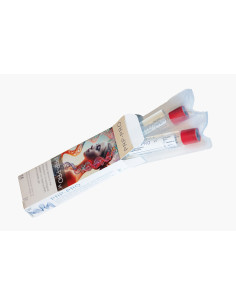
PRP is derived from the patient's own blood. After the blood is drawn, it is processed in a suitable PRP tubes transferred and centrifuged. This separates the blood components, allowing a plasma-containing fraction with an increased platelet concentration to be obtained.

Technical Classification

In hair medicine, PRP is being studied in connection with androgenetic alopecia, hair transplants, and postoperative scalp regeneration, among other conditions. The study data to date point to some interesting approaches, but the evidence remains mixed.

For Professional Users

Key factors include patient selection, transplantation technique, PRP protocol, platelet concentration, timing of application, and follow-up. PRP should not be marketed as a miracle cure.

What is PRP?

PRP stands for platelet-rich plasma. It is a preparation derived from a patient’s own blood that can contain a higher concentration of platelets than whole blood. Platelets contain, among other things, growth factors and signaling proteins that play a role in biological repair and regulatory processes.

To prepare the solution, blood is drawn from the patient. This is followed by centrifugation. Depending on the system used, different fractions are produced, from which the PRP is extracted. The composition of the final preparation depends heavily on the system used.

Key Factors

  • Tube Type
  • Anticoagulant
  • Styling gel or no styling gel
  • Blood volume
  • Centrifugation time
  • RCF value
  • Rotor radius of the centrifuge
  • Plasma Fraction Collection Techniques
  • Time between preparation and use
That is precisely why PRP is not a uniform, standardized product. Two clinics can both use “PRP” and still produce very different preparations.

PRP After Hair Transplantation: What Do Current Studies Show?

The current literature does not support blanket claims, but it does suggest that PRP plays a clinically interesting role as a complementary treatment in selected therapeutic approaches.

Systematic Review

A systematic review published in 2025 on PRP in the context of hair transplants concludes that PRP, when used as an adjunctive treatment, may be associated with higher hair density, improved graft survival, and earlier visible hair growth. At the same time, only a few controlled studies were included; protocols, measurement methods, and PRP preparation were not standardized.

About the Study

Meta-Analysis on PRP for Alopecia

A large meta-analysis from 2025 included 43 randomized controlled trials with a total of 1,877 participants. The analysis linked PRP to improvements in hair density, reduced hair loss, and patient satisfaction. However, no consistently significant benefits were observed for hair thickness or other follicle-related parameters.

About the Study

ISHRS Classification

The ISHRS also describes PRP in the context of hair transplantation as a procedure with potential applications, but expressly warns against uncritical portrayals of it as a “miracle cure” and points out the need for well-controlled studies.

About the ISHRS

Based on current data, PRP may be an interesting complementary option in the field of hair transplantation. However, it does not guarantee improved graft take, increased hair density, or permanent hair growth.

Potential Applications of PRP in Hair Transplantation

PRP During Hair Transplantation

PRP can be considered as a complementary procedure in the context of hair transplantation, for example in connection with the treatment of the recipient site or the handling of grafts. It does not guarantee the protection of the grafts, but rather represents a well-researched complementary approach within an overall surgical plan.

PRP After a Hair Transplant

After a hair transplant, the primary focus is initially on scalp wound healing. In this context, PRP is being discussed as an autologous adjunct that can be incorporated into certain postoperative care regimens. The specific timing depends on the surgical technique, the condition of the skin, and the physician’s assessment.

PRP for Concomitant Alopecia

Many patients who undergo hair transplants continue to suffer from androgenetic alopecia. PRP is also being studied in the literature in this context. Depending on the findings, it may be part of a medical treatment plan.

When is PRP recommended after a hair transplant?

There is no one-size-fits-all answer to this question. PRP may be considered if the treating physician believes it would be clinically beneficial as part of the individual’s post-treatment care plan and there are no relevant contraindications.

Possible decision-making criteria

  • Condition of the scalp after the procedure
  • Transplantation techniques, such as FUE or FUT
  • Extent of postoperative irritation
  • The Wound Healing Process
  • Comorbidities

Other relevant factors

  • Medications, especially anticoagulants
  • Existing androgenetic alopecia
  • The patient's expectations
  • Quality and Standardization of PRP Processing
A proper PRP procedure does not begin with the injection, but rather with blood collection, tube selection, and centrifugation.

Why PRP Tubes Are Important in Hair Treatment

PRP tubes are not just any consumable. They are part of the processing system and affect how blood components are separated during centrifugation.

Depending on the system, PRP tubes may contain an anticoagulant, a separation gel, or no specific additives. For PRP processing following a hair transplant, it is crucial that the tubes, centrifuge, and protocol are compatible.

Suitable PRP tubes They support a reproducible procedure in clinical practice. However, they do not replace the medical indication, proper blood collection, aseptic technique, and correct use.

Relevant for professional users

  • Compatibility with the centrifuge being used
  • Clearly defined blood volume
  • Appropriate Anticoagulant Level
  • Reproducible separation of blood components
  • Safe Handling in Daily Practice
  • Documentable Centrifugation Protocol
A common mistake is to specify the rotational speed exclusively in RPM. RCF—that is, relative centrifugal force—is a more technically meaningful measure.

How many PRP sessions are needed after a hair transplant?

There is no universal protocol that applies to all patients. Studies and clinical protocols differ significantly. Some approaches involve early application once the initial wound-healing phase is complete, while others do not use PRP until several weeks or months have passed. The number of sessions also varies.

In practice, treatment series are often discussed—for example, several sessions spaced a few weeks apart. Whether this is appropriate depends on the individual's condition and the goal of the treatment.

Medical Determination

The number and timing of potential PRP treatments are determined by a physician. Factors such as surgical technique, the healing process, scalp findings, existing alopecia, and the treatment plan to date all play a role in this decision.

What Patients Should Realistically Expect

PRP is not a substitute for a professionally performed hair transplant. Nor does it guarantee that transplanted grafts will take better or that existing hair loss will be stopped.

PRP is being studied as a complementary option in the field of hair medicine. Depending on the individual’s specific situation, it can be incorporated into a medical follow-up or treatment plan. The actual course of treatment varies from person to person and depends on many factors.

Quality of Hair Transplants

Graft Handling

Blood flow to the recipient site

Density Planning

Genetic predisposition

Existing Hair Loss

Medications

Follow-up Care

Nicotine, Diet, and Overall Health

Risks and Limitations of PRP

Possible side effects

  • Redness
  • Swelling
  • Feeling of pressure
  • Hematoma
  • Pain at the injection site
  • Short-term local irritation
  • Infection resulting from non-sterile practices
  • Lack of clinical effect

Precautions

Contraindications and precautions should be evaluated by a physician. Factors that may be relevant include, among others, coagulation disorders, acute infections, certain changes in blood counts, immunosuppressive therapies, or medications that affect blood clotting and platelet function.

The ISHRS also emphasizes that, when using PRP in hair transplantation, sterile technique is crucial at every step, and that not every patient’s situation is automatically suitable for PRP.

Implications for Physicians and Specialized Users

For medical practices and clinics, PRP following a hair transplant is primarily a procedural issue. Its effectiveness cannot be considered in isolation from the preparation process.

Indications

Clear indications and realistic patient counseling.

Standardization

Appropriate PRP tubes, a compatible centrifuge, and standardized RCF parameters.

Process reliability

Aseptic blood collection and processing, a documented procedure, proper administration, and structured follow-up.

Conclusion

PRP following a hair transplant is a topic of professional interest. Current research shows promising results, particularly with regard to hair density and, possibly, post-transplant outcomes. At the same time, the available data are not consistent enough to make blanket claims about success.

For medical professionals, the key point is controlled use. PRP should only be used when medically indicated, with appropriate materials and a reproducible protocol.

When it comes to hair transplants in particular, the result does not depend on any single factor. What matters most is the combination of surgical technique, graft handling, scalp condition, post-operative care, the patient’s suitability, and the quality of the PRP preparation.

FAQ

What is PRP after a hair transplant?

PRP stands for platelet-rich plasma and is derived from the patient's own blood. Following a hair transplant, PRP is being considered as a complementary option as part of post-operative care regimens.

When can PRP be used after a hair transplant?

The timing depends on the healing process, the surgical technique, and the doctor's assessment. It is not practical to provide general guidelines.

Does PRP improve the results of a hair transplant?

Some studies show positive results, such as in terms of hair density, graft survival, or early signs of growth. However, the available data is inconsistent.

Why are PRP tubes important?

PRP tubes are part of the processing procedure. Together with the centrifuge, RCF value, centrifugation time, and collection technique, they influence the separation of blood components.

Is PRP safe after a hair transplant?

PRP is derived from the patient's own blood. However, local side effects may occur. The key factors are sterile technique, proper indication, and professional administration.

How many PRP sessions are needed after a hair transplant?

There is no one-size-fits-all approach. The number of sessions depends on the individual findings, the follow-up care plan, the condition of the hair, and the medical treatment plan.

Related products

Cellmula HD Ampoules - Hair regrowth
immediately available
Serum & Ampoules

CELLMULA HD Scalp & Hair Care Ampoules (5 x 5 ml)

Cellmula
100332
€84.99
€3,399.60 per Liter
CELLMULA HD is a professional scalp & hair care solution in ampoules. The formula with selected peptide components and vitamins supports a balanced-looking scalp and a thicker-looking hair appearance as part of cosmetic treatment routines. Content: 5 x 5 ml Highlights: Hygienic single-dose ampoules Peptide/growth-factor components...
PRP Tubes | Vi PRP-PRO (PU 2 pcs.) PRP Tubes | Vi PRP-PRO (PU 2 pcs.) 2
immediately available
PRP

PRP Tubes | Vi PRP-PRO (PU 2 pcs.)

PRPMED Professional Cosmetic Treatments
1001001
€36.00
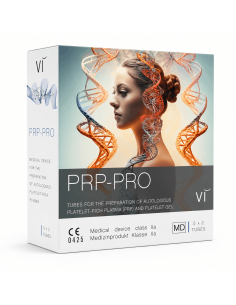
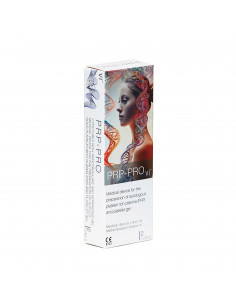
Vi PRP-PRO PRP Tubes – Set of 2 Sterile PRP tube set for the professional preparation of platelet-rich plasma. Each borosilicate glass tube is designed for approximately 9 ml of blood and contains 0.8 ml of sodium citrate and a thixotropic separator gel. CE 0425, Class IIa medical device 2 sterile PRP tubes per sales unit Standard centrifugation:...
PRP tubes | PRP-Pro | PU 10 pcs. PRP tubes | PRP-Pro | PU 10 pcs. 2
immediately available
PRP

PRP tubes | Vi PRP-PRO | with Anticoagulant PU 10 pieces

PRPMED Professional Cosmetic Treatments
100101
€131.00
The VI PRP-PRO glass tube offers a modern solution for producing platelet-rich plasma (PRP) and ensures additional stability and reliability in treatments with a wall thickness of 2.4 mm. Developed with innovative technology and EC-certified (0425-MED-004180-00), it guarantees the highest level of safety and efficiency. Key Features: Certified...
Product added to wishlist
Product added to compare.
group_work Cookie consent