Shopping Cart
01 · Anatomy
What happens in carpal tunnel syndrome?
The carpal tunnel contains several flexor tendons and the median nerve. If pressure rises in this confined space, the nerve may become irritated or damaged. Symptoms typically affect the thumb, index and middle fingers, as well as the thumb side of the ring finger.
Typical symptoms
- night-time tingling or numbness
- pain in the hand and forearm
- reduced grip and thumb strength
- symptoms usually spare the little finger
Warning signs
Persistent numbness, visible wasting of the thenar muscles or increasing loss of strength may indicate advanced nerve damage. Specialist medical assessment should not be delayed in these cases.
02 · Diagnosis
Diagnosis and established treatment pathways
Diagnosis is based on medical history and clinical examination. Depending on the findings, ultrasound or electrophysiological testing can help determine severity and clarify possible differential diagnoses. Treatment is guided not only by symptom duration, but above all by the degree of nerve damage and its cause.
Conservative treatment
For mild or time-limited symptoms, options may include a night wrist splint and modification of aggravating activities. Corticosteroid injections can provide temporary symptom relief, but have not shown a reliably sustained benefit.
Surgical decompression
Progressive weakness, clear neurological deficits or an inadequate response to conservative treatment may make surgical decompression of the median nerve necessary. PRP must not delay medically indicated decompression.
03 · Proposed mechanism
What is PRP intended to do around the compressed nerve?
PRP stands for platelet-rich plasma. The patient's own blood is processed to obtain a plasma fraction with a higher platelet concentration. The signalling molecules it contains form the basis of the hypothesis that PRP could influence local inflammatory responses or regenerative processes around an irritated nerve.
Biologically plausible
- Platelets release various signalling proteins.
- Local tissue responses could be influenced.
- Clinical studies show some short-term improvements.
Not proven by this
- PRP does not mechanically enlarge the carpal tunnel.
- Lasting nerve regeneration has not been established.
- PRP has not been shown to replace necessary surgery.
04 · Evidence
What do clinical studies and meta-analyses show?
Several small randomised studies report better symptom or function scores after a single PRP injection, usually performed under ultrasound guidance. However, the studies differ substantially in PRP composition, volume, comparator treatment, severity and follow-up period.
Overall evidence
There are short- and medium-term signals of benefit. The current evidence is insufficient to establish a reproducible additional long-term benefit.
very uncertainwell established
2017
Placebo-controlled study
After twelve weeks, a clinically defined improvement was observed more often in the PRP group. The small sample and short follow-up limit the strength of the findings.
Open study on PubMed2019
PRP compared with corticosteroid
Both groups improved within three months. PRP performed better on several clinical and neurophysiological measures. This did not establish a long-term advantage.
Open study on PubMed2022
Meta-analysis of randomised studies
The analysis found indications of improvements in symptoms, pain and function. At the same time, preparation methods, dosing and study quality remained inconsistent.
Open meta-analysis on PubMed2025
Subjective benefits, inconsistent objective findings
A more recent meta-analysis found partly better symptom and function scores. For nerve-conduction parameters and median-nerve cross-sectional area, most comparisons showed no confirmed differences.
Open meta-analysis on PubMed05 · Guideline
Why does the guideline remain cautious?
The 2024 AAOS guideline specifically assesses long-term benefit. It found no convincingly demonstrated long-term advantage for either leukocyte-rich or leukocyte-poor PRP in the non-operative treatment of carpal tunnel syndrome.
The apparent contradiction can be explained: individual studies and meta-analyses detect signals during the first weeks or months. A guideline, by contrast, asks whether a treatment produces reliable, reproducible and lasting clinically relevant benefits. The available evidence is not sufficient for that conclusion.
No reliable evidence that surgery can be avoided
A temporary reduction in pain or tingling does not automatically mean that the mechanical compression of the nerve has been resolved. It has not been reliably shown that PRP reduces the rate of later surgery.
06 · Limitations
For which situations is the evidence insufficient?
The available findings mainly come from selected patients with mild to moderate idiopathic disease. They cannot readily be transferred to advanced, secondary or postoperative cases.
Insufficiently studied
- marked muscle weakness or muscle atrophy
- persistent sensory deficits
- space-occupying lesions or acute injuries
- pregnancy and relevant comorbidities
- recurrence after surgery
Unresolved protocol questions
- optimal platelet concentration
- role of leukocytes
- injection volume and number of applications
- patient selection
- effects beyond twelve months
The injection is performed close to the median nerve, tendons and blood vessels. It requires medical expertise, sterile technique and reliable anatomical orientation. Many studies used ultrasound guidance.
07 · Medical professionals
Technical PRP workflow: keep preparation separate from indication
The decision whether PRP is medically justifiable in a specific case of carpal tunnel syndrome must remain separate from technical preparation. Tubes and centrifuges do not determine the indication. They must be selected and used according to their intended purpose, instructions for use, internal SOP and compatibility.
Relevant technical product information at prpmed.de
PRP preparation
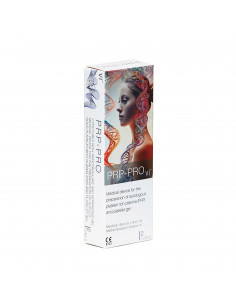
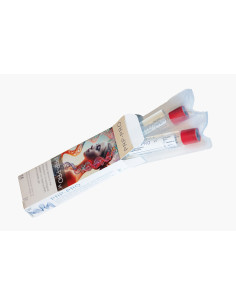
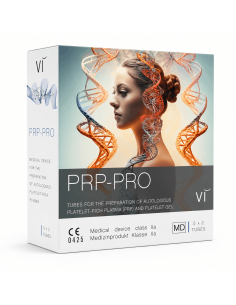
Vi PRP-PRO PRP tubes
Technical information on borosilicate glass, sodium citrate, separation gel, Class IIa status and the manufacturer-specific standard protocol.
View Vi PRP-PRO
Centrifugation
Hettich EBA 200 MD
Product information for the Class IIa medical-device centrifuge with integrated fixed-angle rotor and adjustable RCF and speed.
View EBA 200 MDThe product links are provided for technical information and procurement by medical professionals. They do not constitute a recommendation for treating carpal tunnel syndrome.
08 · FAQ
Frequently asked questions about PRP for carpal tunnel syndrome
Is PRP a standard treatment for carpal tunnel syndrome?
No. The current guideline assessment does not identify a convincingly demonstrated long-term benefit. PRP is therefore not a routine non-operative standard treatment.
Does PRP work better than cortisone?
Some small studies suggest possible medium-term advantages. However, the findings are inconsistent and a lasting benefit has not been demonstrated.
Can PRP prevent the need for surgery?
There is currently no reliable evidence for this. In advanced neurological deficits, necessary decompression must not be delayed.
How many PRP injections are required?
There is no generally accepted regimen. Many studies investigated a single injection. This does not support a general recommendation for repeated applications.
Does PRP regenerate a damaged median nerve?
Such an effect is discussed on biological grounds, but has not been adequately demonstrated clinically in carpal tunnel syndrome. Symptom improvement is not equivalent to lasting structural nerve regeneration.
Editorial team and review
Transparency about the medical content
Specialist editorial team
prpmed.de specialist editorial team
Research, editorial assessment and separation of medical content from technical product information.
Medical review
Medical review pending
Before publishing a reviewer statement, the reviewer's name, specialty, profile and review date must be added following actual medical approval.
Sources
- American Academy of Orthopaedic Surgeons: Management of Carpal Tunnel Syndrome, guideline summary.
- Randomised placebo-controlled study of a PRP injection for carpal tunnel syndrome.
- Randomised study: PRP compared with corticosteroid.
- Meta-analysis of randomised studies of PRP for carpal tunnel syndrome, 2022.
- Systematic review and meta-analysis of efficacy and safety, 2025.
This article provides a factual overview of the current research. It is not a diagnosis, treatment recommendation or instruction for performing a PRP injection. Medical decisions require individual assessment by appropriately qualified physicians.