Shopping Cart
Professional article for medical users
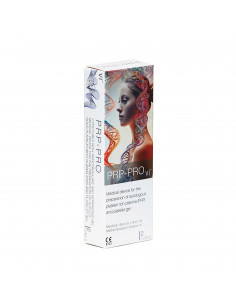
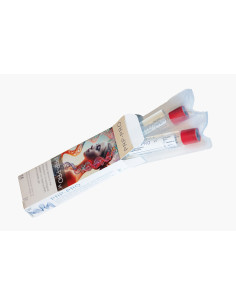
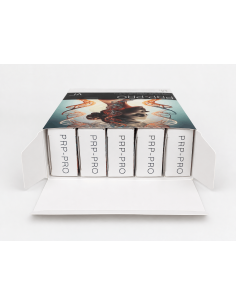
PRP tubes: structure, use and selection criteria
PRP tubes are used for the standardized preparation of platelet-rich plasma from venous autologous blood. Intended purpose, sterility, material, additives and a suitable centrifugation protocol are decisive.
Info: A PRP tube is intended for PRP preparation and for separating blood components after collection and centrifugation. Depending on the system, it may contain sodium citrate, a separation gel or no separating additives. The manufacturer’s intended purpose and instructions for use are decisive.
Note: This article is intended for medical professionals. It does not replace individual indication, instructions for use, manufacturer information or national professional regulations. No therapeutic, efficacy or success claims are made.
What are PRP tubes?
PRP tubes are special tubes for preparing Platelet-Rich Plasma from autologous blood. They help separate blood components in a controlled way after centrifugation.
Definition Unlike pure diagnostic tubes, the focus is not laboratory analysis, but the preparation of a defined plasma fraction according to a suitable protocol. The manufacturer’s intended purpose determines whether a tube is suitable for the planned medical workflow.
Technical workflow
- Blood is collected under suitable hygienic conditions.
- The blood is filled into a sterile PRP tube intended for this purpose.
- The tube is processed in a compatible centrifuge according to manufacturer instructions.
- After centrifugation, the target plasma fraction can be processed by qualified professionals.
What professional users should check
| CE/MDR and intended purpose | Check conformity information, instructions for use and manufacturer documentation. |
| Sterility | Check sterile packaging, expiry date, integrity and storage conditions. |
| Anticoagulant | Match type and amount of additive with the protocol. |
| Separation gel | Check whether the selected workflow provides for separation gel. |
| Centrifuge compatibility | Match RCF, runtime, rotor and tube size with the protocol. |
| Material and fill volume | Observe tube volume, stopper and processing notes. |
PRP tubes, laboratory tubes and PRF tubes compared
| PRP tubes | Preparation of platelet-rich plasma | Often with sodium citrate; depending on system with separation gel. |
| Laboratory tubes | Diagnostic blood testing | Not automatically intended for later return of blood components. |
| PRF tubes | Preparation of Platelet-Rich Fibrin | Often without anticoagulant; rapid processing required. |
Fields of use described in the literature
PRP is discussed in several medical fields, including orthopaedics, dermatology, aesthetic medicine, dentistry, oral and maxillofacial surgery and wound management. This does not create a general treatment recommendation; indication, performance and assessment remain the responsibility of the treating professional.
Selecting suitable PRP tubes
When purchasing, the decisive question is whether the tube fits the planned PRP preparation, the available centrifuge and the intended protocol. The product reference remains factual: selection criteria, not a general promise of use.
- For classic PRP preparation: check intended purpose, anticoagulant and separation gel.
- For reproducible processing: align RCF, rotor, runtime and tube size.
- For PRF-related procedures: check tubes without anticoagulant and matching protocols separately.
FAQ about PRP tubes
What is a PRP tube?
A PRP tube is intended for PRP preparation and for separating blood components after blood collection and centrifugation.
What is the difference between PRP tubes and laboratory tubes?
Laboratory tubes are usually intended for diagnostic testing. PRP tubes are designed for preparing platelet-rich plasma according to their intended purpose.
Why do many PRP tubes contain sodium citrate?
Sodium citrate inhibits coagulation during preparation and allows controlled handling before centrifugation.
Are PRP tubes with separation gel always better?
Not automatically. Suitability depends on the system, desired PRP type and manufacturer protocol.
Which centrifuge fits PRP tubes?
The centrifuge must support tube size, rotor and required protocol. RCF is as important as RPM.
Can PRP tubes be reused?
No. Sterile single-use tubes are intended for one-time use.
Selected sources and further reading
- Regulation (EU) 2017/745 on medical devices, EUR-Lex
- Dhurat R, Sukesh M. Principles and Methods of Preparation of Platelet-Rich Plasma.
- Dashore S et al. Preparation of Platelet-Rich Plasma: National IADVL PRP Taskforce Recommendations.
- Platelet-Rich Plasma Obtained with Different Anticoagulants and Their Effect on Platelet Function.
- Comparison of single and double centrifugation methods for PRP preparation.