Shopping Cart
Technical article for PRP users
PRP Tubes Made of Glass or Plastic? Material Comparison for PRP & PRF
When selecting PRP tubes, many professional users first look at volume, anticoagulant, separation gel or centrifugation parameters. Another important point, however, is the tube material: glass or plastic.
The question “PRP tubes made of glass or plastic?” cannot be answered generally with “better” or “worse”. The decisive factors are intended purpose, CE marking, instructions for use, the specific PRP or PRF protocol and compatibility with the centrifuge used.
Material is only one factor
Glass and plastic have different practical and technical properties. The entire workflow is decisive.
Check intended purpose
A tube is suitable only if manufacturer information, IFU, CE marking and protocol match.
Distinguish PRP and PRF
Tubes with sodium citrate and separation gel differ clearly from glass tubes without anticoagulant and without separation gel.
1. Why intended purpose is more important than material alone
Whether a PRP tube is made of glass or plastic is only part of the assessment. At least as important is whether the product is intended and documented for the planned workflow.
A tube may look high-quality externally, but it is not automatically suitable for every PRP or PRF application. The material question should therefore always be considered together with complete product documentation.
Important checkpoints
- manufacturer’s intended purpose
- CE marking
- instructions for use or IFU
- LOT or batch number
- information on sterility and shelf life
- material information
- additives such as sodium citrate or separation gel
- compatibility with rotor, RCF and centrifugation protocol
2. Glass PRP tubes: properties and possible advantages
Glass tubes, especially those made of borosilicate glass, are widely used in medical and laboratory applications because of their chemical resistance, temperature stability and material clarity.
In PRP and PRF protocols, glass can play an important role depending on product design and intended purpose. Especially in PRF or PRF-related procedures, glass tubes without anticoagulant are often used when this is provided for by the respective protocol and manufacturer information.
Chemical resistance
Borosilicate glass is known for its high chemical stability. This makes it suitable for applications where material purity and defined surface properties are important.
Clear view of the layers
Glass allows very good visual assessment of separated blood components after centrifugation. This can be helpful in a professional workflow.
Relevant for PRF-related protocols
In PRF protocols without anticoagulant, glass tubes may play a special role depending on manufacturer information and protocol.
Suitable for defined PRP systems
PRP tubes with anticoagulant and separation gel can also be made of glass if they are intended and documented accordingly.
3. Plastic PRP tubes: properties and practical aspects
Plastic tubes, often made of PET or other medically suitable plastics, are widely used in laboratory and diagnostic settings. They offer practical advantages in transport, storage and handling.
However, a plastic tube is not automatically a suitable PRP tube. Here too, the manufacturer’s intended purpose and whether the product is intended for the planned professional PRP workflow remain decisive.
High break resistance
Compared with glass, plastic is less break-sensitive. This can be a practical advantage in daily practice, during transport and storage.
Low weight
Plastic tubes are light and robust. This can simplify handling.
Good industrial standardisation
Modern plastic tubes can be produced with defined vacuum, closure and packaging properties.
Particularly check with plastic tubes
- intended purpose
- manufacturer information
- inner coating
- sterility information
- additives
- CE marking
- IFU
- compatibility with PRP or PRF protocol
4. Glass vs. plastic: the technical comparison
The comparison shows: material is important, but it does not replace checking manufacturer documentation. A suitable PRP tube is not identified solely by whether it is made of glass or plastic, but by whether material, intended purpose, additives and protocol match.
| Feature | Glass / borosilicate glass | Plastic / PET |
|---|---|---|
| Material stability | Chemically very resistant | Varies depending on plastic and product specification |
| Break resistance | Requires careful handling | Usually more break-resistant |
| View of blood components | Very clear | Depends on material quality and transparency |
| Role in PRF protocols | Often relevant, depending on intended purpose | Coating and surface properties require particular attention |
| PRP with anticoagulant | Possible if intended accordingly | Possible if intended accordingly |
| Separation gel systems | Possible if provided by the product | Possible if provided by the product |
| Documentation | Check CE, IFU, LOT and intended purpose | Check CE, IFU, LOT and intended purpose |
5. Example: Vi PRP-PRO and Density PRF/PRP glass tubes
At prpmed.de, the focus is on professional glass tubes for defined PRP and PRF-related applications.
Vi PRP-PRO PRP tubes
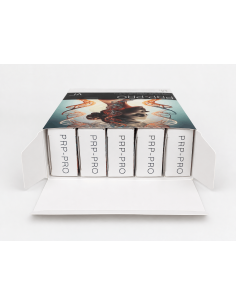
The Vi PRP-PRO PRP tube is a glass PRP tube with sodium citrate as anticoagulant and a polymer separation gel. It is intended for the preparation or collection of autologous platelet-rich plasma, PRP.
The separation gel supports physical separation of blood components during centrifugation. Use should always follow instructions for use, intended purpose and professional assessment.
View Vi PRP-PRODensity PRF/PRP glass tubes
Density PRF/PRP glass tubes are glass tubes without anticoagulant and without separation gel. They therefore differ clearly from classic PRP tubes with sodium citrate and separation gel.
Such tubes may be relevant for PRF or PRF-related protocols when the respective protocol and manufacturer’s intended purpose provide for this.
View Density tubes6. Why “glass or plastic?” is not the only question
For professional users, the material question should always be part of a broader assessment. Especially in PRP and PRF protocols, the tube should not be viewed in isolation. The entire workflow of blood collection, tube, centrifuge, protocol and professional application is decisive.
Key questions for selection
- Is the tube intended for the planned PRP or PRF workflow?
- Is it appropriately labelled as a medical device?
- Are instructions for use or IFU available?
- Are LOT number, shelf life and manufacturer information traceable?
- Does the tube contain anticoagulant, separation gel or other additives?
- Is the tube compatible with the centrifuge used?
- Do RCF, RPM, rotor and runtime match the protocol?
- Is the product supplied by a specialised dealer?
7. Checklist: selecting glass or plastic PRP tubes correctly
The following checklist supports professional preselection. It does not replace checking the respective manufacturer documentation and instructions for use.
| Check question | Relevance for practice |
|---|---|
| Glass or plastic? | Material properties influence handling and protocol suitability. |
| Intended purpose clearly stated? | Decisive for proper product selection. |
| CE marking present? | Indicates conformity assessment according to applicable requirements. |
| IFU available? | Basis for use in a professional workflow. |
| LOT number present? | Important for traceability and documentation. |
| Anticoagulant included? | Relevant for PRP protocols with anticoagulation. |
| Separation gel included? | Relevant for structured separation of blood components. |
| Without anticoagulant and gel? | Relevant for certain PRF or PRF-related protocols. |
| Compatible with centrifuge? | Tube size, rotor, RCF and RPM must match. |
8. Conclusion: glass or plastic PRP tubes – the right workflow is decisive
The question “PRP tubes made of glass or plastic?” is important for professional users, but should not be answered in isolation. Glass, especially borosilicate glass, offers interesting material properties and is relevant in many PRP and PRF-related systems. Plastic can offer practical advantages in break resistance and handling.
However, the material alone is not decisive. Intended purpose, CE marking, instructions for use, LOT traceability, additives, centrifuge compatibility and the specific PRP or PRF protocol are decisive.
PRP tubes in the prpmed specialist shop
At prpmed.de, professional users can find PRP tubes and PRF/PRP glass tubes for different workflows.
Go to PRP tubes categoryFAQ
FAQ: PRP tubes made of glass or plastic
Are glass PRP tubes better than plastic tubes?
This cannot be answered generally. Glass and plastic have different material properties. The decisive factors are intended purpose, manufacturer documentation, IFU, additives and the specific PRP or PRF protocol.
Why are glass tubes often used for PRF?
In certain PRF or PRF-related protocols, the material surface may play a role in clotting dynamics. Whether a specific glass tube is suitable depends on intended purpose, IFU and protocol.
What is borosilicate glass?
Borosilicate glass is a chemically resistant glass commonly used in medical and laboratory applications. It is characterised by stability, transparency and good material resistance.
Are plastic tubes unsuitable for PRP?
Not generally. Plastic tubes may be suitable for certain applications if they are appropriately intended, labelled and documented. General laboratory or IVD tubes, however, are not automatically intended for PRP applications.
What is more important: glass or CE marking?
Both are relevant, but CE marking and intended purpose are particularly important from a regulatory perspective. Material alone is not sufficient to assess suitability.
What is the difference between Vi PRP-PRO and Density PRF/PRP glass tubes?
Vi PRP-PRO is a glass PRP tube with sodium citrate and separation gel. Density PRF/PRP glass tubes are glass tubes without anticoagulant and without separation gel. Both product groups are intended for different workflows and should not be exchanged without checking.
What should be considered when buying PRP tubes?
Important points are intended purpose, CE marking, IFU, LOT number, shelf life, material information, additives, centrifuge compatibility and suitability for the intended protocol.
Where can glass PRP tubes be purchased?
Professional users can find glass PRP tubes and PRF/PRP glass tubes in the PRP tubes category at prpmed.de.
Summary: The choice between glass and plastic should not be made in isolation. The decisive factors are intended purpose, CE marking, IFU, LOT traceability, material information, centrifuge compatibility and the specific PRP or PRF protocol.