Shopping Cart
PRP knowledge · Updated August 2026
How stable is PRP after preparation—at room temperature, refrigerated or deep-frozen? Research provides important partial answers, but no universal shelf-life figure.
The short answer: There is no generally valid storage period for PRP. Results depend on the specific preparation, processing system, container, temperature history and endpoint investigated. The fact that individual growth factors remain measurable after storage proves neither intact platelets nor sterility or clinical performance comparable with fresh PRP.
Interactive literature display—not a storage or work instruction. The following elements only organise published study conditions and measurements. They do not calculate a permissible storage period or validate a PRP system or practice process.
Why PRP has no single expiry period
PRP is not one identical substance, but a group of autologous blood preparations. Two products may differ considerably immediately after processing.
Platelet count, leukocyte and erythrocyte content, anticoagulant, plasma volume and activation status are influenced by the tube system, centrifugal force, run time, rotor and collection technique. The fundamentals of PRP composition and biology explain why the product name alone is insufficient for a stability comparison.
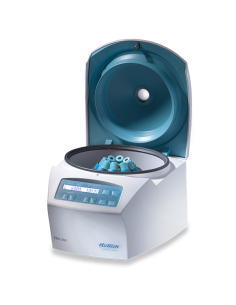
Even transferring a centrifugation protocol can alter the final product. The RCF/RPM calculator only supports the mathematical conversion of × g and rpm; it is neither a processing nor a storage protocol.
The key reading rule: A period investigated in a study initially applies only to the preparation, procedure, container and endpoints used there. It is not a general release for other PRP systems.
“Stable” does not automatically mean “fit for use”
Publications use the term stability for very different measurements. Open the four dimensions: each answers a different question.
Interactive explainer
Four dimensions of PRP stability
The panels can be opened individually. No single dimension replaces the others.
Count and structure
How many platelets are counted—and are their membranes and granules still intact?
Does not prove: function, sterility or clinical suitability.
Function
Do platelets still respond in a controlled manner to activation stimuli, and how do aggregation and clot formation change?
Does not prove: a safe period for use.
Soluble factors
Are individual proteins still measurable—and was their biological activity also tested?
Does not prove: intact cells or the release profile of fresh PRP.
Quality and effect
Were identity, microbiological quality and clinical outcomes investigated separately?
Only this level touches on actual usability—and it is missing from many laboratory studies.
What studies show about storage conditions
Research does not provide a simple temperature ranking. Cell structure, activation and individual factors may respond differently depending on the measurement.
Evidence explorer
Open study conditions and interpret them correctly
Each panel separates observation from limitation. Temperatures are study conditions, not recommendations.
Room temperatureShort time windowsHuman studies with selected markers
Wilson et al. found no change in bioactive TGF-β1 and MMP-9 for up to four hours in two human PRP types [1].
Not investigated: complete platelet function, sterility and clinical equivalence. This does not establish a universal hourly limit.
about 4 °CRefrigerationfactor-, time- and activation-dependent
Kim et al. reported stable, rising or falling values depending on storage time, activation and the factor measured [2]. A small six-donor study found activity in an epithelial model after refrigerated storage, but after two weeks the samples no longer behaved like fresh PRP [3].
Not established: a general refrigerated shelf life, sterility or clinical efficacy.
−20 °CFreezingconflicting changes
Hosnuter et al. found lower concentrations of several factors after seven and 14 days than in fresh samples [4]. Other investigations also show that measurements do not respond uniformly.
Not established: a blanket shelf life of weeks or months.
−80 °CLong-term measurementsanalytes may respond differently
Liu et al. found no reduction in several investigated factors over six months [6]. Beitia et al. nevertheless described changes in platelet structure and activation and decreases in individual factors [5]. Cheng et al. also compared −20, −40 and −80 °C using laboratory endpoints [7].
Not established: equivalence to fresh PRP or suitability for later application.
Why do such results differ? Because a measurable protein, an intact membrane and a functional platelet response are different endpoints. Anticoagulant, leukocyte content, activation, freezing rate, container and analytical method add further variation.
| Measurement | What it answers | What it does not answer |
|---|---|---|
| Platelet count | How many particles the analyser counts | Whether cells are intact, activatable or clinically suitable |
| Single growth factor | Whether a defined analyte is detectable with the method used | Complete bioactivity and interaction of the entire preparation |
| Cell or tissue model | Whether a sample elicits a response under defined laboratory conditions | Clinical effect and safety in humans |
| Microbiological testing | Contamination status within the tested process | Biological function or therapeutic efficacy |
Freeze-thawed PRP is not simply “fresh PRP used later”
Temperature changes may damage membranes, trigger activation and release cellular contents. The same starting sample can therefore become a biologically different product form.
Interactive product comparison
Five terms, five different states
This display explains differences; it is not a manufacturing sequence or process instruction.
Fresh PRPintact cells intended
The starting form after processing. Composition and function remain system-dependent.
Refrigerated PRPaltered cellular processes
Refrigeration does not automatically preserve the biological starting state.
Freeze-thawed PRPmembrane damage possible
Proteins may remain measurable even when cell structure and activation have changed.
Platelet lysateseparate product form
Lysate is not a synonym for arbitrarily thawed PRP, but the result of a defined manufacturing process.
Lyophilised derivativeseparate validation required
Formulation, residual moisture, packaging and reconstitution shape the final product.
Freeze–thaw and platelet lysate
Freezing and thawing can lyse platelets. Defined procedures use this effect intentionally to produce platelet lysate. Human studies nevertheless show that the number of cycles and process conditions may influence the release profile [8] [9]. Lysate and fresh PRP should therefore not be equated without evidence of equivalence.
Lyophilisation as a separate product concept
Freeze-drying removes water under controlled conditions. A review describes widely differing protectants, formulations and test methods and calls for product-specific quality controls [10]. A study of freeze-dried PRGF eye drops further illustrates how application- and product-specific these data are; it is not evidence for ordinary injectable PRP [11].
What this means for quality and responsibility
Questions a responsible facility must resolve for the specific product
The following is neither a validation instruction nor a release checklist.
- Do the intended purpose and current instructions for use cover the planned handling?
- Has the complete manufacturing and, where applicable, storage process been validated for the specific preparation?
- Are identity, asepsis, container, traceability and temperature monitoring controlled?
- Which physical, biological and microbiological tests support release?
- How are deviations documented and assessed?
Freezing does not sterilise PRP. Contamination can occur throughout the process chain. Arita et al. identified potential contamination sources during collection and preparation; the study does not demonstrate a sterilising effect of any storage condition [12].
A CE marking is also not a PRP shelf-life release. It concerns the specific product within its intended purpose and does not automatically prove sterility, efficacy or storage stability of the PRP produced.
Frequently asked questions about PRP storage
How long can PRP stand after centrifugation?
There is no general number of hours. The specific system, its instructions for use and the responsible facility's validated process are decisive. Short laboratory studies cannot be read as a universal period for use.
May PRP be stored in a refrigerator?
Not on the basis of a general recommendation alone. Refrigeration may alter activation, function and release profile. Permissibility must be clarified for the specific product, container and process.
Can PRP be frozen at −20 °C or −80 °C?
PRP can technically be frozen, but this does not necessarily produce a product biologically equivalent to fresh PRP. Laboratory findings do not permit clinical release without a validated overall process.
Do growth factors remain after freezing?
Some factors may remain measurable while others decrease. Detecting a protein does not automatically demonstrate bioactivity, cell function, sterility or clinical effect.
Is thawed PRP the same as fresh PRP?
Not without product-specific evidence of equivalence. Freezing and thawing may change cell membranes, activation status and the release profile.
What is the difference between frozen and lyophilised PRP?
Frozen PRP remains a deep-frozen liquid. Lyophilisation removes water in a controlled freeze-drying process. Formulation, protectants, packaging and reconstitution make it a separate manufacturing procedure.
Continue reading on PRPMED
Selected scientific literature
- Wilson BH, Cole BJ, Goodale MB, Fortier LA. Short-Term Storage of Platelet-Rich Plasma at Room Temperature Does Not Affect Growth Factor or Catabolic Cytokine Concentration. 2018. PubMed
- Kim JI et al. Effect of Storage Conditions and Activation on Growth Factor Concentration in Platelet-Rich Plasma. 2020. PubMed
- Keren E et al. Evaluation of storage parameters of platelet-rich plasma in functional assay of epithelial gap repair. 2025. PubMed
- Hosnuter M et al. Functional assessment of autologous platelet-rich plasma after long-term storage at −20 °C without any preservation agent. 2017. PubMed
- Beitia M et al. The Effect of Long-Term Cryopreservation on the Properties and Functionality of Platelet-Rich Plasma. 2025. PubMed
- Liu W et al. Long-term stability of frozen platelet-rich plasma under −80 °C storage condition. 2024. PubMed
- Cheng Z et al. Experimental Study on the Influence of Different Storage Conditions (Temperature, Duration) on Platelet Count, LDH, and Growth Factor Concentration in Platelet-Rich Plasma. 2025. DOI
- Roffi A et al. Does platelet-rich plasma freeze-thawing influence growth factor release and their effects on chondrocytes and synoviocytes? 2014. PubMed
- Strandberg G et al. Standardizing the freeze-thaw preparation of growth factors from platelet lysate. 2017. PubMed
- Andia I et al. Freeze-Drying of Platelet-Rich Plasma: The Quest for Standardization. 2020. PubMed
- Anitua E et al. Long term stability of preservative-free and lyophilized PRGF eye drops stored at different temperature conditions: in vitro comparative study. 2025. PubMed
- Arita A et al. Microbial contamination risks and clinical safety in platelet-rich plasma therapy and evaluation of rapid microbial detection methods. 2026. PubMed
- Hauschild G et al. Short term storage stability at room temperature of two different platelet-rich plasma preparations from equine donors and potential impact on growth factor concentrations. 2017. DOI
Legal framework for Germany and the EU
- German Medicinal Products Act: section 4 AMG, section 13 AMG and section 67 AMG
- German Transfusion Act: section 7 TFG, section 13 TFG and section 14 TFG
- Regulation (EU) 2017/745 on medical devices—consolidated version and section 4 MPBetreibV
Legal and safety note (Germany): PRP is obtained from autologous blood. Its classification under medicinal-product and transfusion law, and any notification, authorisation, quality and documentation duties, depend on the specific manufacturing and use model. The exemption in section 13(2b) AMG for manufacture under direct professional responsibility for personal use in a specific patient is not a general permission to manufacture, store or supply; notification duties under section 67 AMG and TFG requirements may apply. Medical devices may only be used within the manufacturer's current intended purpose and instructions for use and by appropriately qualified persons. A CE marking relates to the particular product, not automatically to the efficacy, sterility or shelf life of the PRP produced. The specific classification should be clarified with the competent authority. This article is not a manufacturing, storage, thawing, treatment or release instruction and does not constitute medical or legal advice. Updated 25 August 2026.