Professional article · updated August 2026
Microneedling with a Dermaroller: Use, Evidence and Combination with PRP, Hyaluronic Acid and Serums
Microneedling uses fine needles to create controlled microchannels in the skin. A dermaroller is one device type alongside stamp systems and motorised pens. Clinically, the temporary change in the skin barrier is as relevant as the mechanical stimulus itself – especially when PRP, hyaluronic acid or selected topical formulations are combined with needling.
Microneedling & dermarollerPRP evidence 2026Hyaluronic acidSerums & safety
Key points
01
Two separate mechanisms
Microneedling combines controlled tissue stimulation with a temporary increase in skin permeability. These effects should be assessed separately.
02
PRP: most extensive combination data
For atrophic acne scars, a 2026 meta-analysis of 17 studies and 1,111 participants strengthens the evidence for an added benefit over microneedling alone.
03
Not all hyaluronic acid products are alike
A topical serum, a sterile post-procedure formulation and an injectable filler are different products and should not be treated as equivalent.
04
More penetration is not automatically better
Microchannels can increase substance delivery. This is only useful when the specific product is suitable for the intended application.
Visual overview of the workflow
The interaction between device, adjunct product and aftercare is easier to understand as a simple sequence. The graphic does not replace a protocol, but it makes the logic easier to scan.
1
Check the indication
Define skin status, device, product type and hygiene route before starting.
2
Needle in a controlled way
Device choice, pressure and actual penetration shape both stimulus and risk.
3
Choose the right product
Use PRP, HA or a serum only when the product fits the intended application.
4
Manage early aftercare
The barrier is temporarily altered. Hygiene, irritation control and UV protection matter.
How microneedling works
Needling creates numerous point-shaped channels without removing the skin across a broad surface. This produces two distinct mechanisms:
1. Controlled tissue stimulation
Punctures trigger a local repair response. Growth factors, inflammatory mediators and fibroblasts contribute to formation and reorganisation of the extracellular matrix. This mechanism is relevant, for example, in atrophic scarring.
2. Temporary barrier alteration
The stratum corneum normally limits penetration of many larger or hydrophilic molecules. Microneedling temporarily creates microchannels. A substance may therefore enter the skin more readily – but this does not automatically prove added clinical benefit or greater safety.
Better penetration does not automatically mean better efficacy – and it certainly does not automatically mean greater safety.
Dermaroller, pen and stamp: same principle, different mechanics
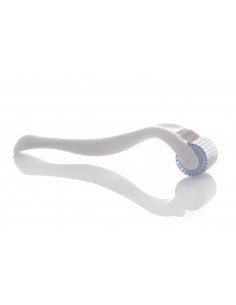
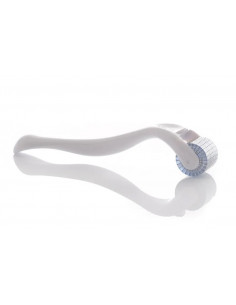
The device types are not directly interchangeable. With a roller, needles enter and leave the skin at an angle created by the rolling movement; pens and stamps work predominantly vertically. Nominal needle length also does not necessarily equal actual tissue penetration.
| System | Movement | Practical interpretation |
|---|
| Dermaroller | Rolling cylinder with repeated entry and exit | Fast over larger areas; pressure, angle and rolling motion affect actual penetration. |
| Microneedling pen | Motorised vertical needle movement | Depth is usually adjustable; single-use cartridges can support standardised hygiene workflows. |
| Stamp | Vertical stamping | Precise on small areas; slower for large treatment fields. |
A rigid chart such as “0.5 mm for home use, 1.5 mm for clinics” would be an oversimplification. Skin region, device, intended purpose, actual penetration, professional qualification and indication all matter.
PRP workflow in one schematic
With PRP, a lot depends on preparation. This graphic is intentionally simplified and only highlights where relevant variables arise.
A
Blood drawStarting material and anticoagulant already influence the downstream process.
B
CentrifugationRCF, time and tube system shape separation of the fractions.
C
Fraction selectionNot every PRP is the same. Cell content and usable volume can differ.
D
ApplicationTopical through microchannels, intradermal or combined – depending on the protocol.
Important: This schematic describes approaches used in published studies and is not a manufacturing or application instruction. Whether a specific microneedling device or PRP system is intended for a particular combination depends on its intended purpose, instructions for use and the applicable regulatory requirements.
Microneedling + PRP: what does the evidence show?
PRP (platelet-rich plasma) is prepared from the patient's own blood. Platelets can release multiple signalling and growth factors after activation. The combination is biologically plausible: microneedling provides a repair stimulus and creates microchannels, while PRP supplies autologous components involved in wound healing and remodelling.
2026 meta-analysis: a clear signal in atrophic acne scars
A 2026 systematic review and meta-analysis evaluated 17 studies with 1,111 participants. Compared with microneedling alone, the PRP combination produced more favourable results across several scar outcomes. Trial Sequential Analysis reached the required information size for a marked photographic improvement. At the same time, study quality and treatment protocols remained heterogeneous. [2]
What can reasonably be said
For atrophic acne scars, current data support that adding PRP to microneedling may provide additional clinical benefit.
What cannot reasonably be said
That PRP improves every microneedling treatment, that one protocol is universally superior, or that effects reliably persist for a fixed number of months.
PRP is not a uniform product
Platelet concentration, leukocyte and erythrocyte content, anticoagulant, tube system, centrifugation protocol, activation and application route can differ substantially. The 2026 analysis found differences between single-spin and double-spin protocols in a subgroup analysis. This does not prove that one method is generally superior, but it shows that preparation is a relevant variable. [2]
Topical delivery through microchannels or intradermal injection?
The studies used both routes and combinations of them. It therefore remains unclear which route is superior under otherwise comparable conditions. With topical application, the amount of PRP actually reaching the target tissue is also more difficult to quantify. [2]
Microneedling and hyaluronic acid
With hyaluronic acid, the first question is which product is being discussed. A cosmetic serum, a sterile post-procedure formulation and injectable hyaluronic acid differ in intended purpose, composition, sterility and route of administration.
In a split-face study of 41 patients with atrophic acne scars, both facial sides were microneedled; one side then received non-cross-linked hyaluronic acid and the other PRP. Both sides improved, with no statistically significant difference between the two combinations. [4]
Important distinction
An HA serum is not a skin booster and not a filler. The ingredient name “hyaluronic acid” alone says nothing about sterility or suitability for application to freshly punctured skin.
Serums: opportunity and avoidable risk
The second microneedling pathway – increased permeability – makes topical combinations interesting. It also raises the requirements for formulation and product safety. A serum that is well tolerated on intact skin is not automatically suitable for a freshly perforated skin barrier.
Vitamin C shows why blanket recommendations fail
A 2026 randomised, double-blind split-face study in 31 adults examined a defined vitamin C, vitamin E and ferulic acid formulation after microneedling versus placebo. After twelve weeks, several outcomes improved more on the active side. This is a product-specific result – not a licence to use arbitrary vitamin C serums. [5]
Rare but documented granulomatous reactions after microneedling provide the counterpoint. A systematic review published online in 2024 identified 15 published cases; motorised needling systems and topical vitamin C were frequently involved. Such events are rare, but they can be persistent. [6]
What should be checked for peri-procedural products
- explicit intended use or manufacturer instructions for the planned application
- defined manufacturing and hygiene characteristics
- a clear formulation without unnecessary irritant additives
- no extrapolation from one tested product to an entire ingredient class
How long is the skin barrier altered?
There is no universal time value. Studies show that micropores and changes in barrier function – depending on the microneedle system, skin, measurement method and other conditions – can remain detectable for hours to considerably longer. [11]
Hygiene: particularly important with blood contact and PRP
Microneedling can involve blood contact. PRP adds blood collection, processing and application of autologous material. Single-use needle modules must not be shared between people or reused contrary to manufacturer instructions. Reprocessing, surface disinfection and device cleaning should follow the specific product instructions and the professional hygiene concept. [7]
An exceptional CDC investigation in New Mexico demonstrated in 2024 what poor infection control can mean for PRP microneedling: several HIV infections were probably linked to procedures in an unlicensed spa. This is not a typical risk of properly performed PRP procedures, but it underlines the need for controlled processes.
[8]Do not confuse home devices with professional microneedling
Superficial consumer rollers and professionally used needling systems can differ greatly in intended purpose, actual penetration and risk profile. Needle length alone does not determine whether a treatment is medical, cosmetic or appropriate for a particular user group. Product information, local requirements and the actual procedure remain decisive. [7]
When particular caution is needed
Professional or medical assessment is especially appropriate with active infections, inflammatory lesions, relevant wound-healing or coagulation disorders, immunosuppression, pronounced keloid tendency, certain medications or recent aesthetic procedures. Medication should not be stopped without medical advice. [7]
What readers should retain quickly
If the article is reduced to three core messages, the orientation looks like this:
PRP
most extensive combination data in this comparison
For atrophic acne scars, this is currently the best-supported combination.
HA
smaller but plausible evidence base
Not every HA format is equal. Product type and intended use matter.
Serums
only meaningful product by product
Certain formulations may make sense, but blanket claims are not credible.
Aftercare: principles are better than rigid day-by-day schedules
Aftercare depends on the device, depth, skin response and products used. A low-irritant routine, minimal unnecessary manipulation and consistent UV protection are sensible principles. Potentially irritating products should be used cautiously during early recovery. Rigid rules such as “retinol exactly from day 7” or “no sauna for three weeks” are not defensible without a specific protocol.
Evidence at a glance
| Combination | Current assessment | Main limitation |
|---|
| Microneedling alone | Clinically studied for atrophic scars and several signs of skin ageing. | Protocols and devices are heterogeneous. |
| Microneedling + PRP | Supported for atrophic acne scars by a larger 2026 meta-analysis. | No universal PRP or microneedling standard protocol. |
| Microneedling + hyaluronic acid | Biologically plausible and clinically investigated. | Far less direct evidence than for PRP; product type matters. |
| Microneedling + serum | Positive data exist for individual formulations. | Results are product-specific; unsuitable topicals may add risk. |
Frequently asked questions
Is microneedling with PRP more effective than microneedling alone?
For atrophic acne scars, the 2026 meta-analysis supports an added benefit. This finding should not automatically be transferred to other indications.
Can any hyaluronic acid serum be used with microneedling?
No. The presence of hyaluronic acid says nothing about sterility, formulation or suitability for freshly punctured skin.
Can vitamin C be used after microneedling?
This cannot be answered for the entire ingredient class. Positive data exist for specific formulations, while rare granulomatous reactions have also been documented.
Are dermarollers and microneedling pens equivalent?
They use the same general principle but differ mechanically. High-quality direct clinical comparisons remain limited.
Do the microchannels close within a few minutes?
There is no universally valid minute value. Measured barrier recovery varies with device, depth, skin and method.
Professional resources at prpmed.de
For professional PRP workflows, the following technical product and calculation resources are available. These links are not treatment recommendations; intended purpose, instructions for use and internal SOPs remain authoritative.
Note on transferability: The cited studies used different PRP preparation and microneedling protocols. Their results do not establish specific clinical efficacy for Vi PRP-PRO, Hettich EBA 200 MD or any other individual product.
Current interpretation
Microneedling is more than a way of “driving” skincare into the skin. Controlled tissue stimulation and temporary barrier alteration are two distinct pathways. For PRP in atrophic acne scars, the evidence base has become substantially more extensive, but remains methodologically heterogeneous; for hyaluronic acid, the evidence base is smaller, and serums require particularly product-specific assessment. The key is not to combine as many actives as possible, but to make sure indication, device, product, hygiene and user qualification fit together.