Shopping Cart
Clinical article · evidence and classification
Polynucleotide Skin Boosters: How Rejuran Differs from Hyaluronic Acid Fillers and PRP
Polynucleotides are increasingly treated as a separate product category in medical aesthetics. The term alone, however, says little about composition, clinical evidence or regulatory classification. This article separates general findings on PN, product-specific information on Rejuran Healer and results from studies of other PN or PDRN products.
Note: This article is intended for professional information. It does not provide a treatment recommendation or injection protocol. The current manufacturer information, individual indication and national professional law remain decisive.
Use the terms precisely
What are polynucleotides?
Polynucleotides, abbreviated PN, consist of longer chains of linked nucleotides. Aesthetic PN products generally contain processed DNA fragments formulated as an injectable material.
The singular “polynucleotide” is often used for the material class or active component. The plural “polynucleotides” is usually more precise because a product contains many DNA chains.
The term alone does not establish molecular size, concentration, viscosity, clinical effect or interchangeability. These properties depend on the individual product and manufacturer.
PN and PDRN are not automatically the same
Publications and product communications sometimes use PN and PDRN side by side or as synonyms. Recent papers propose distinctions based on chain length and molecular weight, but no universally applied terminology currently exists.13
Results obtained with a PDRN medicinal product, a PN-HPT product or a combined PN–hyaluronic acid formulation cannot simply be transferred to Rejuran Healer.
01Material class
DNA-based polymers with product-specific properties.
02No single generic active
PN products are not automatically interchangeable.
03Check the evidence
Product, treatment area, comparator and study design must match.
04The IFU takes priority
Intended purpose and safety must be assessed for the exact version.
Clinical terminology
What does PN skin booster mean?
“Skin booster” is a common umbrella term in aesthetic practice. It usually refers to injectable products for which pronounced volume augmentation or facial contouring is not the primary aim.
It is not a precise regulatory product classification. The term is used for non-cross-linked hyaluronic acid products, polynucleotide gels and several combination products. Composition, intended purpose, labelling, current instructions for use and the regulatory status of the supplied version remain decisive.
Important: The term PN skin booster describes a treatment concept, but it does not replace the technical product description or regulatory review.
Product-specific classification
Is Rejuran a serum, skin booster or dermal filler?
Not a cosmetic serum
The search term “Rejuran serum” is misleading when applied to Rejuran Healer. A serum is normally applied topically. The available product information instead describes Rejuran Healer as an injectable PN-based medical device for suitably qualified healthcare professionals who are legally authorised to use it.1
It must therefore not be treated as a freely usable ampoule, a cosmetic microneedling serum or a topical skincare product.
Skin booster is the clearer short description
In clinical and product contexts, Rejuran Healer is classified as a polynucleotide skin booster. This description reflects the concept more accurately than “volumising filler”, because the available information does not position the product primarily for conventional volume augmentation.
Injectable PN gels may still be described as fillers in scientific or regulatory contexts. This does not mean that they share the same rheology or mechanical volumising effect as cross-linked hyaluronic acid fillers.
Rejuran Healer is an injectable PN-based medical device commonly described in aesthetic practice as a polynucleotide skin booster. It is not a cosmetic serum and is not positioned primarily as a conventional volumising filler.
How should Rejuran Healer be classified in practice?
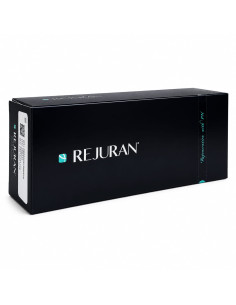
According to the product documentation available to prpmed.de, Rejuran Healer is based on polynucleotides derived from processed salmon DNA. The pack contains two 2 ml prefilled syringes. The documentation lists the face, neck and décolletage within the scope of the current manufacturer information. Choice of area, technique, amount and interval remains a medical decision.
European manufacturer and distribution information lists the product family as class III medical devices with CE marking CE 2265. The labelling, conformity information and instructions for use of the version actually supplied remain controlling.2, 3
Neutral comparison
Polynucleotide skin boosters, hyaluronic acid and PRP
The three categories differ in material origin, production and standardisation. The overview below is not a ranking and does not identify a winner.
PNmanufacturer-defined DNA-based material
HAhyaluronic acid with product-specific cross-linking and rheology
PRPpatient-specific autologous blood preparation
| Feature | Polynucleotide skin boosters | Hyaluronic acid fillers / skin boosters | PRP |
|---|---|---|---|
| Material origin | Processed DNA fragments; origin and manufacture are product-specific. Rejuran Healer is described as salmon-DNA based. | Hyaluronic acid gel; cross-linked, lightly cross-linked or non-cross-linked depending on the product. | Autologous material obtained from the patient’s blood. |
| Product type | Industrially manufactured, ready-to-use injectable product. | Industrially manufactured, ready-to-use injectable product. | Prepared for the individual patient from collected blood. |
| Primary concept | Product-specific approach focusing on structural or skin-related parameters; not automatically intended for volume. | Cross-linked fillers are mainly used for volume, contour or wrinkle correction. HA skin boosters follow a different concept. | Use of a patient’s own plasma concentrate within a medically defined procedure. |
| Standardisation | Composition is manufacturer-defined for the exact product version. | Composition and rheological properties are defined for the individual product. | Composition varies with patient, blood count, collection system and processing method. |
| Volumising effect | Product-specific; Rejuran Healer is not described primarily for conventional volume augmentation. | More pronounced with volumising fillers and generally lower with HA skin boosters. | No permanently defined mechanical volumising effect comparable with a shape-stable filler. |
| Patient-specific manufacture | No. | No. | Yes. |
| Study comparability | Limited to sufficiently similar PN products and applications. | Results depend on product, cross-linking, rheology, treatment area and technique. | Results depend strongly on the reported PRP composition and preparation. |
| Practical considerations | Check product version, CE information, intended purpose, IFU and user restrictions. | Check product class, intended purpose, material properties and filler-specific risk management. | Consider preparation, quality assurance, documentation and potentially applicable blood-product law. |
This comparison describes differences in materials and processes. It does not replace an individual medical decision.
Material concept
Polynucleotides and hyaluronic acid fillers
Hyaluronic acid is a hydrophilic polysaccharide. Depending on cross-linking and rheological properties, an HA product may create volume, support contours or be used as a lightly cross-linked or non-cross-linked skin booster.
Polynucleotides are DNA-based polymers. According to the product documentation, pronounced volume augmentation is not the primary focus of Rejuran Healer. This does not mean that every PN product behaves identically or has no material-related tissue effect.
The question “Rejuran or hyaluronic acid?” is also too broad. It matters whether the comparison involves a cross-linked volumising filler, a softer filler or a non-cross-linked HA skin booster.
What do direct comparative studies show?
A randomised double-blind split-face study in 27 participants compared a PN filler with a non-cross-linked HA product in the periocular area. No significant difference was found in visual and global aesthetic rating scales. Some instrument-based parameters developed more favourably in the PN group. The small sample, limited area and specific products do not establish general superiority of PN or Rejuran.6
Another study examined a PN filler for crow’s feet in 30 participants without a parallel control group; 28 completed the study. Changes from baseline without an adequate control group cannot establish superiority over HA, PRP, no treatment or another intervention.7
Ready-made product and autologous preparation
Polynucleotides and PRP
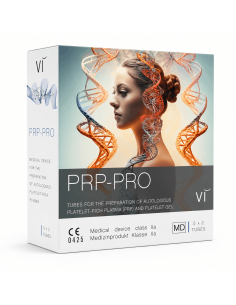
The key difference begins with origin. Rejuran Healer is an industrially manufactured, ready-to-use injectable product. PRP is prepared for an individual patient from that patient’s own blood. The result is not a uniform active ingredient with a universally fixed composition.
Studies show substantial differences in platelet, leucocyte, erythrocyte and growth-factor concentrations between PRP preparation methods. Variation also exists between patients and between repeated preparations from the same patient.10
Evidence on PRP cannot be used as proof of effectiveness for polynucleotides. Conversely, findings on PN products do not establish an effect of PRP.
In Germany, pharmaceutical and transfusion-law requirements may be relevant to the preparation and use of PRP. The exact legal classification depends on the particular preparation and treatment concept.12
Read the evidence critically
What does the current evidence show?
The literature on injectable polynucleotides is growing, but its quality remains inconsistent. A systematic review published in 2025 identified nine studies involving 219 treated participants. Most included studies were rated as low or moderate quality, and products, treatment areas, techniques and outcomes varied substantially.4
Individual clinical studies report changes in selected wrinkle, texture, elasticity or hydration parameters. Results are not consistently aligned and are often limited by small samples, absent control groups or short follow-up.
Two frequently cited direct Rejuran comparison studies have also been retracted. A 2014 randomised Rejuran–HA paper was retracted in 2016. A further PCL–Rejuran comparison was retracted in 2026 because the comparator material had been incorrectly described.8, 9
Schematic evidence assessment
Biological plausibilitypresent
Clinical comparative datalimited
Robust long-term datainsufficient
The bars are an editorial visualisation, not a quantitative meta-analysis.
Which mechanisms are discussed?
Publications discuss water binding, temporary matrix-like integration, interactions with fibroblasts and changes in extracellular-matrix processes. Some of these models come from cell culture or animal experiments, PDRN research or studies of other PN formulations.
Terms such as “biostimulation” or “regeneration” should therefore not be treated as proof of a guaranteed clinical outcome. They describe a theoretical material or treatment concept. Measurable changes may depend on the product, indication, baseline condition, area and assessment method.5
Which claims are not adequately supported at present?
- Polynucleotides are generally more effective or safer than HA fillers.
- Rejuran produces predictable results in every patient.
- PN products can generally replace PRP, HA or other procedures.
- Results from PDRN or other PN products can be fully transferred to Rejuran.
- A fixed number of applications reliably produces a defined result.
- Combinations with PRP, fillers, lasers or other procedures are inherently superior to single treatments.
- Small studies can exclude rare complications.
Safety and professional responsibility
Contraindications, risks and duties of the practitioner
Smaller PN studies have mainly reported temporary local reactions. Such studies are not large enough to identify rare risks reliably. A full safety assessment must therefore be based on the current IFU for the exact product version used.
For injectable fillers as a product group, the German Federal Institute for Drugs and Medical Devices lists local inflammation, oedema, hypersensitivity reactions, vascular occlusion, migration and granuloma formation among possible events. These general points are not a product-specific risk profile for Rejuran, but they demonstrate why injectable aesthetic products must not be trivialised.11
Before use, the practitioner should assess medical history, allergies, skin condition, potential contraindications, previous procedures and package integrity. Batch, amount used, treatment area, date, consent and relevant reactions should be documented traceably.
Use is restricted to qualified healthcare professionals. A distributor’s description does not replace the manufacturer’s IFU, medical training or individual indication.
Professional procurement
What practitioners should check before purchasing
1
Exact product versionThe name on the packaging, syringe, documentation and invoice should match.
2
Regulatory informationCheck CE marking, notified body, manufacturer, intended purpose and current IFU.
3
TraceabilityCheck batch, expiry date, package integrity and storage conditions.
4
Clear product distinctionDo not confuse an injectable PN medical device with a serum or microneedling ampoule.
5
Traceable supply chainProduct data, origin, storage and manufacturer information should be verifiable.
6
No blanket interchangeabilityOther PN, PDRN, HA or PRP products are not automatically equivalent.
Product information for Rejuran Healer
The separate product page provides pack contents, price, availability and the technical information listed in the shop. It does not replace the current manufacturer IFU.
Relevant professional resources
Further reading
Product informationRejuran Healer 2 × 2 ml – polynucleotide skin boosterProfessional rangePRP tubes for professional preparationProduct categoryDermal fillers for healthcare professionalsOverviewPRP materials and accessoriesBrandRejuran products in the professional shopClinical articlePRP treatment: principles and classification
Common search questions
FAQ on polynucleotides, Rejuran, hyaluronic acid and PRP
What is a polynucleotide?
A polynucleotide is a longer chain of linked nucleotides. Injectable PN products contain processed DNA fragments as part of a manufacturer-defined material. The term alone does not specify concentration, molecular size or clinical effect.
What are polynucleotides in aesthetic medicine?
Polynucleotides are used in various injectable products often described as PN skin boosters or PN fillers. Composition, origin, material properties and intended purpose vary by product.
Is Rejuran a serum?
Rejuran Healer is not a cosmetic serum. The product information describes it as an injectable PN-based medical device. The search term “Rejuran serum” is therefore technically inaccurate.
Is Rejuran Healer a skin booster or a dermal filler?
In aesthetic practice, Rejuran Healer is commonly classified as a polynucleotide skin booster. PN gels may also be described as fillers in scientific and regulatory contexts, but Rejuran Healer is not positioned primarily as a conventional volumising HA filler.
How does Rejuran differ from hyaluronic acid?
Rejuran is based on polynucleotides; HA products are based on hyaluronic acid. Cross-linked HA fillers are commonly used for volume and contour. The evidence does not justify a general statement that one material is better.
How does Rejuran differ from PRP?
Rejuran is an industrially manufactured product with a defined composition. PRP is prepared individually from the patient’s own blood and varies with the patient and preparation method.
Are PN and PDRN interchangeable terms?
Not reliably. Both terms refer to DNA-based fragments, but their use in the literature is inconsistent. The exact product composition remains decisive.
Is Rejuran better than hyaluronic acid or PRP?
General superiority has not been established. Comparative evidence is limited, studies are often small, and two direct Rejuran comparison papers were retracted. Selection remains an individual medical decision.
How strong is the evidence for PN skin boosters?
Clinical signals have been reported for selected skin and wrinkle parameters, but studies vary in product, area, sample size and measurement method. Larger independent comparisons and robust long-term data are still lacking.
Who may use Rejuran Healer?
The product is intended only for suitably qualified healthcare professionals who are legally authorised to use it. The current IFU, individual indication and applicable professional law remain decisive.
Evidence base
Sources and allocation to statements
- prpmed.de – Rejuran Healer 2 × 2 ml Product page: pack contents, product type, material principle, intended users and distinction from cosmetic serum.
- PharmaResearch – official Rejuran product information Official product information: publicly stated product and pack data.
- Laboratoires VIVACY – European Rejuran information European information: CE/class III data and professional-use note; promotional claims were not adopted.
- Systematic review of polynucleotides in aesthetic medicine Systematic review: scope, heterogeneity and quality of the evidence.
- Review of polynucleotides in aesthetic medicine Review: proposed mechanisms and remaining research limitations.
- Randomized split-face study: PN versus non-cross-linked HA Randomised split-face study: limited direct comparison of PN and non-cross-linked HA.
- Clinical PN filler study for crow’s feet Clinical PN study for crow’s feet: results and methodological limitations.
- Retraction relating to Rejuran and hyaluronic acid Retracted Rejuran–HA publication; not used as evidence of effectiveness.
- Retraction notice relating to PCL and Rejuran Retracted PCL–Rejuran publication; not used as evidence of effectiveness.
- Mazzocca et al. – variability of PRP preparations Variability of PRP between preparation methods.
- BfArM – risks associated with fillers General, non-product-specific risks associated with injectable fillers.
- German Transfusion Act, section 13 Legal framework that may be relevant to blood products.
- Current paper on PN and PDRN terminology Current paper on the terminology and distinction between PN and PDRN.