Shopping Cart
Reproductive medicine
PRP
Evidence 2026
PRP for Thin Endometrium: What the Evidence Really Shows in 2026
Intrauterine platelet-rich plasma (PRP) is being investigated as an experimental approach for thin or refractory endometrium. Several studies and meta-analyses report positive signals – while Cochrane, ESHRE and the HFEA continue to assess the clinical benefit cautiously.
EvidencePositive signals, but heterogeneous evidence.
Standard treatment?No. No established routine use.
ESHREIntrauterine PRP not recommended.
HFEA 2026Red rating for thin/refractory endometrium.
PRP for thin endometrium: the short answer
Direct assessment
PRP is being investigated for thin or refractory endometrium, but in 2026 it is not an established standard treatment.A 2024 meta-analysis of randomized studies found, among other outcomes, greater endometrial thickness as well as higher clinical pregnancy and live birth rates. By contrast, a Cochrane review rates the evidence as very uncertain. ESHRE does not recommend intrauterine PRP; the UK HFEA has rated it red for thin or refractory endometrium since February 2026.
Important for interpretation:“Thin endometrium”, “recurrent implantation failure” (RIF), endometriosis and endometrial hyperplasia are not interchangeable diagnoses. Results from one of these groups cannot automatically be transferred to the others.
What does “thin endometrium” mean?
Endometrial thickness is a measurement
The endometrium is the lining inside the uterus. In assisted reproduction, its thickness is usually assessed by ultrasound. Studies often define “thin endometrium” as a value below about 7 mm, although different thresholds are used in the literature.
No hard success threshold
Thickness alone does not determine whether implantation is possible. Endometrial receptivity is more complex and does not depend on a single ultrasound value. The measurement should therefore be understood as part of an overall assessment.
thin endometrium
refractory endometrium
RIF ≠ thin endometrium
Endometriosis ≠ thin endometrium
Hyperplasia ≠ thin endometrium
Why is PRP being investigated at all?
PRP stands forPlatelet-Rich Plasma, or platelet-rich plasma. It is prepared from autologous blood. Platelets contain biologically active factors associated, among other things, with angiogenesis, cell proliferation and tissue repair. This led to the hypothesis that PRP might influence regenerative processes in the endometrium.
1
Autologous blood
The starting material is the patient’s own blood.
2
PRP preparation
The plasma fraction is technically processed and characterized.
3
Intrauterine application
In studies, PRP is mainly introduced into the uterine cavity.
4
Research question
Studies assess endometrial thickness and reproductive outcomes.
A biologically plausible mechanism isnot proof of clinical efficacy. High-quality controlled studies with patient-relevant endpoints such as live birth rate and safety are what matter.
Professional users can find background on PRP, preparation and terminology in the internal article“What is Platelet-Rich Plasma (PRP)?”.
What do the studies show?
The current literature is not simply “positive” or “negative”. Different publications answer different questions and weigh methodological weaknesses differently. The following evidence map can be expanded.
2024 Meta-analysis on thin endometrium8 RCTs · 678 patients
Positive study signal
Liu et al. found greater endometrial thickness compared with control groups (mean difference 1.23 mm), as well as higher clinical pregnancy, implantation and live birth rates. At the same time, the authors cite small sample sizes and heterogeneity as limitations and call for larger high-quality RCTs.
2024 Cochrane review12 RCTs · 1,069 women · intrauterine/intraovarian
Very uncertain evidence
Cochrane concluded that the effect of intrauterine or intraovarian PRP on assisted reproduction outcomes remains uncertain. Only one of the twelve included studies was judged to have a low risk of bias. Other problems included small sample sizes, insufficient methodological reporting and missing safety data.
2025 Umbrella review25 systematic reviews · 112 primary studies
Many positive signals, heterogeneous quality
Masiello et al. found predominantly positive effects on clinical pregnancy, implantation and live birth across the included systematic reviews. However, certainty of evidence ranged from very low to high and was more often low or moderate; clinical heterogeneity remained a central problem.
2026 RIF: new meta-analysesDo not equate with thin endometrium
Positive effects, but a different patient group
More recent meta-analyses on recurrent implantation failure (RIF) report in part higher clinical pregnancy and live birth rates with intrauterine PRP. However, a 2026 umbrella review still rates the quality of evidence as low and the effect on live birth as uncertain.
Why do meta-analyses and guidelines disagree?
| Level | What is assessed? | Why can the conclusion differ? |
|---|---|---|
| Single study | A defined patient group and a specific PRP protocol. | Small samples can show large effects, but are more vulnerable to chance and bias. |
| Meta-analysis | Statistical summary of several studies. | A pooled positive effect can exist even when the underlying studies are methodologically weak or heterogeneous. |
| Cochrane / GRADE | Effect plus certainty of evidence. | Risk of bias, imprecision, indirectness and missing safety data can substantially downgrade confidence. |
| Professional society / authority | Benefit, risks, transferability and routine clinical use. | A statistical signal alone is not enough for a routine recommendation. |
Key point
Two statements can be correct at the same time:Several studies find positive effects– andthe clinical benefit is still not sufficiently established.
PRP is not always the same
A further research problem is the lack of standardization. The term PRP covers preparations with different cell concentrations, processing methods and application protocols. This makes comparisons more difficult.
Differences in the preparation
Platelet concentration
Platelet dose
Leukocyte content
Residual erythrocytes
Activation
Final volume
Differences in the process
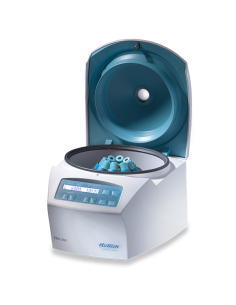
Centrifugation method
RCF / ×g
Rotor & radius
Run time
Time of application
Route of application
For technical context on PRP preparation:RCF, RPM, rotor and time in PRP centrifugationand theRCF/RPM Calculator.
What do ESHRE and HFEA say?
ESHRE: not recommended
ESHRE Good Practice Recommendations
ESHRE describes the data on intrauterine PRP as promising, but emphasizes major quality problems and missing safety data. The recommendation is:Intrauterine PRP is not recommended.
HFEA 2026: Red
Current HFEA assessment
The UK HFEA rates intrauterine PRP red for improving the chance of having a baby in people with thin or refractory endometrium. The reason given is possible safety concerns and the absence of moderate- or high-quality evidence for improved treatment outcomes.
A red HFEA rating does not mean that PRP has been proven ineffective. It means that benefit and safety are currently not sufficiently established under the evidence criteria used to consider the add-on benefit established.
Safety: “autologous” does not automatically mean “proven safe”
Safety data are limited
Autologous origin reduces certain immunological risks. It does not follow that every intrauterine PRP application is automatically risk-free. Relevant issues include sterile processing, contamination risks, application technique and the currently limited data on long-term reproductive outcomes.
Cochrane points to insufficient or missing safety data. The HFEA also highlights open safety questions and limited knowledge about possible effects on oocytes, embryos and long-term fertility outcomes.
Clearly distinguish thin endometrium from RIF
Thin / refractory endometrium
The question primarily concerns insufficient development of the uterine lining.
- Endometrial thickness as a measurable parameter
- often studied in the context of FET/IVF
- PRP studies often focus on endometrial development
≠
Recurrent Implantation Failure (RIF)
Repeated implantation failure can also occur with normal endometrial thickness.
- different inclusion criteria
- heterogeneous definitions across studies
- results cannot automatically be transferred to thin endometrium
How should the situation be assessed in 2026?
B1 assessment
The data now go beyond small pilot studies. Randomized studies, meta-analyses and reviews repeatedly show positive signals. At the same time, methodological weaknesses, different PRP preparations, heterogeneous patient groups and insufficient safety data prevent a robust conclusion that intrauterine PRP reliably improves the live birth rate in thin endometrium.
A technically appropriate description is therefore:an experimental, not yet sufficiently validated regenerative approach with clinically interesting signals.Individual medical decisions belong in the hands of appropriately qualified reproductive medicine professionals.
Further reading on PRPmed
The following internal pages provide more detail on technical PRP preparation. They do not make any statement about the clinical suitability of PRP for a specific reproductive medicine indication.
What is PRP?Basics, terminology and PRP types
RCF/RPM CalculatorConvert ×g and RPM using the rotor radius
Knowledge & ToolsPRP calculators and scientific professional tools
PRP Classification & ReportingUse published classification systems in a structured way
PRP centrifugationRCF, RPM, rotor, run time and transferability
Vi PRP-PRO – technical product dataTube design, CE status and standard centrifugation value
Frequently asked questions about PRP and thin endometrium
Can PRP increase endometrial thickness?
Several studies and a meta-analysis of randomized trials report an increase in endometrial thickness after intrauterine PRP. In the 2024 meta-analysis by Liu et al., the mean difference versus control groups was 1.23 mm. The results should be interpreted cautiously because of limited study size and heterogeneity.
Does PRP increase the chance of pregnancy?
Some RCTs and meta-analyses report higher clinical pregnancy rates. Cochrane, however, rates the evidence as very uncertain. A statistically positive pooled effect should therefore not be equated with a proven individual benefit.
Does PRP improve the live birth rate?
Some meta-analyses report higher live birth rates. Cochrane and current institutional assessments nevertheless continue to regard the evidence as insufficiently certain. A reliable clinical effect on live birth is therefore not established in 2026.
Is PRP for thin endometrium a standard treatment?
No. ESHRE does not recommend intrauterine PRP. The HFEA has rated its use for thin or refractory endometrium red since February 2026.
Is PRP safe because it comes from the patient’s own blood?
Autologous origin reduces certain immunological risks, but does not replace a safety assessment. Comprehensive data on adverse events and long-term outcomes are still lacking for intrauterine PRP in reproductive medicine.
Is recurrent implantation failure the same as thin endometrium?
No. RIF can also occur with normal endometrial thickness. Patient groups, definitions and study aims differ, so results from RIF studies cannot automatically be transferred to thin endometrium.
Selected sources
Liu X et al. · BMC Pregnancy and Childbirth · 2024
Meta-analysis of 8 RCTs in thin endometrium.
PubMed
Vaidakis D et al. · Cochrane · 2024
Autologous platelet-rich plasma for assisted reproduction.
PubMed
Masiello F et al. · Blood Transfusion · 2025
Umbrella review of 25 systematic reviews.
PubMed
ESHRE Add-ons Working Group · 2023
Good practice recommendations on add-ons in reproductive medicine.
Full text
Human Fertilisation and Embryology Authority · 2026
Current assessment of intrauterine and intraovarian PRP.
HFEA
Kaur H et al. · Frontiers in Reproductive Health · 2026
Umbrella review of PRP in unexplained RIF.
Full text
Liang X et al. · Reproductive Medicine and Biology · 2026
Meta-analysis of randomized studies on RIF.
Full text
Liu KE et al. · Reproductive BioMedicine Online · 2019
CFAS guideline on management of thin endometrium.
PubMed
Editorial status:.
Medical information:This article provides professional information on the current state of research. It is not an individual diagnosis, treatment recommendation or guarantee of success. Diagnosis and treatment in reproductive medicine are the responsibility of appropriately qualified medical professionals.