

PRP hair

PRP for hair: application, effectiveness and safety

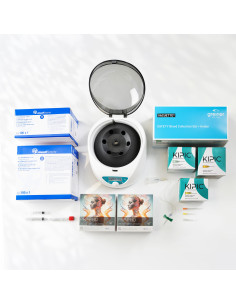
PRP Starter Set | SERVOspin Evolve – Complete package for professional users

100451
The PRP Starter Set | SERVOspin Evolve is a preconfigured set for the preparation of Platelet-Rich Plasma (PRP) for use in medical practices and laboratories. It combines PRP-suitable consumables with a technically compatible laboratory centrifuge as well as accessories for blood collection and application. Contents: 1× SERVOspin Evolve centrifuge 6×15...
immediately available
€1,199.00

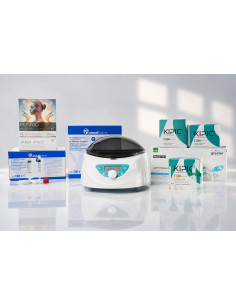
PRP Power Kit Pro - your complete set for professional PRP treatments

100399
Contents include: 1x DUO Quattro centrifuge 2x PRP tubes | Vi PRP-Pro | pack of 10 pcs. 1x Kipic® needle 25G x 42 mm | pack of 100 pcs. 1x Kipic® mesotherapy needle 30G x 4 mm | pack of 100 pcs. 1x Kipic® mesotherapy needle 27G x 13 mm | pack of 100 pcs. 1x Mediware disposable syringes 5 ml, 3-part, Luer-Lock, sterile | pack of 100 pcs. 1x Mediware...
Out-of-stock
€2,668.00
Showing 1-2 of 2 item(s)

Professional category · PRP and hair medicine

PRP for hair does not begin with a promise. It begins with a controlled workflow.

Products for professional PRP preparation in hair-related workflows: PRP tubes, centrifuges, preconfigured sets, and accessories for blood collection and sample handling. For physicians, clinics, medical facilities, and appropriately qualified professional users.

Follicle atlasDiagnosis → Preparation → Application
Schematic view of the scalp, hair follicles, and PRP fraction An abstract cross-section shows several hairs, follicles, and a highlighted PRP fraction as part of a professional workflow. PRP

Basics

What does PRP mean in hair medicine?

PRP stands for Platelet-Rich Plasma. It is obtained from the patient’s own blood. After blood collection, a centrifuge separates the blood components according to their different densities. This can provide a plasma fraction with a higher platelet concentration than the original blood.

After activation, platelets release various growth factors and signalling proteins. This biological rationale underlies scientific interest in PRP for certain forms of hair loss. It does not mean that every preparation has the same composition or produces comparable results in every patient.

The products in this category are intended for professional preparation and equipment workflows. They do not replace a diagnosis, medical qualification, or an individually defined treatment protocol.

In brief: PRP is not a standardised finished medicinal product. The composition of the obtained plasma fraction is influenced by factors including the tube system, blood volume, centrifugal force, run time, and subsequent processing.

Diagnosis before product selection

Hair loss is a symptom, not a single diagnosis.

PRP has been studied most extensively in androgenetic alopecia. Other forms of hair loss may have different causes and require different investigations and medical decisions.

01

Androgenetic alopecia

Hereditary hair loss in men and women; this is the area covered by most PRP research.

02

Inflammatory or autoimmune causes

Medical assessment determines whether an approach is appropriate and, if so, which one.

03

Hormonal or medication-related factors

Comorbidities and medicines may be relevant to the diagnostic work-up.

04

Systemic or nutritional factors

Laboratory values, medical history, and clinical findings may be required to clarify the cause.

This list is not exhaustive. Individual suitability and possible contraindications must be assessed by the treating medical professional.

Evidence

Evidence of possible effects – but no general guarantee of success.

Systematic reviews and meta-analyses sometimes report measurable changes in hair density in androgenetic alopecia. However, the strength of the evidence remains limited because study groups are often small and preparation methods, platelet concentrations, treatment schedules, and comparator groups differ substantially.

Best supported

Possible changes in hair density in selected patients with androgenetic alopecia.

Inconsistent

Results for hair count, hair diameter, visible regrowth, and long-term effects.

Important limitation

Study results cannot automatically be transferred to every tube, centrifuge, or patient.

Systematic review on PubMed

Technical process

Four stages of a professional PRP hair workflow

Blood collection

Blood is collected under appropriate hygienic conditions into a tube system intended for this purpose.

Centrifugation

The tubes are balanced correctly and processed using the parameters specified for the particular system.

Plasma fraction

The intended fraction is withdrawn or made available according to the tube design and the defined workflow.

Medical application

Technique, treatment area, quantity, and session planning are defined individually by qualified medical professionals.

RPM is not the same as centrifugal force.

The actual relative centrifugal force depends on rotational speed and rotor radius. An RPM value must therefore not be transferred to another centrifuge model without verification.

In the range · Item 100101

Positioning Vi PRP-PRO within the hair workflow

Vi PRP-PRO is a sterile borosilicate-glass PRP tube for professional PRP preparation. It contains sodium citrate as an anticoagulant and a thixotropic separation gel. Its specific use is governed by the intended purpose, instructions for use, and the facility’s professionally defined process.

Product type
PRP tubes, pack of 10
Material
Borosilicate glass
Additives
Sodium citrate and separation gel
Distinction
Contains no melatonin

Vi PRP-PRO is not equivalent to PRF tubes without anticoagulant or to tubes containing melatonin. Products with different additives and protocols must not be interchanged solely because they have a similar design.

Vi PRP-PRO product page

Equipment as a system

The individual product is not decisive; technical compatibility is.

A PRP hair workflow consists of several components. Tube format, rotor holder, RCF, run time, blood collection accessories, and other consumables must match the intended process.

01

PRP tubes

Check material, fill volume, anticoagulant, separation gel, product status, and manufacturer protocol.

02

Centrifuge and rotor

Tube dimensions, adapters, rotor radius, permitted load, and achievable RCF must be compatible.

03

Blood collection and transfer

Select holders, needles, syringes, and connectors according to the planned process and their intended purpose.

Selection criteria

What professional users should check before ordering

Intended purpose

Use the product only within the intended purpose defined by the manufacturer.

Technical compatibility

Assess the tube, rotor, adapter, and centrifugation parameters as one interconnected system.

Manufacturer information

Do not replace specified fill volumes, run time, RCF, and handling instructions with generic online information.

Documentation

Document the products used, settings, and relevant process steps in a traceable manner.

Safety

Autologous material does not mean risk-free.

Blood collection and invasive application may be associated with local pain, tenderness, redness, swelling, minor bleeding, or bruising. Invasive procedures also carry a general risk of infection if hygiene standards are not observed.

Diagnosis, suitability, contraindications, concomitant medication, informed consent, and medical performance are the responsibility of the treating professional. The available studies do not replace an individual risk assessment.

Direct answers

Frequently asked questions about PRP for hair

Is PRP suitable for every form of hair loss?

No. Hair loss can have different causes. Most available PRP research relates to androgenetic alopecia. The underlying cause must be assessed medically before use.

Does PRP guarantee new hair growth?

No. Studies report possible changes in individual outcome measures, especially hair density, in selected patient groups. An individual result cannot be inferred or guaranteed from this.

How many PRP applications are required?

There is no universally applicable schedule. Studies differ in the number, interval, and duration of applications. Planning is defined individually by the treating medical professional.

Can any laboratory centrifuge be used for PRP?

No. Tube dimensions, rotor holder, adapter, achievable RCF, run-time control, loading, and intended purpose must match the planned preparation process.

What is the difference between RPM and RCF?

RPM denotes the rotor speed. RCF describes the relative centrifugal force actually acting on the sample. Because RCF also depends on rotor radius, two centrifuges can generate different forces at the same RPM.

Are all PRP tubes constructed in the same way?

No. Differences include material, volume, anticoagulant, separation gel, regulatory status, and intended centrifugation protocol. Substitution requires technical and professional assessment.

Practice and medical facility

Selecting PRP hair products systematically

This category contains products for professional PRP preparation in hair-related workflows. Before ordering, check whether the intended purpose, tube system, centrifuge, and consumables match your planned workflow.

Product added to wishlist
Product added to compare.
group_work Cookie consent