
Shopping Cart
Evidence-based overview · hand & wrist
PRP treatment for wrist pain
PRP is being studied for selected hand and wrist disorders. The decisive issue is not the symptom “pain”, but the exact diagnosis.
Wrist pain can interfere with gripping, weight-bearing and repetitive movement. Similar symptoms may nevertheless arise from very different causes, including tendon irritation, osteoarthritis, ligament or cartilage injury, fracture or nerve compression.
An injection of platelet-rich plasma, or PRP, is therefore not a general treatment for every painful wrist. Whether it can reasonably be discussed depends on the affected structure, the severity of the condition and previous treatment.
Biologie
What is platelet-rich plasma?
PRP is prepared from the patient’s own blood. After blood collection, the components are separated by centrifugation. The fraction used is intended to contain a higher concentration of platelets than the original blood.
Platelets participate in clotting and tissue responses and release several signalling molecules. This is the basis for the assumption that PRP may influence local healing and inflammatory processes. It does not mean that PRP can completely replace lost cartilage, repair damaged nerves or reverse structural disease.
PRP is not one uniform product. Platelet concentration, leukocyte content, starting volume, centrifugation method and number of injections vary across systems and studies. A universally optimal dose has not been established.
Diagnostik
Diagnosis comes before injection
Pain on the thumb side, symptoms on the little-finger side and night-time tingling in the thumb, index and middle fingers suggest different disorders. Depending on the findings, examination may include radiographs, ultrasound, MRI or nerve-conduction testing.
A PRP injection without a defined target structure is not clinically sound. Studies address specific diagnoses and cannot be transferred indiscriminately to all forms of wrist pain.
Evidence map
What does the evidence show for specific diagnoses?
The evidence differs markedly by disorder. A positive individual study is not proof of general effectiveness.
De Quervain tendinopathy
Several small studies and reviews report possible reductions in pain and improvements in function. A 2026 review found possible longer-term advantages over corticosteroids, but stressed small samples, major heterogeneity and low certainty. Corticosteroid injection combined with temporary immobilisation remains better studied.
Hand and thumb-base osteoarthritis
For thumb-base and hand osteoarthritis, some studies suggest longer-term pain reduction. In one network analysis there was no clear short-term superiority over placebo, and functional improvement was not consistent. These findings cannot automatically be transferred to every form of radiocarpal wrist osteoarthritis.
Carpal tunnel syndrome
A meta-analysis of seven studies involving 365 participants found improvements in subjective symptoms, while objective nerve measures were less consistent. In marked weakness, muscle wasting or severe nerve compression, an injection must not delay necessary surgical decompression.
TFCC injury
Evidence is very limited. In a small retrospective cohort, adding PRP to arthroscopic TFCC repair did not improve outcomes. Pain was similar and one function score was more favourable in the group without PRP.
Fractures and Kienböck disease
PRP has been examined in isolated studies of scaphoid and distal-radius fractures, but it has not become an accepted general standard. There is no robust clinical evidence that PRP can “reverse” Kienböck disease.
Workflow
What might a PRP procedure involve?
The procedure depends on the diagnosis, target tissue, clinical approach and PRP system. Small joints, tendons, nerves and vessels are closely packed at the wrist, so injections are often performed with ultrasound guidance.
Study protocols differ in preparation, volume, number of injections and intervals. No universal regimen can be derived from individual publications.
Blood collection using an intended system
Centrifugation according to the instructions for use and documented protocol
Selection and withdrawal of the intended plasma fraction
Targeted injection by a qualified medical professional
Follow-up and diagnosis-specific further care
Safety
Adverse effects and limitations
Temporary pain, tenderness, swelling or bruising may occur after injection. As with any injection, risks include bleeding, infection and injury to adjacent nerves or vessels.
Infections, abnormal blood counts, cancer and medicines affecting coagulation or platelet function require individual medical assessment. Medicines must not be stopped without medical advice. A 2025 international consensus notes that many recommendations for comorbid conditions are based mainly on expert opinion because clinical data remain limited.
Selection
When can PRP reasonably be discussed?
An individual medical assessment may be appropriate when there is a clear diagnosis and at least some clinical evidence for that condition. Relevant factors include:
- the exact diagnosis and target structure
- severity and duration of symptoms
- previous conservative or surgical treatment
- imaging and neurological findings
- comorbidities and relevant medicines
- characteristics of the PRP system and the documented protocol
Methodik
Why the evidence is difficult to compare
Studies labelled “PRP” do not necessarily use identical preparations. Blood volume, cell composition, centrifugal force, rotor, run time and withdrawal technique can alter the final product.
Many studies also have small samples, short follow-up and different comparators. A positive study should therefore not be read as proof that PRP is generally effective for “wrist pain”.
Technical reference for professional users
Preparation is a system-specific process
The following product links describe materials and device technology for professional PRP workflows. They are not a recommendation for a specific medical indication and do not replace the instructions for use or clinical judgement.
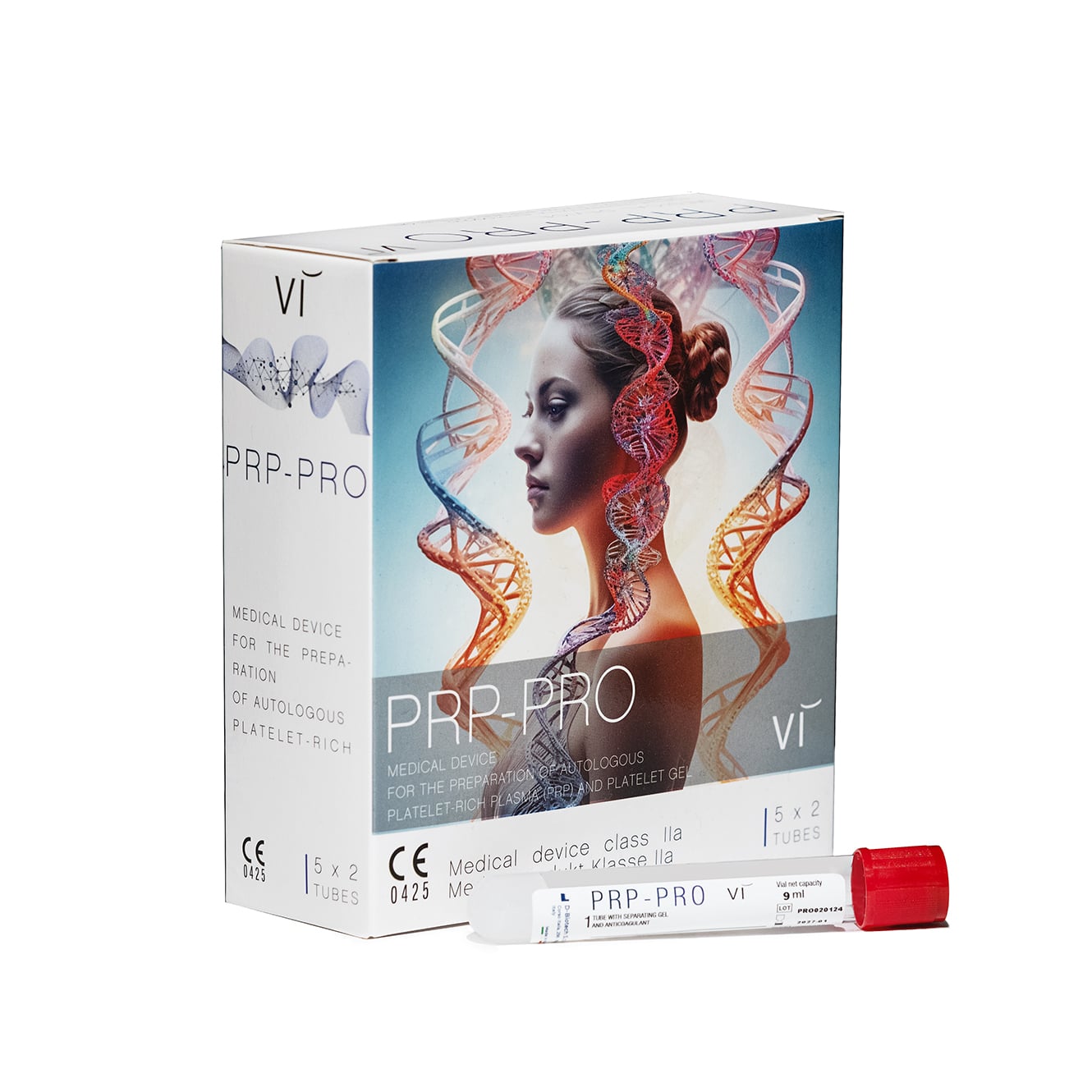
Vi PRP-PRO PRP tubes
Sterile borosilicate-glass PRP tube with sodium citrate and separation gel. Intended purpose, fill volume, protocol and centrifuge compatibility must be checked before professional use.
View Vi PRP-PRO product data
Hettich EBA 200 MD
Compact class IIa medical-device centrifuge with an integrated fixed-angle rotor. The manufacturer’s specifications, permitted tube configuration and documented RCF/time protocol remain decisive.
View Hettich EBA 200 MDFAQ
Frequently asked questions
Does PRP help every type of wrist pain?
No. Wrist pain is a symptom with many possible causes. PRP can only be considered in relation to a defined diagnosis.
Can PRP fully repair cartilage or nerves?
There is no robust general evidence that it completely restores lost cartilage or damaged nerves. Studies mainly assess pain and function.
Is PRP an alternative to surgery for carpal tunnel syndrome?
It is being studied as a conservative option in mild to moderate disease. Severe compression, weakness or muscle wasting may require timely surgical decompression.
Is ultrasound guidance useful?
Sensitive structures are closely packed at the wrist. Ultrasound can support needle placement, but does not replace a clear diagnosis or clinical expertise.
Is there one standard PRP protocol?
No. Preparations and protocols differ. The instructions for use, device specifications and case-specific clinical assessment remain binding.
Conclusion
Balanced assessment
The most relevant clinical data concern de Quervain tendinopathy, thumb-base osteoarthritis and carpal tunnel syndrome. Even in these conditions, the evidence is inconsistent and partly of low certainty.
Convincing evidence is lacking for TFCC injury, vascular disorders of the wrist and nonspecific pain. Claims that PRP repairs nerves, replaces cartilage or reverses Kienböck disease are not supported by the current clinical evidence.