
Shopping Cart
The information we provide is for your information only and does not replace a personal consultation, examination or diagnosis by a registered doctor.
In principle, no remote diagnosis or therapy suggestion can be made in individual cases. The information and content provided is intended to offer general, non-binding support to those seeking advice. The information provided by the respective experts is no substitute for a visit to the doctor, but can usefully supplement and support the dialogue between patient and doctor.
We do not offer advice, recommendations or enquiries about the purchase and/or use of medicines, other health products, diagnostic or therapeutic procedures.
We also warn against self-medication. The content provided by us cannot and should not be used to make an independent diagnosis and/or independent selection and application, or to change or discontinue any medication, other health product or healing process. Please consult your doctor or pharmacist for this!
The content available on our website is carefully compiled and meets high quality standards. Medical texts are written by experts. The accuracy of the content is regularly checked and updated. Knowledge in medicine is subject to constant change through scientific research and development in medical practice. Our authors and medical experts ensure that medical information is presented correctly and comprehensibly, even for laypersons. However, we and third parties do not assume any responsibility for the completeness, accuracy, correctness and up-to-dateness of the contents of the website.

Understanding PRP Activation: Calcium, Thrombin, Fibrin and In-Situ Activation
How do ex vivo activation and in-situ activation differ? This professional review explains calcium, thrombin, fibrin formation, release kinetics and current clinical evidence.
Read more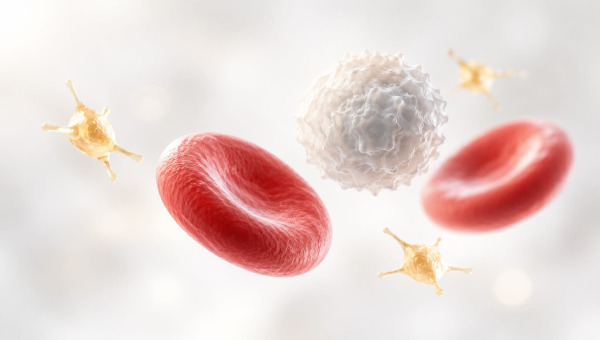
Leukocyte-rich or leukocyte-poor PRP? How to interpret LR-PRP and LP-PRP
LR-PRP and LP-PRP differ in their leukocyte profile, but this is only one part of their characterization. This professional review examines cell profile, neutrophils, clinical evidence and the limits of simplified LR/LP rules.
Read more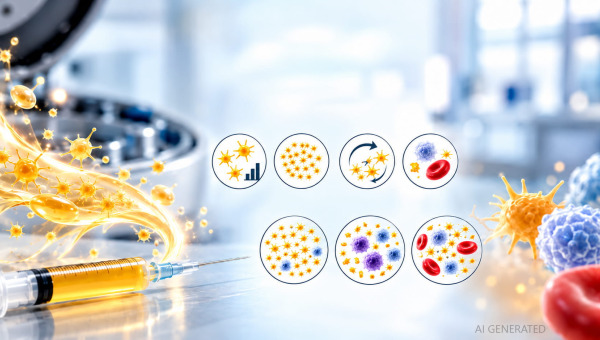
How to characterize PRP: platelet dose, recovery and cell profile
Not all PRP preparations are the same: concentration, absolute platelet count, recovery and cell profile describe different properties. This professional article explains how PRP can be characterized transparently and classified using established systems.
Read more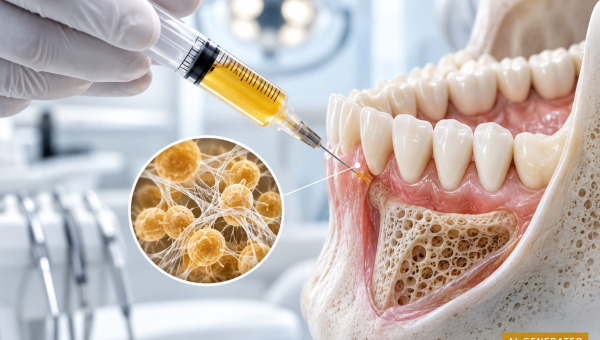
PRP and PRF in Dentistry and Oral Surgery – Evidence, Applications and Differences
PRP and PRF are being investigated for a range of regenerative applications in dentistry and oral surgery. This professional article reviews current evidence on periodontitis, extraction sockets, implantology, peri-implantitis, sinus augmentation, MRONJ and temporomandibular disorders, while explaining the differences between PRP, PRF and different PRF protocols.
Read more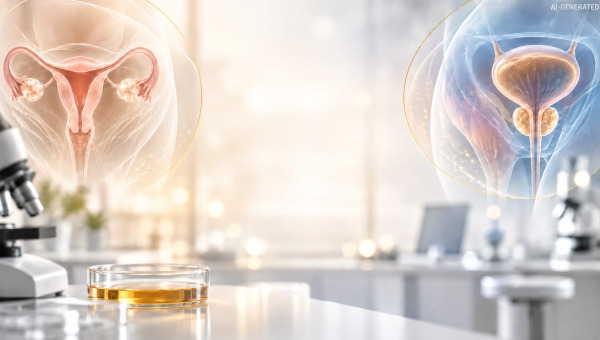
PRP in Gynecology and Urology – Applications, Evidence and Limitations
PRP is being investigated across gynecology, urogynecology, reproductive medicine, urology and andrology. This professional overview examines the current evidence, routes of administration, guidelines, safety aspects and limitations.
Read more
PRP Injection Techniques and Application Methods by Specialty
PRP is applied very differently depending on the medical specialty and target tissue. This professional article compares intradermal microinjections, nappage, linear and fanning techniques, bolus and depot methods, peppering, intra-articular injections and PRF-based applications. Interactive visuals explain imaging, preparation, platelet dose and flow physics.
Read more
PRP for Stress Urinary Incontinence: What Do Clinical Studies Really Show?
PRP is being investigated as a regenerative approach for female stress urinary incontinence. This article reviews randomized trials, the 2026 meta-analysis, proposed mechanisms, safety and current guidelines, and explains why the clinical evidence remains inconsistent.
Read more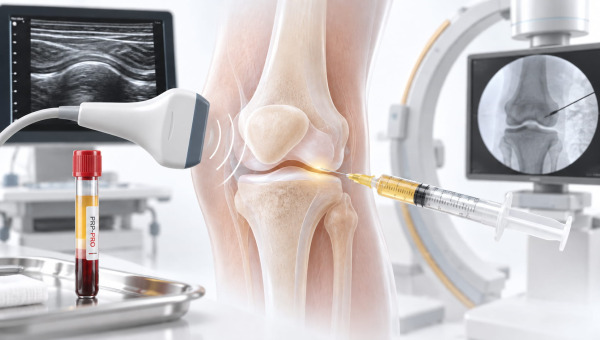
Imaging in PRP Injections: Ultrasound and Fluoroscopy Compared
How can the position of a PRP injection be controlled in small, deep or anatomically difficult target structures? This article compares ultrasound and fluoroscopy, examines their strengths and limitations, and reviews the current evidence on image-guided PRP injections.
Read more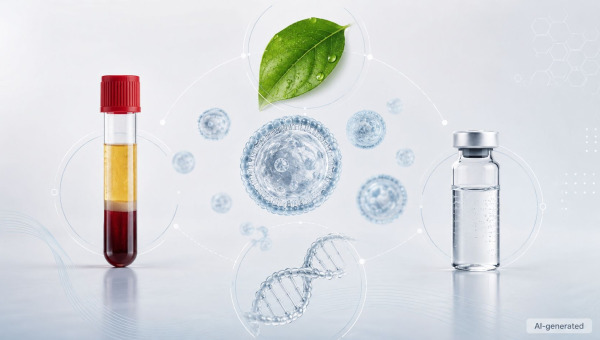
Exosomes in Aesthetics: Plant-Based Exosomes, Exosome Serums, PDRN and PRP Compared
What distinguishes plant-based exosomes, exosome serums, PDRN and PRP? This professional overview compares their origin, composition, evidence and role in regenerative aesthetics and explains why these concepts should not be treated as interchangeable.
Read more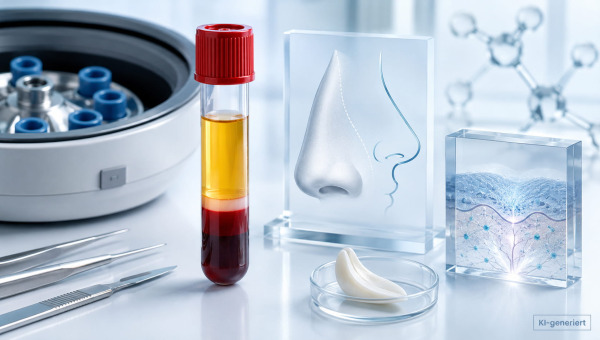
PRP in Plastic and Reconstructive Surgery: Current Evidence and Potential Applications
What does current research show about PRP in plastic and reconstructive surgery? This article critically examines studies on rhinoplasty, cartilage grafting, wound healing, scars and postoperative recovery, clearly separating clinical evidence from experimental approaches.
Read more