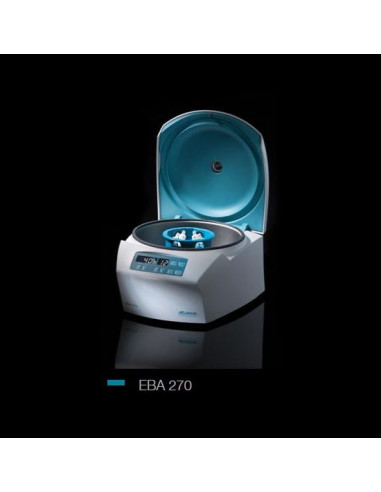
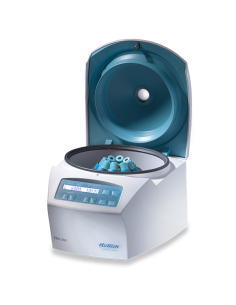
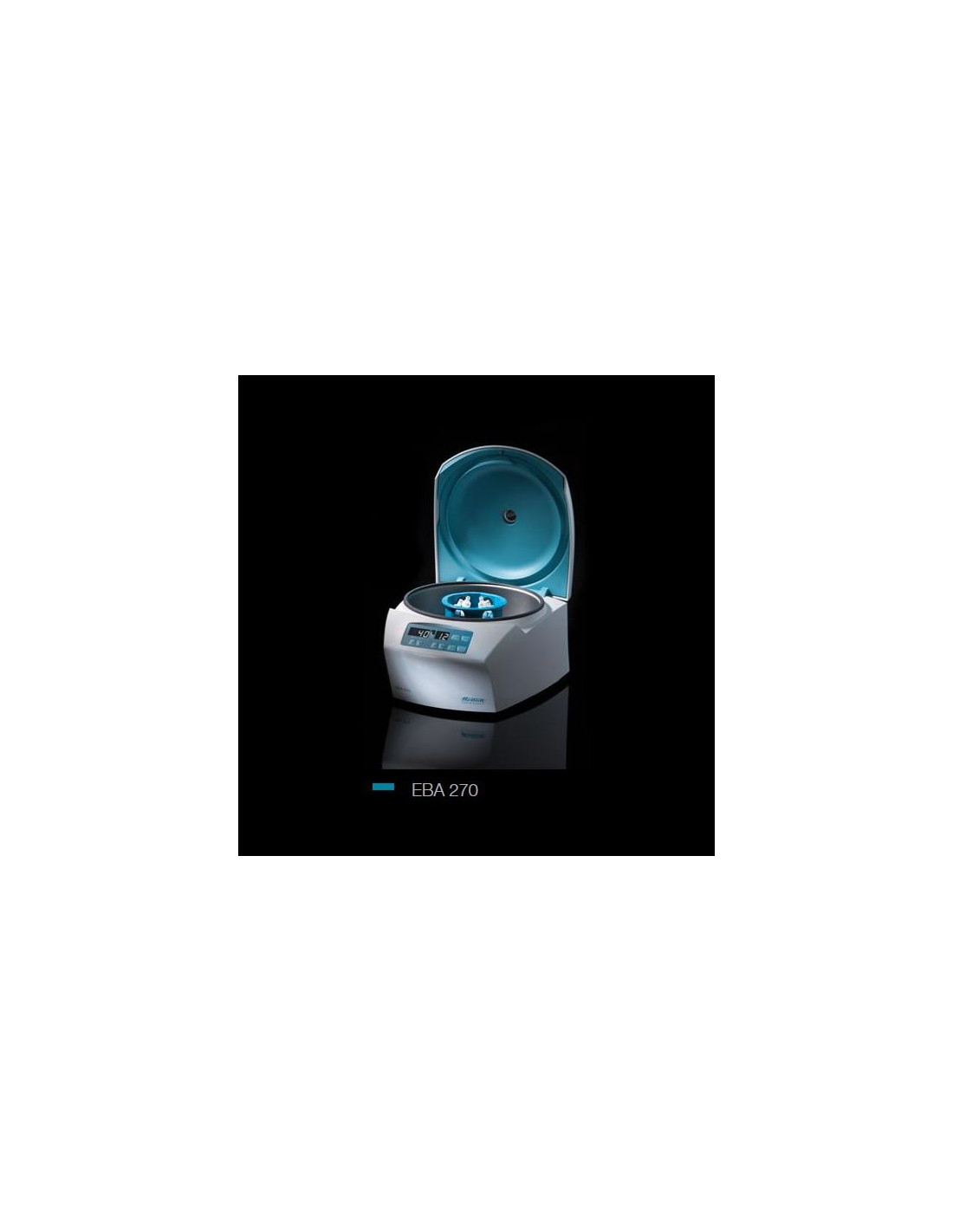
Hettich EBA 270 centrifuge – 6 × 15 ml with swing-out rotor
The Hettich EBA 270 is a compact laboratory centrifuge for physician offices, small laboratories and clinical sample preparation. Its integrated 6-place swing-out rotor accepts tubes up to 15 ml, swings out to 90° and operates from 500 to 4,000 rpm with a maximum RCF of 2,254 × g.
Hettich lists standard blood collection tubes and urine tubes up to 15 ml as typical applications. According to the manufacturer, the 90° swing-out rotor is particularly suited to blood collection tubes containing separating gel.
90°
Integrated 90° swing-out rotor
The tubes oscillate up to 90° during operation. Hettich explicitly recommends this rotor design for blood collection tubes with separating gel.
2.254× g
500 to 4,000 minutes−1
The rotational speed is adjustable in increments of 100 rpm.−1 Adjustable. The RCF calculator below shows the resulting × g value for rotor 2315.
51dB(A)
326 × 400 × 239 mm, approx. 14 kg
Maximum noise level according to Hettich: ≤ 51 dB(A). Compact tabletop design with metal lid, sight glass and imbalance detection.
rotor
2315, 6-axis swing-out rotor, 90°
capacity
6 × 15 ml
speed
500 to 4,000 minutes−1, step size 100
Maximum acceleration
2,254 × g
Duration
up to 99 minutes, plus short-term button
classification
In vitro diagnostic device, Class A under IVDR (EU) 2017/746
Manufacturer
Andreas Hettich GmbH & Co. KG, Tuttlingen
Price–
Interactive · for exactly this rotor
From × g in the protocol to the number on the display
The protocols are called relative centrifugal acceleration in × g. On the device, you set a speed One. Both are related via the rotor radius – in the case of rotor 2315, these are 12.6 cmEnter your target value.
× g
min−1
Set on the device
3.300min−1
This actually results in
1.534× g
Deviation from the target value
+2,3%
The step size of 100 minutes−1 This means that not every ×-g value will be exactly achieved. The calculator displays the nearest adjustable speed and the value that actually results from it.
5001.0001.5002.000
5001.0001.5002.0002.5003.0003.5004.000
Speed in min−1 · perpendicular: × g. The acceleration increases with the square The rotational speed – double the rotational speed means four times the acceleration.
Calculated according to RCF = 1.118 × 10⁻⁵ × r × n² with r = 12.6 cm for rotor 2315. Cross-check with the manufacturer's specification: 4,000 min−1 This results in 2,254 × g. The device's data sheet and manual are authoritative; the radius changes with a different rotor or application.
Interactive · Rotor design
Why the design determines the separating layer
Rotor designs guide the vessels differently during operation. The illustration shows the geometric difference between swing-out and angled rotors. Select a design.
During operation, the tube swings out to 90°. Centrifugal force then acts upon it. along the tube axis, and the boundary between the phases forms exactly perpendicular to it. If the tube is then positioned vertically again, this boundary is already in place. horizontal Nothing needs to flow back, nothing gets smudged. How individual samples appear after the run also depends on the sample, container, rotational speed, and runtime.
In an angle rotor, the tube remains at a fixed angle. Centrifugal force acts upon it. oblique to the tube axisThe heavy phase adheres to the outer wall during operation, with the interface positioned perpendicular to the tube. As soon as the rotor stops and only gravity is acting, The deposited material runs back down the wall.until the boundary is horizontal again. The extent to which this rearrangement affects a specific sample depends on the sample, the container, the rotational speed, and the runtime.
Schematic representation of the physical principle. Which phases form and how sharply they separate depends on the sample, rotational speed, and transit time.
Interactive · Loading
Six seats, but not every booking works.
A rotor must be loaded symmetrically, otherwise the imbalance detection will deactivate – and in the worst case, the bearing will be damaged. Tap the slots you want to fill.
No seat occupied
Select the seats you want to fill. The computer checks whether the numbers cancel each other out.
Opposite seats: 1–4, 2–5, 3–6
The geometric symmetry is checked. Additionally, opposite positions must be loaded with the same mass according to the manufacturer's instructions. Use identical container types and observe the specifications in the device manual.
Technical data
The device in numbers
Rotor and drive
rotor
2315, swing-out rotor, 6 seats, 90°
capacity
6 × 15 ml
Rotor radius
12.6 cm (from 2,254 × g at 4,000 min−1)
Speed range
500 to 4,000 minutes−1, step size 100
Maximum acceleration
2,254 × g
Permissible density
up to 1.2 kg/dm³
drive
Brushless motor
cooling
Air cooling
Spin cycle
stainless steel
Operation and design
Advertisement
LCD displays all set parameters
Control panel
Membrane keyboard, two exit stages
Duration
up to 99 minutes, plus short-term button
Lid
Metal with viewing window, one-hand closure with locking mechanism.
Security
Imbalance detection with shutdown, over-temperature shutdown, emergency release, error indication
signal
Acoustic signal at the end of the run
noise
≤ 51 dB(A)
Dimensions (W × D × H)
326 × 400 × 239 mm
Weight
approximately 14 kg
Operation & Purpose
What needs to be clarified before the first run
Operational
Read the manual before first use. Operation by trained personnel only. Manual and data sheet are available for download below.
Load symmetrically. Use the same tubes, the same fill level, and place them opposite each other. Do not exceed the maximum fill level.
Only open the cover when the rotor has stopped. The lock only releases after that; the emergency release is intended for power outages, not for everyday use.
Set up securely. Level, load-bearing surface, safety distance all around according to the manual, grounded electrical outlet.
Protective equipment. Wear gloves and safety goggles when handling biological material; do not allow any liquid to enter the centrifuge chamber.
After the run. Check the centrifuge chamber and rotor, remove any breakage immediately, clean and disinfect according to the manual and hygiene plan.
Classification and limits
In vitro diagnostic device, Class A. Hettich classifies the EBA 270 as a Class A IVD under Regulation (EU) 2017/746. Its intended purpose is to separate components of liquid samples of human origin for sample preparation in in vitro diagnostic procedures.
What follows from this. What you load the device with and for what purpose depends on the intended use of the respective tube or kit system – not on that of the centrifuge. prpmed provides no information on this.
No guarantee of results. The phases that form in your application and how they can be removed depend on the sample, tube, rotational speed and runtime.
Responsibility. The operator is responsible for the area of application, validation, maintenance intervals and documentation in accordance with the regulations applicable to him.
Submission. Exclusively for commercial users and their authorized representatives.
Disposal. Waste electrical and electronic equipment (WEEE) according to Directive 2012/19/EU. Manufacturer's WEEE number: DE 92954423.
In the program
Three centrifuges – which one suits your intended purpose?
The design determines the separating layer, which classification about what a device is actually intended for. Both should be suitable for the planned application – and this should be considered before purchasing.
Prices are read live from the respective product pages; the price shown on the target page is definitive. Rotor and rating information is taken from the manufacturer's specifications on the respective page. Also included in the program: the mobile centrifuge cart P1-Z for use in changing locations.
Documents
Manual and datasheet
Both documents should be read before the first run – and included in the operator's equipment documentation.
prpmed offers its own tools for work related to centrifugation – free of charge and without registration.
Practical questions
Frequently Asked Questions
My protocol specifies × g – what speed should I set?
The calculator above will determine this. Background: The relative centrifugal acceleration depends on the rotor radius, which is why the same rotational speed results in different g-values on two different devices. For rotor 2315, the radius is 12.6 cm; 3,300 min⁻¹.−1 This results in approximately 1,534 × g. For other devices, the RCF/RPM calculator.
Why am I not hitting my target value exactly?
Because the rotational speed changes in increments of 100 rpm−1 The calculator can be adjusted. It therefore displays the nearest adjustable speed and the resulting calculated RCF value. The deviation depends on the selected target value.
What distinguishes a swing-out rotor from an angled rotor?
In a swing-out rotor, the vessels move to a horizontal position during operation; in an angled rotor, they remain at a fixed angle. The graphic above illustrates the geometric principle. The separation achieved with a specific sample also depends on the sample, the vessel, the rotational speed, and the runtime.
Which tubes are intended for the EBA 270?
Hettich lists standard blood collection tubes and urine tubes up to 15 ml. According to the manufacturer, the integrated 90° swing-out rotor is particularly suited to blood collection tubes containing separating gel. Compatibility of a specific tube depends on dimensions, adapters and the manufacturer’s specifications.
How should the 6-place rotor be loaded correctly?
The rotor must be loaded geometrically symmetrically and with equal mass in accordance with the manufacturer’s instructions. The device manual, rotor loading plan and the specifications for the tubes and adapters used are decisive.
How is the EBA 270 classified for regulatory purposes?
Hettich classifies the EBA 270 as a Class A in vitro diagnostic device under Regulation (EU) 2017/746. Its intended purpose covers sample preparation in in vitro diagnostic procedures. For other uses, the intended purpose of the system being used is decisive.
How loud is the Hettich EBA 270?
Hettich specifies a maximum noise level of ≤ 51 dB(A). The dimensions are 326 × 400 × 239 mm and the weight is approximately 14 kg.
Which settings is the Hettich EBA 270 designed for?
Hettich lists small laboratories and physician office laboratories as typical settings. The EBA 270 is a compact centrifuge intended for sample preparation in in-vitro diagnostics; the specific use must match the manufacturer’s intended purpose and the tubes being used.
What is included in the delivery?
Device with mounted swing-out rotor 2315 and associated suspension, power cord and operating instructions. For the exact scope of delivery of the current batch, please refer to the data sheet or inquire before ordering.
Sale exclusively to commercial users and their authorized representatives. The information on this page describes the device's design, performance data, and operation; it is not an instruction manual and does not guarantee any specific result. The manufacturer's operating instructions, data sheet, and declaration of conformity, as supplied with the device, are authoritative. The operator is responsible for installation, training, validation, maintenance, and documentation in accordance with applicable regulations.
GPSR - General Product Safety Regulation
GPSR – General Product Safety Regulation
Responsible Economic Operator according to GPSR:
Andreas Hettich GmbH
Föhrenstraße 12
78532 Tuttlingen
Germany
Tel. +49 7461 7050
FAX: +49 7461 705 1125
https://www.hettichlab.com/de/kontakt/
Product Safety Sheet in Accordance with GPSR (General Product Safety Regulation) for the Hettich EBA 270 Centrifuge
1. Product Identification
Product Name: Hettich EBA 270 Centrifuge
Model Number: EBA 270
Manufacturer: Andreas Hettich GmbH & Co. KG
WEEE-Reg. No.: DE 92954423
Application: Medical device compliant with the IVD Directive 98/79/EC, specifically designed for human in-vitro diagnostics.
2. Intended Use
The Hettich EBA 270 centrifuge is specifically designed for use in medical practices, small laboratories, and blood collection. It is used for the separation and preparation of samples, particularly blood samples with separation gels, through centrifugation.
3. Key Technical Data
Max. Capacity: 6 x 15 ml
Max. RCF: 2,254
Max. Speed (RPM): 500 – 4,000 min⁻¹ (adjustable in increments of 100)
Weight: approx. 14 kg
Cooling: Air cooling
Dimensions (W x D x H): 326 x 389 x 239 mm
Maximum Noise Level: ≤ 51 dB(A)
Power Supply: Standard mains connection
4. Safety Information
General Safety Instructions:
The device must only be operated by trained personnel.
The device may only be used for its intended purpose.
Read the user manual completely before first use.
Sale is restricted to medical professionals in compliance with legal regulations.
Electrical Safety:
Ensure the device is connected to a grounded power outlet.
Only use the power supply recommended by the manufacturer.
Disconnect the power supply before cleaning or maintaining the device.
Mechanical Safety:
The rotor must be properly and symmetrically loaded.
Verify that the rotor is securely seated before operation.
Do not open the lid until the rotor has come to a complete stop.
Do not exceed the maximum fill volume specified for sample tubes.
Operational Safety:
Prevent liquids from entering the rotor chamber.
Sample tubes must be evenly filled to avoid vibrations or damage.
The centrifuge must only be operated in a clean and dry environment.
Overheating Protection:
The device is equipped with overheating protection that will automatically shut it down in case of overheating.
5. Health and Environmental Risks
Health Risks:
Improper use may cause injuries due to unbalanced rotors or unsecured sample tubes.
Contact with biological samples (e.g., blood serum) may pose health risks. Always wear appropriate protective equipment (e.g., gloves, safety goggles).
Environmental Risks:
The device contains electronic components. Dispose of it in accordance with applicable WEEE regulations.
6. Emergency Measures
In Case of Malfunction:
Immediately turn off the device and disconnect it from the power supply.
Inspect the rotor and rotor chamber for damage or foreign objects.
Contact an authorized service provider.
In Case of Electrical Short Circuit:
Disconnect the power supply (e.g., switch off the circuit breaker).
Do not attempt to repair the device yourself.
7. Maintenance and Care
Cleaning:
Clean the centrifuge with a soft cloth and mild detergent. Do not use aggressive chemicals.
Regularly clean the rotor and rotor chamber of dust and residues.
Maintenance:
Have the device inspected at least once a year by the manufacturer or an authorized service provider.
Replace wear parts, such as rotors and seals, as necessary.
Storage:
Store the device in a dry, dust-free environment.
8. Labels and Warnings
Warning Symbols on the Device:
⚠️ Caution: Read the user manual.
⚡ Warning: Electrical hazard.
♻️ Dispose of in accordance with WEEE regulations.
9. User Responsibility
The user is responsible for:
Adhering to the specified areas of application.
Ensuring regular maintenance and proper handling of the device.
Training personnel in the correct use of the device.
Complying with applicable regulations for medical devices.
10. Declaration of Conformity
The Hettich EBA 270 Centrifuge complies with the following:
This product safety sheet has been prepared in accordance with the General Product Safety Regulation (GPSR). It does not replace the manufacturer’s user manual. The device must only be used by trained medical professionals.
Hettich EBA 200 MD, type 1810 – Class IIa medical device under MDR (EU) 2017/745. For professional separation of human whole blood or blood components.
8-place E4413 angle rotor, 33°
Tubes up to 10 ml*
Max. 6,000 RPM / 3,461 RCF
CE 0483
* Compatibility depends on tube dimensions and manufacturer specifications.
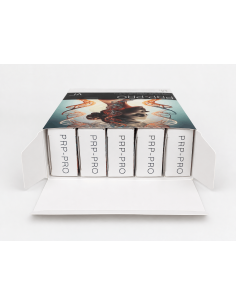
The VI PRP-PRO glass tube offers a modern solution for producing platelet-rich plasma (PRP) and ensures additional stability and reliability in treatments with a wall thickness of 2.4 mm. Developed with innovative technology and EC-certified (0425-MED-004180-00), it guarantees the highest level of safety and efficiency.
Key Features:
Certified...
Jalupro Super Hydro is a biorevitalizer intended for use in the professional aesthetic field.
The formulation combines hyaluronic acid with amino acids and peptides and is intended for treatments in the areas of the face, neck, décolleté, and hands.
Contents: 1 x 2.5 ml
Combifix® Adapter Luer-Lock / female–female
Combifix® adapter for connecting two Luer-Lock syringes.Used to create a sealed connection between two syringes to homogenize the resulting plasma gel.
Material & Safety
Free of BPA, DEHP, latex and PVC
Pyrogen-free and classified as non-toxic
Resistant to alcohols and lipids...
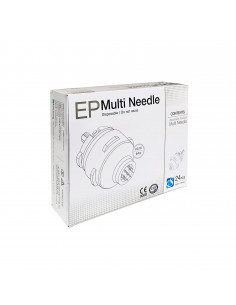
The EPN Needling Pen Replacement Heads (24 pieces) provide a precise solution for microneedling treatments. They enable deeper absorption of active ingredients through the combination of microneedling and electroporation, promoting visible skin rejuvenation.
Precision: Each replacement head contains 9 needles with a diameter of 0.16 mm.
Application:...
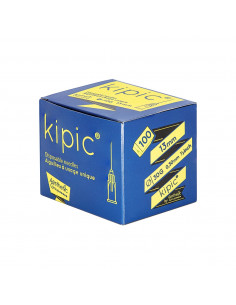
KIPIC® needles are specifically designed for precise microinvasive treatments and cosmetic procedures such as mesotherapy, PRP applications, and botulinum toxin injections. The fine tip ensures gentle and low-pain injections.
Technical Data:
Needle size: 30G (diameter 0.30 mm)
Length: 13 mm
Contents: 100 pieces
Safety: Single-use needle, sterile...
Quality Made in Germany: The precise workmanship and glass bead blasted finish ensure an elegant, satin-matte appearance.
The non-porous, refined stainless steel surface can be cleaned without leaving any residue, is resistant to disinfectants, and is autoclavable.
Suitable for various syringe types. The robust construction is designed for...
Product features
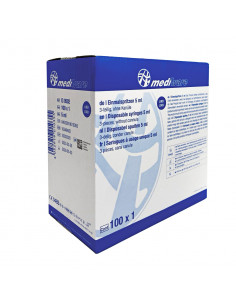
Contents: 100 x 5 ml syringes
3-piece design
With centred Luer-Lock connector
Without needle
Crystal-clear syringe barrel
Smooth-running, latex-free silicone plunger
Black, abrasion-resistant graduation
Extended scale for easy readability
Individually sterile packed in peel pack
For professional medical use
The KIPIC® Mesotherapy Needle (27G, 0.40 mm, 4 mm) is ideal for precise, low-pain injections in cosmetic and medical applications. Its fine tip ensures smooth injections and is especially suitable for subcutaneous treatments.
Technical Data:
Needle size: 27G (diameter 0.40 mm)
Length: 4 mm
Content: 100 pieces
Safety: Disposable needle, sterile...
Combifix® Adapter Luer-Lock / female–female
Combifix® adapter for connecting two Luer-Lock syringes.Used to create a sealed connection between two syringes to homogenize the resulting plasma gel.
Material & Safety
Free of BPA, DEHP, latex and PVC
Pyrogen-free and classified as non-toxic
Resistant to alcohols and lipids...
Tap to zoom
You need to login or create account
Save products on your wishlist to buy them later or share with your friends.