
Shopping Cart
Professional article for orthopaedics, sports medicine and podology
PRP for heel spurs and plantar fasciitis: evidence, practice and legal framework 2026
Platelet-rich plasma is frequently offered for heel pain. The evidence is more nuanced than many claims suggest: in chronic plantar fasciopathy, a mid-term advantage over corticosteroid injections is seen, whereas no proven benefit has been shown for the Achilles tendon. This article reviews the evidence and, in the legal section, distinguishes between independent PRP treatment, blood collection, preparation and delegable individual tasks.
- Updated
- 11 September 2026
- Reading time
- approx. 12 minutes
- Evidence base
- 26 sources
- Audience
- Medical professionals
Key points at a glance
- The bony spur is rarely the actual cause of pain.It is an X-ray finding that is also common in people without symptoms. The condition investigated and treated is plantar fasciopathy.[1]
- Chronic plantar fasciitis: mid-term advantage over corticosteroid injection.Meta-analysis of 24 RCTs: better pain scores at 3 and 6 months, with no difference at 1 and 12 months.[2]
- Only a small difference compared with shock-wave therapy.On average, −0.67 points on a 10-point pain scale after 3–6 months. Under defined conditions, ESWT is covered by German statutory health insurance.[3][4]
- Achilles tendon: no proven benefit.PRP showed no advantage over placebo for either chronic tendinopathy or acute rupture.[5][6]
- Independent PRP treatment remains under medical responsibility.Under Section 7(2) of the German Transfusion Act (TFG), blood donation may be collected by a physician or by qualified personnel under a physician’s responsibility. Under current case law, Heilpraktiker practitioners and podologists may not independently offer PRP as an autologous blood treatment.[7][25]
Heel spur or plantar fasciopathy?
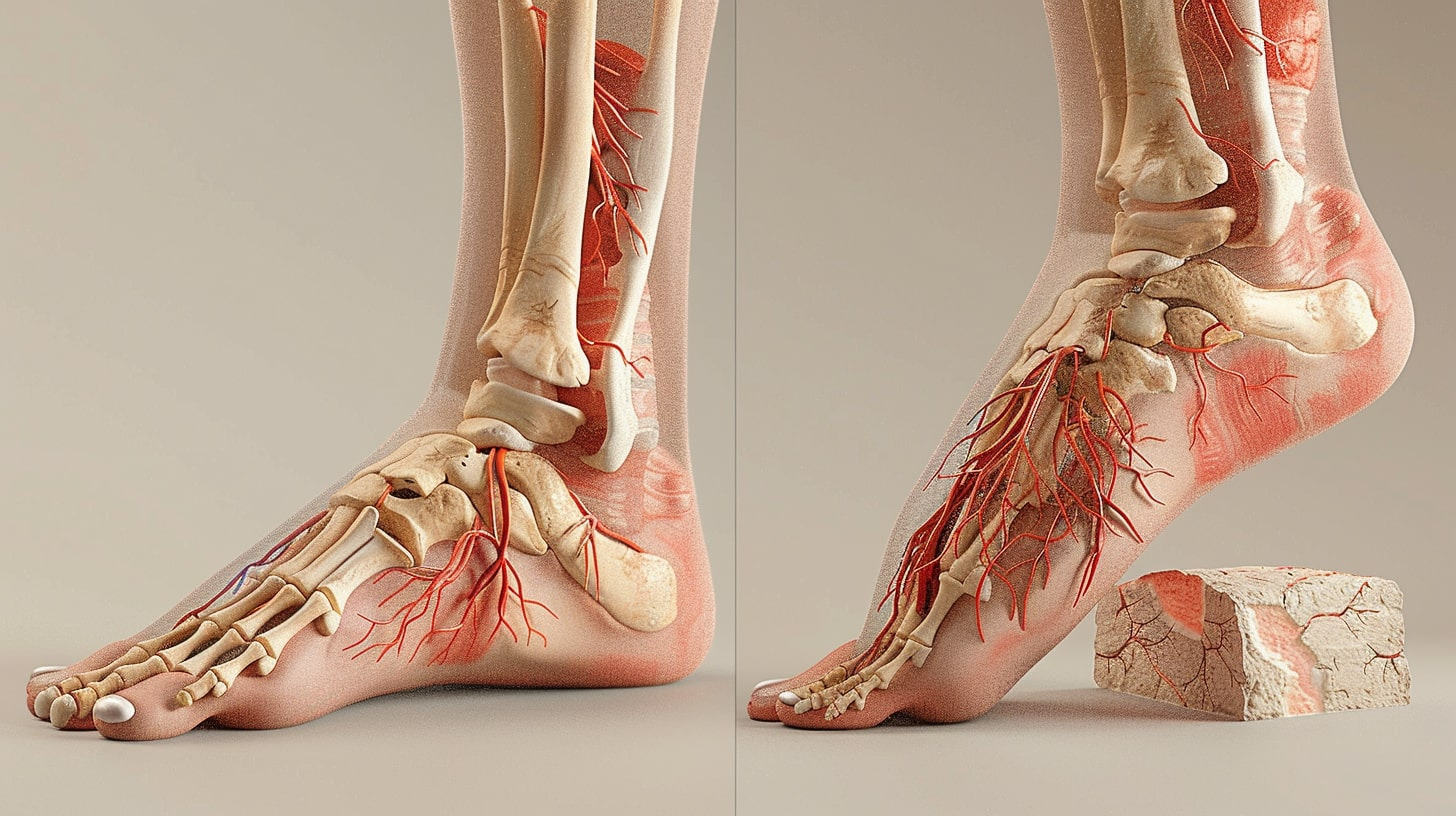
In everyday practice, “heel spur” is often used as a catch-all term for pain under the heel. Medically, the term describes a bony projection at the calcaneal tuberosity—an imaging finding rather than a pain diagnosis. Plantar calcaneal spurs become more common with age and are also found in many people without symptoms.[1] A German-language continuing-education article therefore considers a lateral X-ray solely to detect the spur unnecessary: the finding has no therapeutic consequence.[10]
The typical first-step pain is usually caused by plantar fasciopathy at the fascial origin. Because classic inflammation is rarely present, “fasciopathy” is more precise than “fasciitis”.[9] Diagnosis is primarily clinical: pain during the first steps after rest and tenderness at the medial calcaneal tubercle. On ultrasound, fascial thickness greater than 4 mm and hypoechoic structure support the diagnosis. The APTA guideline lists differential diagnoses including heel fat-pad syndrome, stress fracture, tarsal tunnel syndrome, inferior calcaneal nerve entrapment and S1 radiculopathy.[11]
Important for informed consent: PRP studies investigate plantar fasciopathy, not the spur itself. There is no evidence that PRP changes a bony heel spur.
Heel map: cause, clinical clues and PRP evidence
Select a structure in the foot. Use the filter to see the level of evidence for PRP.
What the studies show in plantar fasciitis
PRP compared with corticosteroid injection
Most randomised studies compare PRP with a corticosteroid injection. The most recent pairwise meta-analysis of 24 RCTs involving 1,653 participants found significantly better pain scores with PRP at 3 and 6 months, but no difference at 1 month or 12 months.[2]
A similar pattern was seen in the Dutch double-blind multicentre RCT by Peerbooms et al. with 115 patients: pain fell quickly with corticosteroid and then plateaued, while improvement with PRP was slower but reached a lower pain level after 12 months. At least 25% improvement was achieved by 84% of the PRP group versus 56% with corticosteroid. However, around 30% of participants did not complete the study, and the results required adjustment for baseline differences.[12]
Limits of the evidence
Fourteen of the 24 studies in the meta-analysis were conducted in India and four in Egypt.[2] Many studies are small, and PRP preparation and injection techniques vary substantially. A 2026 network meta-analysis of 63 RCTs also supports a mid- and longer-term trend in favour of PRP over corticosteroid injection. However, the authors rated confidence in the individual comparisons from very low to high.[13] Some effect sizes reported there versus placebo are so large that they are more suggestive of heterogeneity in the primary data. The rankings should therefore be read as a signal, not as a fixed hierarchy.
PRP compared with shock-wave therapy
Six RCTs involving 432 participants show a statistically significant pain advantage for PRP after 3–6 months: on average −0.67 points on a 10-point scale.[3] That is a small difference. Whether patients actually notice it remains uncertain. The network meta-analysis shows broad effectiveness of ESWT across time points.[13] In Germany, extracorporeal shock-wave therapy for heel pain caused by plantar fasciitis is covered by statutory health insurance under defined conditions.[4] This should be part of any discussion about PRP.
Time course: is PRP or corticosteroid ahead?
Select a time point after the injection. The graphic shows the direction of findings from three sources, not the effect size.
Direct statistical comparison
Course description or ranking
No marker: the abstract reports no separate result for this time point
Where PRP shows no benefit
Chronic Achilles tendinopathy
A 2025 meta-analysis of randomised trials found no improvement in pain or function versus placebo. The authors found signs of publication bias and advise against use until high-quality studies demonstrate a clear benefit.[5] An umbrella review of eight systematic reviews reached the same conclusion: isolated short-term pain benefits were neither clinically meaningful nor sustained.[14] A sham-controlled RCT published in JAMA is among the key trials.[15]
Acute Achilles tendon rupture
In the UK PATH-2 trial, 230 conservatively treated patients from 19 hospitals received PRP or a placebo injection. PRP showed no advantage at 24 weeks or at two years.[6]
Other causes of foot pain
Evidence is insufficient for PRP injections in ankle osteoarthritis and conservatively treated osteochondral lesions of the talus.[16] We found no robust studies for nerve entrapment, retrocalcaneal bursitis or forefoot pain.
Evidence overview
| Indication | Rating | Key finding |
|---|---|---|
| Chronic plantar fasciitis, PRP vs corticosteroid at 3–6 months | Moderate evidence | Advantage for PRP, heterogeneous study quality[2][13] |
| Chronic plantar fasciitis at 12 months | Inconsistent | Meta-analysis shows no difference; RCT and network meta-analysis favour PRP[2][12][13] |
| Plantar fasciitis, PRP vs shock-wave therapy | Inconsistent | Small advantage for PRP based on few studies[3] |
| Acute plantar fasciitis | Insufficient evidence | Studies predominantly include chronic cases |
| Bony heel spur | Insufficient evidence | Not a treatment target; no evidence of an effect[1][10] |
| Chronic Achilles tendinopathy | No benefit demonstrated | No advantage over placebo[5][14] |
| Acute Achilles tendon rupture | No benefit demonstrated | No advantage at 24 weeks or 2 years[6] |
| Ankle osteoarthritis, talar osteochondral lesion (conservative treatment) | Insufficient evidence | Insufficient evidence for injections[16] |
Indication and protocol in practice
The studies predominantly include chronic cases that were resistant to conservative treatment, often with symptoms lasting at least six months.[12] As a practical reference for when conservative measures can be considered exhausted, the German G-BA criterion for ESWT requires at least six months of limitation despite rest/load modification, stretching exercises and insoles.[4] Plantar-fascia and calf stretching as well as manual therapy are guideline-supported basic measures.[11] An injection does not replace them, and it does not correct a biomechanical cause such as hindfoot valgus.[13]
Almost all protocol variables, however, are not standardised:
- Injection volume
- 2–5 ml in the corticosteroid-comparison trials[2]
- Leukocyte content
- Whether leukocyte-rich or leukocyte-poor PRP is superior at the plantar fascia remains unclear
- Number of sessions
- Many studies used a single injection[12]; an optimal number has not been established
- Injection technique
- Ultrasound-guided or landmark-guided, sometimes with peppering[13]; superiority has not been established
- Local anaesthesia
- Used beforehand in some studies[12]; effect on PRP efficacy is unclear
- Pause of NSAIDs/antiplatelet drugs
- Often recommended; a review found no human studies with clinical endpoints and no sufficient basis for routine discontinuation.[26] Never stop medication on your own.
Because study results are tied to specific protocols, the system, blood volume, centrifugation parameters and injected volume should be documented. We explain what matters when combining tubes and centrifuges in our article PRP tubes and centrifuges: compatibility and settings. For basics on design and selection, see What are PRP tubes?. Terms such as LR-PRP, LP-PRP and RCF are explained in the PRP/PRF professional glossary ; for device-specific conversion, use the RCF/RPM calculator for PRP centrifugation .
Safety and red flags
The fully published 2025 systematic review of PRP in foot and ankle disorders included 16 RCTs with 674 PRP patients and 749 controls. Adverse events were recorded more often with PRP (41.1% vs 33.7%); the most common event was treatment-site pain (15.1% vs 10.2%). The number needed to harm was 13. One severe pain reaction required surgical debridement; no other severe complications or infections were reported.[17] This argues against describing PRP as “free of side effects”, while serious events were still rare in the included RCTs.
A formal 2025 GRIIP consensus addresses infectious, oncological and haematological comorbidities.[18] It is more nuanced than blanket exclusion lists: previously evaluated thrombocytopenia above 50,000/µl without haematological malignancy is not automatically considered a contraindication; with active cancer, PRP is generally not recommended except in justified individual cases after oncology consultation. Many of these recommendations are based on expert consensus (predominantly evidence grade D), not high-quality RCTs. In PATH-2, exclusion criteria included diabetes, coagulation disorders and anticoagulation.[6] Repeated corticosteroid injections have been associated with plantar-fascia rupture and fat-pad atrophy.[13]
More detail on adverse effects and exclusion criteria: PRP side effects: recognising risks and managing them safely and PRP treatment: who is it not suitable for?
Clarify before any injection
- Fever, redness, warmth
- Swelling without trauma in diabetes (Charcot foot)
- Numbness, tingling, burning or radiating back pain
- Unable to bear weight normally, increasing bone pain
- Night pain or rest pain, unintentional weight loss
- Cold, pale foot; calf pain when walking
- Bilateral symptoms with inflammatory back pain
- Coagulation disorder, anticoagulation, active cancer
Legal framework: who may use PRP?
PRP is a blood preparation and is therefore relevant under German medicinal-product law. Blood collection, preparation, injection and professional responsibility must be considered separately. Section 7(2) TFG permits collection of a donation by a physician or by other qualified personnel under the responsibility of a physician.[19] This is different from an independent PRP service offered by a non-physician profession.
- In 2023, the German Federal Administrative Court ruled that collection of autologous blood, regardless of volume, is a donation within the meaning of the TFG and is therefore subject to the physician-reservation rule.[19]
- The Munich Administrative Court required a manufacturing authorisation for PRP autologous-blood treatment by Heilpraktiker practitioners[20]; in 2024, the Bavarian Higher Administrative Court expressly classified PRP plasma autologous-blood treatment as subject to the physician-reservation rule.[7] On 27 June 2025, the German Federal Administrative Court dismissed complaints against refusal to allow an appeal; the underlying case expressly included blood collection, centrifugation and subsequent injection of platelet-rich plasma.[25]
- Physicians may prepare PRP without a manufacturing authorisation for use in their own patients, but must notify the competent state authority under Section 67 AMG.[21]
| Professional group | Independent PRP treatment? | Assessment |
|---|---|---|
| Physician | Generally yes | Provided the practitioner has the relevant professional competence and the other legal, professional and organisational requirements are met; preparation without a manufacturing authorisation for own patients is subject to notification under Section 67 AMG.[21] |
| Qualified assisting personnel, e.g. medical assistant | No; delegated individual tasks only | Blood collection is permitted under Section 7(2) TFG under medical responsibility.[19] Whether additional invasive steps may be delegated depends on qualifications, the specific task and medical responsibility. |
| Heilpraktiker practitioner | No, not independently | Current case law also covers PRP autologous-blood treatments; the physician-reservation rule and medicinal-product requirements prevent an independent service.[7][25] |
| Podologist with a sectoral Heilpraktiker permit | No, not independently | The sectoral permit is limited to the field of podology. We found no specific court decision on “sectoral podology permit + PRP”; the assessment follows from TFG case law and the scope of the sectoral permit.[8][25] |
| Podologist without a Heilpraktiker permit | No, not independently | No independent authority to practise medicine for PRP; blood collection for PRP preparation is subject to the TFG requirements. |
Assessment based on the case law reviewed, as of September 2026. There is no specific court decision on the combination of a sectoral Heilpraktiker permit for podology and PRP; this line is an inference. This is not legal advice. The competent state authority can provide binding information on notification under the AMG. A more detailed separation of blood collection, preparation, application and delegation is provided in our article Who may perform PRP treatment?
Role of podology, costs and reimbursement
Since the German Federal Administrative Court judgment of 29 August 2024, a sectoral Heilpraktiker permit for podology can be issued nationwide in Germany.[8] It permits independent medical practice within the field of podology. Injections with autologous blood products are not part of that field. Podology nevertheless remains an important partner in the care pathway for heel pain: podologists often see patients early, identify red flags, provide pressure relief, advise on footwear and load, and monitor progress, especially in people with diabetes.
- First contactGeneral practice or podology: history, foot status, identify red flags and refer
- Confirm the diagnosisOrthopaedics: clinical examination, ultrasound, targeted imaging only when indicated
- Conservative foundationStretching, manual therapy, insoles and load modification for several months
- Escalation after informed discussionESWT as a statutory-insurance benefit; injection procedures such as corticosteroid or PRP as medical treatment
- Follow-up supportPhysiotherapy and podology: continue exercises, pressure relief, feedback to the treating physician
Costs and reimbursement
For heel pain, PRP is not covered by German statutory health insurance and is billed as a self-pay service under the German GOÄ fee schedule. Published practice prices are commonly around €100–400 per session (Germany, 2025/2026; figures from practice websites and not representative). Reimbursement by private insurers is not guaranteed: in 2024, the Laufen Local Court rejected medical necessity for an autologous-blood treatment in chronic Achilles tendinopathy.[22]
By contrast, ESWT has been covered by statutory health insurance since 2019 when heel pain has limited normal activity for at least six months and conservative measures have not produced relevant improvement. A maximum of three sessions per foot and disease episode is provided for; treatment may be provided by specialists in orthopaedics and trauma surgery or physical and rehabilitation medicine.[4][24] More on factors that influence PRP treatment costs: PRP treatment: costs, procedure and limitations.
Conclusion
For chronic plantar fasciopathy that has not responded to conservative treatment, PRP is a defensible medical option. The evidence provides moderately robust support for a mid-term advantage over corticosteroid injection. Serious complications were rare in the RCTs reviewed, but local adverse events—especially injection-site pain—occurred more often with PRP than with comparator injections.[17] Anyone offering PRP should communicate the limits clearly: slower onset of effect, conflicting long-term data, only a small difference compared with shock-wave therapy, no proven benefit for the Achilles tendon and no demonstrated effect on the bony heel spur.
A complete discussion should also include alternatives: ESWT as a statutory-insurance benefit[4] and low-dose radiotherapy, for which the specialty-specific DEGRO guideline assigns recommendation grade A for calcaneodynia.[23] Key open questions are large placebo-controlled trials with long-term follow-up, standardised PRP protocols and data in higher-risk groups such as people with diabetes.
Frequently asked questions
Does PRP help a heel spur?
The bony heel spur is an X-ray finding that also occurs in many people without symptoms and, on its own, has no therapeutic consequence. PRP studies investigate plantar fasciopathy. An effect of PRP on the spur itself has not been demonstrated.
How does PRP compare with corticosteroid injection in plantar fasciitis?
In a meta-analysis of 24 RCTs, PRP produced better pain outcomes at 3 and 6 months, while there was no difference at 1 or 12 months. Corticosteroid acts faster. Study quality is heterogeneous.
Is PRP useful for Achilles tendon disorders?
In chronic Achilles tendinopathy, PRP showed no advantage in placebo-controlled trials, and there was likewise no benefit in acute rupture. A 2025 meta-analysis advises against its use.
May podologists independently offer PRP?
Under the case law reviewed, not as an independent PRP autologous-blood treatment. Section 7(2) TFG allows blood collection by a physician or qualified personnel under medical responsibility. A sectoral Heilpraktiker permit for podology does not extend the field to PRP. Delegated individual tasks must be distinguished from an independent PRP service. This is not legal advice.
Does health insurance cover PRP for heel pain?
German statutory health insurance does not cover PRP; reimbursement by private insurers is not guaranteed. By contrast, shock-wave therapy is covered under defined conditions.
What adverse effects have been reported with PRP injections in the foot?
Local complaints, particularly injection-site pain, are most common. In a 2025 systematic review of 16 RCTs, adverse events occurred more often with PRP than with comparator injections; serious events were rare and no infections were reported.
What is the best PRP protocol for plantar fasciitis?
This is not established. Concentration, leukocyte content, volume, number of sessions and injection technique vary substantially between studies. No superior protocol has been demonstrated.
More on prpmed.de
PRP in pain managementOverview of fascial, neuropathic and chronic pain
Understanding PRP side effectsIdentify risks throughout the process and manage them safely
Who is PRP not suitable for?Contraindications and points requiring medical assessment
PRP treatment: procedure, effects and limitationsBasics of preparation and leukocyte-poor or leukocyte-rich PRP
Who may perform PRP?A legal distinction between blood collection, preparation, application and delegation
PRP centrifugation: RCF, RPM and timeTechnical principles and calculator for centrifugation parameters
Vi PRP-PRO PRP tubesGlass tubes for PRP preparation for medical professionals
VACUETTE® safety blood collection setBlood collection set with holder, pack of 35
References
- Kirkpatrick J, Yassaie O, Mirjalili SA. The plantar calcaneal spur: a review of anatomy, histology, etiology and key associations. J Anat. 2017;230(6):743–751. doi:10.1111/joa.12607
- Zuo A, Gao C, Jia Q, Zhang M, Fu T, Li T, Wang L. Platelet-Rich Plasma Versus Corticosteroids in the Treatment of Plantar Fasciitis: A Systematic Review and Meta-analysis. Am J Phys Med Rehabil. 2025;104(7):613–621. doi:10.1097/PHM.0000000000002677
- Daher M, Covarrubias O, Herber A, Oh I, Gianakos AL. Platelet-Rich Plasma vs Extracorporeal Shock Wave Therapy in the Treatment of Plantar Fasciitis at 3–6 Months: A Systematic Review and Meta-analysis of Randomized Controlled Trials. Foot Ankle Int. 2024. doi:10.1177/10711007241231959
- Gemeinsamer Bundesausschuss. Beschluss über eine Änderung der MVV-RL: Extrakorporale Stoßwellentherapie beim Fersenschmerz vom 19.04.2018. g-ba.de
- Barreto ESR, Antunes Júnior CR, Silva IC, Alencar VB, Faleiro TB, Kraychete DC. Is Platelet-rich Plasma Effective in Treating Achilles Tendinopathy? A Meta-analysis of Randomized Clinical Trials. Clin Orthop Relat Res. 2025;483(5):779–790. doi:10.1097/CORR.0000000000003349
- Keene DJ, Alsousou J, Harrison P et al. Platelet rich plasma injection for acute Achilles tendon rupture: PATH-2 randomised, placebo controlled, superiority trial. BMJ. 2019;367:l6132. doi:10.1136/bmj.l6132; Zwei-Jahres-Follow-up: Bone Joint J. 2022;104-B(11). doi:10.1302/0301-620X.104B11.BJJ-2022-0653.R1
- VGH München, Beschluss vom 28.08.2024, 20 BV 23.1807, 20 BV 23.1808 (Eigenbluttherapie durch Heilpraktiker, Arztvorbehalt). gesetze-bayern.de
- BVerwG, Urteil vom 29.08.2024, 3 C 4.23 (sektorale Heilpraktikererlaubnis Podologie). bverwg.de
- MSD Manual Profi-Ausgabe. Plantarfasziitis. Stand 2026. msdmanuals.com
- springermedizin.de. Plantarfasziitis (Fortbildungsbeitrag zum plantaren Fersenschmerz). 2024. springermedizin.de
- Koc TA Jr, Bise CG, Martin RL, McDonough CM et al. Heel Pain – Plantar Fasciitis: Revision 2023. Clinical Practice Guidelines. J Orthop Sports Phys Ther. 2023;53(12):CPG1–CPG39. doi:10.2519/jospt.2023.0303
- Peerbooms JC, Lodder P, den Oudsten BL, Doorgeest K, Schuller HM, Gosens T. Positive Effect of Platelet-Rich Plasma on Pain in Plantar Fasciitis: A Double-Blind Multicenter Randomized Controlled Trial. Am J Sports Med. 2019;47(13):3238–3246. doi:10.1177/0363546519877181
- Tien CH, Chiu MC, Shen YL, Ko YC, Lee JJ et al. Comparative effectiveness of minimally invasive therapies for plantar fasciitis: a systematic review and network meta-analysis. Sci Rep. 2026;16:9074. doi:10.1038/s41598-026-40038-z
- Pallikkara Kuttyadan N et al. Effectiveness of Platelet-Rich Plasma Injection for Chronic Achilles Tendinopathy: An Umbrella Systematic Review. Cureus. 2025. doi:10.7759/cureus.92652
- Kearney RS, Ji C, Warwick J et al. Effect of Platelet-Rich Plasma Injection vs Sham Injection on Tendon Dysfunction in Patients With Chronic Midportion Achilles Tendinopathy: A Randomized Clinical Trial. JAMA. 2021;326(2):137–144.
- Johnson LG, Buck EH, Anastasio AT, Abar B, Fletcher AN, Adams SB. The efficacy of platelet-rich plasma in osseous foot and ankle pathology: a review. Regen Med. 2023;18(1):73–84. doi:10.2217/rme-2022-0056
- Fucaloro SP, Berhane M, Mulvey M, Bragg J, Krivicich L, Salzler M. Platelet-Rich Plasma Injections for Foot and Ankle Pathologies Have Significantly More Complications Compared With Hyaluronic Acid Injections, Saline Solution Injections, and Dry Needling: A Systematic Review. Arthroscopy. 2025;41(10):4357–4366. doi:10.1016/j.arthro.2025.03.065
- Eymard F, Louati K, Noel É et al. Indications and contraindications to platelet-rich plasma injections in musculoskeletal diseases in case of infectious, oncological and haematological comorbidities: A 2025 formal consensus from the GRIIP. Knee Surg Sports Traumatol Arthrosc. 2025. doi:10.1002/ksa.12682
- BVerwG, Urteile vom 14.06.2023, 3 C 3.22, 3 C 4.22, 3 C 5.22 (Blutentnahme durch Heilpraktiker zur Herstellung von Eigenblutprodukten); Verfassungsbeschwerden nicht angenommen, BVerfG, 22.01.2024. gesetze.co
- VG München, Urteil vom 30.06.2022, M 26a K 21.397 (Eigenbluttherapien durch Heilpraktiker). gesetze-bayern.de
- Regierungspräsidien Baden-Württemberg. Anzeige nach § 67 AMG zur erlaubnisfreien Arzneimittelherstellung gemäß § 13 Abs. 2b AMG. rp.baden-wuerttemberg.de
- AG Laufen, Endurteil vom 17.04.2024, 1 C 191/23 (medizinische Notwendigkeit einer ACP-Therapie). gesetze-bayern.de
- DEGRO-AG Radiotherapie gutartiger Erkrankungen. S2e-Leitlinie Strahlentherapie gutartiger Erkrankungen, Version 3.0 vom 19.11.2022. degro.org
- IGeL-Monitor. Von der IGeL zur Kassenleistung: Stoßwellentherapie beim Fersenschmerz. Pressemitteilung vom 14.03.2019. igel-monitor.de
- Bundesverwaltungsgericht. Beschluss vom 27.06.2025, 3 B 27.24. Beschwerden gegen die Nichtzulassung der Revision im Verfahren zu Eigenblutbehandlungen durch Heilpraktiker zurückgewiesen; der Sachverhalt umfasste ausdrücklich auch Blutentnahme, Zentrifugation und Injektion von plättchenreichem Plasma. bverwg.de
- Magruder M, Rodeo SA. Is Antiplatelet Therapy Contraindicated After Platelet-Rich Plasma Treatment? A Narrative Review. Orthop J Sports Med. 2021;9(6):23259671211010510. doi:10.1177/23259671211010510
Research status: 11 September 2026. Content may change as new studies, guidelines or case law emerge.
This article is intended to inform medical professionals. It does not make claims of cure and does not replace medical indication, informed consent or individual treatment decisions. Legal information does not constitute legal advice.