Back pain is not one single diagnosis
In orthopaedic practice, back pain is one of the most common reasons for consultation. However, the term is medically imprecise. Pain may originate from intervertebral discs, facet joints, the sacroiliac joint, muscles, fascia, nerve roots or non-orthopaedic causes.
A statement such as “PRP helps with back pain” is therefore too broad. A professional question is: in which clearly defined pain entity has PRP been studied, how was it prepared, where was it applied and what was it compared with?
What is PRP?
Platelet-rich plasma, or PRP, is plasma obtained from the patient’s own blood with an increased platelet concentration. Platelets contain growth factors, cytokines and other signalling proteins that may be involved in biological inflammatory and repair processes.
This biological plausibility is not the same as proven clinical benefit. Each indication must be assessed separately to determine whether clinical studies show relevant effects on pain, function or quality of life.
Potential target structures
In spine medicine, PRP is being investigated at different target structures: intradiscally for discogenic pain, at lumbar facet joints, at the sacroiliac joint and epidurally or periradicularly for radicular symptoms.
For intradiscal PRP, the evidence remains heterogeneous. Guidelines currently do not provide a sufficient basis for a clear recommendation. For facet- and SI-joint-related pain, some comparative data exist, but they do not justify broad claims for non-specific back pain.
Evidence and limitations
Recent reviews report partial improvements in pain and function. However, studies differ considerably in patient groups, PRP protocols, leukocyte content, injection site, imaging guidance, control group and follow-up.
A more accurate statement is that PRP is being clinically investigated for selected causes of back pain and has shown possible effects in certain studies. This is not general proof of efficacy for all forms of back pain.
Patient selection in practice
For orthopaedic physicians, patient selection is central. Non-specific back pain, radicular symptoms, discogenic pain and facet-related pain should not be mixed. The less clear the pain generator is, the weaker the basis for a targeted injection.
Before invasive procedures, red flags, non-orthopaedic causes, neurological status, prior treatments and relevant comorbidities should be considered. Imaging should be used selectively when it affects the therapeutic decision.
PRP preparation and application
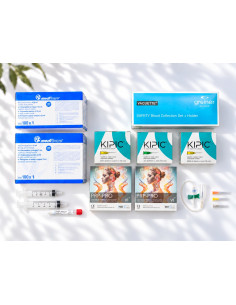
During PRP preparation, venous blood is collected and centrifuged in a suitable system. Depending on the system, blood volume, anticoagulant, separation gel, centrifugation protocol, leukocyte content and final PRP volume may differ.
For spine-related applications, sterile workflow, intended use of the medical devices, traceability, documentation and appropriate image-guided application are particularly relevant.
Safety and consent
PRP is obtained from the patient’s own blood, but it is not risk-free. Possible adverse events include local pain, irritation, bruising, infection, vasovagal reactions or injection-related complications.
For injections close to the spine, additional requirements apply. Coagulation status, anticoagulation, infections, tumour disease, pregnancy and relevant comorbidities must be included in the medical risk-benefit assessment.
Conclusion
PRP for back pain is a relevant but heterogeneous topic in orthopaedics and interventional spine medicine. A medically sound approach is differentiated classification by pain cause and target structure.
For orthopaedic physicians, PRP may be part of an individual treatment consideration in selected patient groups. Current evidence does not allow promises of healing or claims that PRP reliably treats back pain or safely repairs structural damage.
Neutral product reference for medical professionals
For PRP preparation in a professional setting, medical users can find an overview of the PRP tubes category at prpmed.de. The product page for VI PRP-PRO PRP tubes contains product-related information on the relevant material and system category. This reference relates only to PRP preparation and not to clinical efficacy in back pain.
Compliance
This article is intended for medical professionals and provides professional information. It does not replace medical diagnosis, indication, patient information or individual risk-benefit assessment. It contains no treatment recommendation, no promise of healing and no claim regarding the efficacy of individual products for back pain.