A factual overview of PRP for androgenetic alopecia: procedure, evidence up to 2026, limitations and relevant information for patients and professional users.
Last updated: 20 July 2026 · Editorial team: prpmed.de · Literature reviewed through July 2026
Quick answer
PRP has mainly been studied for androgenetic alopecia, also known as male or female pattern hair loss. Systematic reviews suggest that PRP may increase hair density, but results are inconsistent. Differences in preparation, injection protocols and comparator treatments make the evidence difficult to interpret. Depending on the review, certainty ranges from low to moderate. The cause of hair loss should be medically assessed before treatment.
What does this article cover?
Hair loss is an umbrella term for different conditions. The evidence discussed here mainly concerns androgenetic alopecia. It cannot automatically be transferred to alopecia areata, scarring alopecia, medication-related hair loss or hair loss caused by disease or nutritional deficiencies.
What is PRP?
PRP means platelet-rich plasma. Blood consists of plasma and cellular components, including red and white blood cells and platelets. PRP preparation produces a plasma fraction with an increased platelet concentration.
Platelets contain signalling molecules and growth factors involved in the body’s repair and signalling processes. This does not by itself prove a clinical benefit. Whether and to what extent PRP works must be assessed for each indication in controlled studies.
Why diagnosis matters before treatment
Thinning hair, increased shedding or a receding hairline may fit androgenetic alopecia, but they can also have other causes. A medical assessment can help identify inflammatory conditions, medication effects, hormonal factors or deficiencies that may need to be considered.
How is a PRP hair procedure typically performed?
The exact process depends on the system, clinical decision and practice protocol. It usually includes the following steps:
1
Medical assessment
The pattern and possible cause of hair loss, relevant conditions, medication and individual risks are assessed before treatment.
2
Blood collection
Venous autologous blood is collected into a tube suitable for the intended PRP workflow.
3
Preparation
The blood is centrifuged according to the manufacturer’s instructions. Tube, centrifuge, relative centrifugal force and run time must be compatible.
4
Application
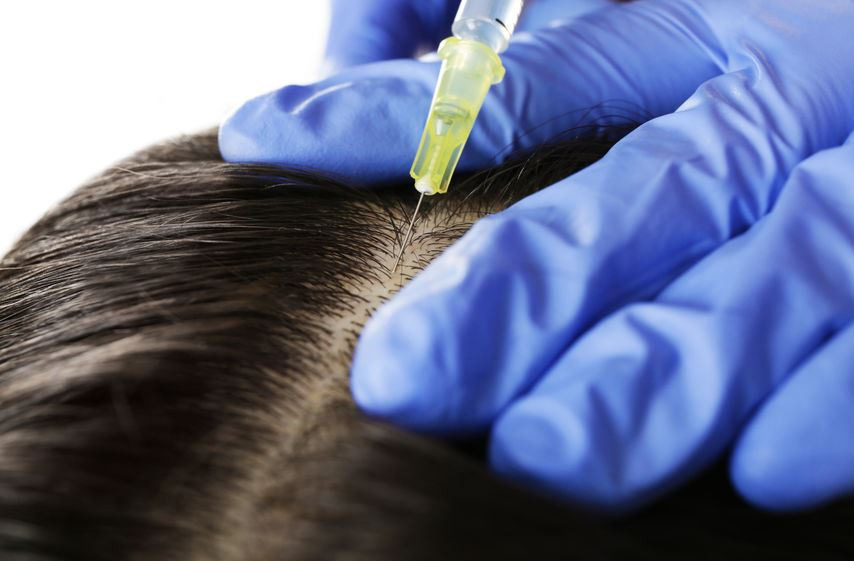
After a medical indication has been established, the prepared plasma fraction is administered to the affected scalp areas by an appropriately qualified professional.
What does the current evidence show?
The evidence is mixed, but not fundamentally negative. Recent reviews can be summarised as follows:
2025 meta-analysis
Forty-three randomised trials with 1,877 participants found an overall increase in hair density versus placebo. Compared with active treatments, the benefit was smaller or not statistically significant. Protocol heterogeneity was substantial.
2024 meta-analysis
An analysis of 13 randomised studies with 431 participants found higher hair density with PRP. Certainty was rated low because of very high heterogeneity, limited study quality and publication bias.
PRP plus minoxidil 2024
Five randomised trials reported higher hair density for PRP plus topical minoxidil than for minoxidil alone. Several trials had a high risk of bias.
PRP versus minoxidil 2026
Nine randomised trials with 451 participants showed no clear PRP advantage in key outcomes such as hair density, terminal hair count or moderate-to-high regrowth. Heterogeneity remained high.
The appropriate conclusion is therefore neither that PRP definitely “works” nor that it is ineffective. There are indications of benefit in selected people with androgenetic alopecia, but standardised protocols and robust long-term data are still lacking. Practice experience and before-and-after photographs cannot replace controlled comparative evidence.
How should specific numbers be interpreted?
Some individual studies report marked increases in hair density. Such values depend heavily on the measurement method, baseline status, control group, follow-up and PRP protocol. In one randomised split-scalp trial, hair density increased on both the PRP and saline sides, with no statistically significant difference between them. Individual study figures should therefore not be presented as an expected personal result.
How many sessions are used, and how long might an effect last?
Many studies used three to four sessions at intervals of roughly four weeks. Other protocols differ. There is currently no generally accepted standard for platelet concentration, activation, injection volume or maintenance intervals.
Studies usually assess changes over several months. Whether maintenance sessions are appropriate must be decided individually. Long-term duration cannot be predicted reliably because follow-up and protocols vary.
What adverse effects and limitations should be considered?
Because PRP is prepared from autologous blood, allergic reactions to the plasma itself are less plausible than with foreign substances. Blood collection and injections are still medical procedures. Commonly reported effects include:
temporary pain or tenderness
redness, swelling or itching of the scalp
minor bleeding or bruising at injection sites
temporary headache
Infection and other injection-related complications are also possible in principle. Risks, contraindications and medication management should be discussed medically in advance. “Autologous” does not mean risk-free.
How much does PRP for hair loss cost?
Costs vary substantially by practice, country, treatment area, preparation system and number of sessions. A meaningful quotation should cover not only one session but also the proposed initial protocol and possible maintenance sessions.
Who may be considered for PRP?
The available evidence mainly concerns people with diagnosed androgenetic alopecia. Suitability cannot be determined from the stage of hair loss alone. Diagnosis, remaining follicular activity, health conditions, previous therapies, expectations and an individual benefit-risk assessment all matter.
Frequently asked questions
Is PRP for hair loss scientifically proven?
Controlled trials and meta-analyses indicate that PRP may increase hair density in androgenetic alopecia. However, studies are heterogeneous, and certainty is rated from low to moderate depending on the analysis.
Is PRP better than minoxidil?
Current comparative evidence does not show a clear PRP advantage in major outcomes such as hair density or terminal hair count. Combination treatment performed better in some studies, but the evidence quality is limited.
How many sessions are needed?
Many studies use three to four sessions about four weeks apart. There is no binding standard protocol. Planning should be individual and medically justified.
Which tubes are needed for PRP?
The manufacturer’s intended purpose and instructions for use, sterility, additives and protocol compatibility are decisive. A tube intended only for in-vitro diagnostics is not automatically intended for subsequent human application of the prepared fraction.
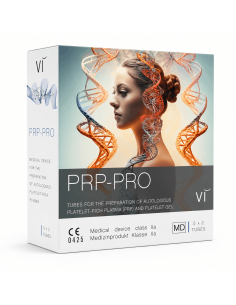
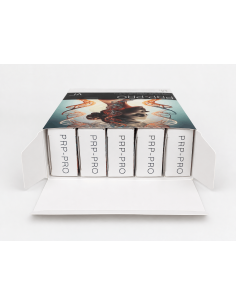
The VI PRP-PRO glass tube offers a modern solution for producing platelet-rich plasma (PRP) and ensures additional stability and reliability in treatments with a wall thickness of 2.4 mm. Developed with innovative technology and EC-certified (0425-MED-004180-00), it guarantees the highest level of safety and efficiency.
Key Features:
Certified...
You need to login or create account
Save products on your wishlist to buy them later or share with your friends.