Why the diagnosis matters
The shoulder is functionally complex. Symptoms may arise from the glenohumeral joint, the subacromial space, the rotator cuff, the long head of the biceps tendon, the acromioclavicular joint or from cervical and neurological causes. A clinically sound assessment requires medical history, physical examination and, depending on the question, imaging such as ultrasound, X-ray or MRI.
From a professional perspective, a statement such as “PRP helps with shoulder pain” is too imprecise. A more scientifically appropriate question is whether PRP shows a measurable additional benefit for a defined indication, a specific injection site, a defined PRP protocol and a defined comparator treatment.
What is PRP?
Platelet-rich plasma, or PRP, is investigated in orthopaedics and sports medicine as an autologous blood product. The procedure is based on processing the patient’s own blood to obtain platelet-rich plasma fractions that may then be administered by a physician.
The biological rationale includes platelet-derived growth factors and signalling proteins that may be involved in inflammatory and repair processes. This biological plausibility does not equal proven clinical benefit for every shoulder diagnosis.
Important for compliant wording: biological mechanisms may be described factually. They should not be used to derive a specific promise of healing, regeneration or treatment success.
PRP in selected shoulder indications
Rotator cuff tendinopathy and partial tears
Several studies and reviews have investigated PRP in tendinopathic disorders and partial tears. Some report improvements in pain and function, particularly in the short to medium term. Other studies show no clear advantage over control interventions.
Full-thickness rotator cuff tears
In full-thickness tendon tears, tear size, retraction, muscle status and surgical indication are central. A general claim that PRP can repair full-thickness tears is not scientifically or legally appropriate.
Shoulder osteoarthritis
For glenohumeral osteoarthritis, the evidence is more limited than for knee osteoarthritis. Individual studies compare PRP with hyaluronic acid, without showing a consistently clear superiority of PRP.
Frozen shoulder
In adhesive capsulitis, individual studies report positive clinical signals. Interpretation remains cautious because natural history, comparator groups and sample sizes limit the strength of conclusions.
Why PRP studies are difficult to compare
A key issue in the PRP literature is heterogeneity. Studies use different systems, centrifugation protocols, tubes, blood volumes, anticoagulants, leukocyte profiles and injection techniques. In some cases, precise information on the composition of the final PRP is missing.
For healthcare professionals, not only the indication matters but also pre-analytical standardisation: blood collection, anticoagulation, centrifugation, separation of blood components, sterile handling, documentation and the intended purpose of the medical devices used must be aligned.
Safety and medical assessment
PRP is obtained from the patient’s own blood. This does not mean that the procedure is risk-free. Potential adverse events may include local pain, temporary irritation, haematoma, infection, vasovagal reactions or injection-related complaints.
Depending on the patient, coagulation status, infections, concomitant medication, pregnancy, malignant disease, systemic disease and other factors must be considered by the treating physician. Whether an injection should be ultrasound-guided depends on the target structure, the clinician’s experience and the anatomical situation.
What can be inferred for clinical practice
Current evidence does not support a broad statement that PRP reliably treats shoulder pain. PRP is most frequently investigated in rotator cuff tendinopathy, selected partial tears and certain inflammatory-degenerative shoulder conditions.
- The indication should be described by diagnosis, not merely by symptom.
- PRP is not a uniform product; protocol and composition are relevant.
- In structurally relevant lesions, PRP does not replace orthopaedic diagnosis and treatment planning.
- Public statements should not promise healing, regeneration or reliable pain reduction.
Conclusion
PRP in shoulder pain is a scientifically relevant but heterogeneous topic. For professional users, a sober assessment is important: PRP is not a uniform product, shoulder pain is not a uniform diagnosis and the evidence does not support general promises of healing or success.
A factual description of PRP as an autologous preparation procedure that is clinically investigated in selected shoulder indications is appropriate. Whether use in an individual case is medically reasonable remains a physician’s decision based on diagnosis, findings, patient factors, alternatives and available evidence.
Neutral product reference for professional users
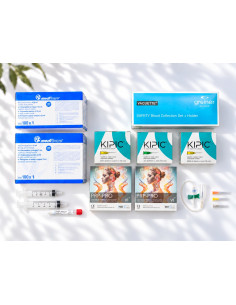
For standardised PRP preparation in a professional setting, prpmed.de provides an overview of suitable PRP tubes. The linked pages serve product- and category-related information only. No clinical efficacy for shoulder pain is derived from these references.
Compliance note
This article is intended for professional information and does not replace medical diagnosis, indication setting or patient counselling. It does not contain a treatment recommendation or a promise of therapeutic success. The use of PRP and the selection of suitable medical devices must take place within the applicable legal, professional and organisational framework.